
• Latest
  • Trending
  • All
  • Pakistan
  • Business
  • World
  • Epaper
  • Opinion
  • Interview
  • Entertainment
  • News Analysis
  • Sports
  • FBR & Customs
  • Health
  • NGOs
  • Crime
Uraan Pakistan: A closer look at the country’s economic direction

Uraan Pakistan: A closer look at the country’s economic direction

PIBF backs protest against fuel price hike, unveils economic revival agenda

PIBF backs protest against fuel price hike, unveils economic revival agenda

ADVERTISEMENT
US Senate unveils landmark crypto bill to regulate digital assets and stablecoins

US Senate unveils landmark crypto bill to regulate digital assets and stablecoins

Zombied trailer sparks excitement and criticism ahead of Eid ul Adha release

Zombied trailer sparks excitement and criticism ahead of Eid ul Adha release

Punjab Assembly caucus discusses inclusive education for children with different abilities

Punjab Assembly caucus discusses inclusive education for children with different abilities

Iran holds firm despite US pressure as conflict fears grow

Iran holds firm despite US pressure as conflict fears grow

Rajab Butt faces criticism and predictions about personal life amid ongoing controversy

Rajab Butt faces criticism and predictions about personal life amid ongoing controversy

Ethiopian envoy highlights trade and investment opportunities during Sialkot chamber visit

Ethiopian envoy highlights trade and investment opportunities during Sialkot chamber visit

Gold prices rebound in Pakistan after sharp fall, silver also rises

Gold prices rebound in Pakistan after sharp fall, silver also rises

Tesla robotaxi rollout in Texas struggles with delays and limited availability

Tesla robotaxi rollout in Texas struggles with delays and limited availability

Lakki Marwat blast kills 9, injures 33 in KP’s Serai Naurang

Lakki Marwat blast kills 9, injures 33 in KP’s Serai Naurang

Pakistan’s Salman Agha sets bold tone ahead of final day in Mirpur Test against Bangladesh

Pakistan’s Salman Agha sets bold tone ahead of final day in Mirpur Test against Bangladesh

Karachi court appearance of alleged cocaine supplier Pinky raises questions over protocol

Karachi court appearance of alleged cocaine supplier Pinky raises questions over protocol

Alia Bhatt’s elegant Cannes 2026 look sparks praise online amid Aishwarya Rai debate

Alia Bhatt’s elegant Cannes 2026 look sparks praise online amid Aishwarya Rai debate

Panasonic pivots toward AI infrastructure amid EV battery volatility

Panasonic pivots toward AI infrastructure amid EV battery volatility

Amitabh Bachchan’s midnight rituals and cinematic future

Amitabh Bachchan’s midnight rituals and cinematic future

Amish Tripathi clarifies Ranveer Singh is not associated with Shiva Trilogy adaptation

Amish Tripathi clarifies Ranveer Singh is not associated with Shiva Trilogy adaptation

Priyanka Chopra shares emotional homecoming gift from daughter Malti Marie following Mother’s Day work trip

Priyanka Chopra shares emotional homecoming gift from daughter Malti Marie following Mother’s Day work trip

Global markets reel as Trump rejects Iranian terms, signaling end of ceasefire

Global markets reel as Trump rejects Iranian terms, signaling end of ceasefire

Diljit Dosanjh confronts concert disruptions: Prioritizing fan safety over political narratives

Diljit Dosanjh confronts concert disruptions: Prioritizing fan safety over political narratives

Honoring the unsung sacrifices of Punjab Police martyrs

Honoring the unsung sacrifices of Punjab Police martyrs

Team Rajab Butt claims victory in 2026 Influencer Cricket League final

Team Rajab Butt claims victory in 2026 Influencer Cricket League final

Pakistan women ready for Zimbabwe T20 challenge as series opens tomorrow

Pakistan women ready for Zimbabwe T20 challenge as series opens tomorrow

Pakistan warns Kabul after Bannu attack killing 15 police personnel, seeks action against militants

Pakistan warns Kabul after Bannu attack killing 15 police personnel, seeks action against militants

Mumbai Indians and Lucknow Super Giants exit IPL playoff race after crushing defeats

Mumbai Indians and Lucknow Super Giants exit IPL playoff race after crushing defeats

OpenAI launches $4 billion subsidiary to embed AI engineers within global corporations

OpenAI launches $4 billion subsidiary to embed AI engineers within global corporations

From films to power: Vijay wins big with social media

From films to power: Vijay wins big with social media

National Women Journalists Forum delegation spends a day with thalassemia children

National Women Journalists Forum delegation spends a day with thalassemia children

Punjab Assembly speaker hails Marka-e-Haq as symbol of Pakistan’s defence strength

Punjab Assembly speaker hails Marka-e-Haq as symbol of Pakistan’s defence strength

Pakistan’s strength lies in its defense, unity, and digital future

Pakistan’s strength lies in its defense, unity, and digital future

  • Login
Wednesday, May 13, 2026
The Tribune International
  • Home
  • Top News
  • World
    • Iran-US-Israel war
  • Pakistan
    • Politics
    • Crime
    • Interview
  • Epaper
  • Entertainment
    • Health
  • Opinion
    • News Analysis
  • Sports
    • Cricket
  • Business
    • Business
      • FBR & Customs
        • Tech
  • History in focus
    • Event News
    • Event Reporting
    • NGOs
      • Weird
        • Blog
          • Fake News
      • #24159 (no title)
No Result
View All Result
  • Home
  • Top News
  • World
    • Iran-US-Israel war
  • Pakistan
    • Politics
    • Crime
    • Interview
  • Epaper
  • Entertainment
    • Health
  • Opinion
    • News Analysis
  • Sports
    • Cricket
  • Business
    • Business
      • FBR & Customs
        • Tech
  • History in focus
    • Event News
    • Event Reporting
    • NGOs
      • Weird
        • Blog
          • Fake News
      • #24159 (no title)
The Tribune International
No Result
View All Result
The Tribune International
No Result
View All Result
  • Home
  • Top News
  • World
  • Pakistan
  • Epaper
  • Entertainment
  • Opinion
  • Sports
  • Business
  • History in focus

Uraan Pakistan: A closer look at the country’s economic direction

The article questions “Uraan Pakistan,” arguing that rising debt, industrial decline, energy crisis, unemployment and weak governance make ambitious export targets unrealistic without deep structural reforms.

by The Tribune International
2 days ago
in Opinion
Uraan Pakistan: A closer look at the country’s economic direction
Share on FacebookShare on Twitter

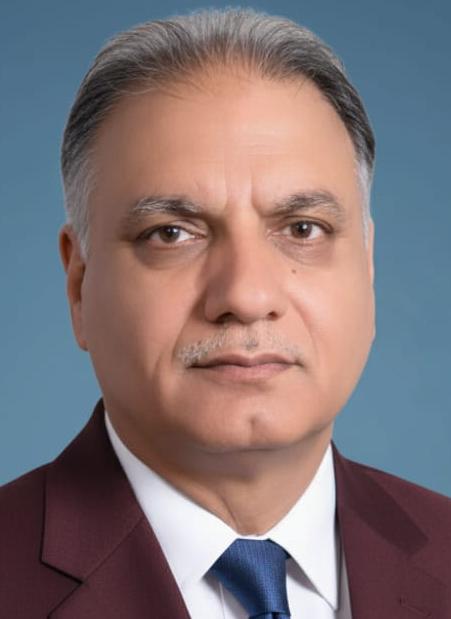
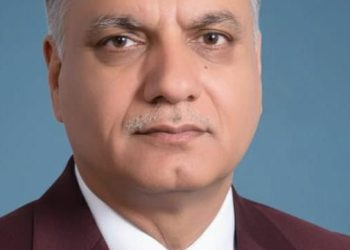
By Dr Alamdar Hussain Malik

“Uraan Pakistan” is a five-year National Economic Transformation Plan (2024–2029) launched by the Government of Pakistan as a broad policy framework aimed at restructuring and revitalizing the national economy. One of its central objectives is to achieve a significant expansion in exports, targeting an increase in export earnings to around $60 billion by 2029, along with sustained annual export growth through diversification of products, value addition, and access to new international markets. The programme also focuses on strengthening the export base through improvements in industry, agriculture, IT, and services sectors, with the broader aim of reducing the chronic trade deficit and improving external account stability. However, this export ambition raises a fundamental question: whether such targets can realistically be achieved under Pakistan’s current fragile economic structure, which is burdened by debt accumulation, deindustrialization, energy crises, institutional inefficiency, and declining productivity across key sectors.

Pakistan today stands at one of the most difficult economic crossroads in its history. At a time when inflation has broken the backbone of the common citizen, unemployment is crushing the educated youth, public institutions are collapsing under financial burdens, and the economy survives largely on loans, the federal government has launched the much-publicized “Uraan Pakistan” programme. The real question, however, is whether Pakistan is truly ready to “fly,” or whether this programme is merely another political slogan disconnected from ground realities.

Over the last four years, Pakistan’s public debt has increased from approximately Rs 55 trillion to Rs 85 trillion. This means an increase of nearly Rs 30 trillion within a very short period — around Rs 7.5 trillion annually, Rs 625 billion monthly, and almost Rs 20 billion every single day. Such a staggering 55 percent increase in debt raises a serious question about the direction of economic governance in the country. A nation already trapped in dependency on international lenders cannot simply claim economic revival through attractive slogans and media campaigns.

The power sector presents another alarming picture. Pakistan’s circular debt has jumped from Rs 2.2 trillion to Rs 3.2 trillion.

This means an increase of almost Rs 1 trillion within four years — approximately Rs 250 billion annually, Rs 20 billion monthly, and nearly Rs 700 million every day. Despite repeated promises of reforms, the energy sector remains financially paralyzed. Electricity prices continue to rise while power theft, transmission losses, poor governance, and inefficiency remain unchecked. How can a country claim economic transformation when its energy sector itself is drowning deeper into debt every passing day?

Similarly, the pension bill has doubled from Rs 450 billion to Rs 900 billion. This 100 percent increase is becoming another unsustainable burden on the national exchequer.

The state is borrowing not only for development but increasingly for salaries, pensions, and debt servicing. In such circumstances, any grand economic programme without structural reforms appears unrealistic and disconnected from financial realities.

The industrial sector is also witnessing severe contraction. In the last few years, around 150 major textile units have been closed across the country, which is an alarming indicator of deindustrialization. Textile, being the backbone of Pakistan’s export economy, is now facing collapse due to rising energy costs, inconsistent policies, high taxation, and lack of competitiveness in global markets. Each closed unit represents thousands of lost jobs, reduced exports, and further pressure on an already fragile economy. Instead of industrial expansion, Pakistan is witnessing industrial shrinkage at a scale that threatens long-term economic survival.

The agriculture sector, which is supposed to be the backbone of Pakistan’s economy, also presents a deeply concerning contradiction. What we were taught a decade ago in textbooks about agriculture—its productivity, self-sufficiency, irrigation systems, and output potential—is no longer reflected in the real fields today. Agriculture now largely exists in academic curricula and policy documents, but on the ground the situation is entirely different. Rising input costs, water scarcity, outdated farming practices, fertilizer shortages, middlemen exploitation, and lack of modern technology have turned a once-strong sector into a struggling and uncertain field of production. The disconnect between what is taught and what is actually happening in the fields highlights a serious policy and implementation failure.

At the same time, the livestock sector—despite its vast and untapped potential—remains grossly underutilized. Pakistan is an agrarian country with a huge livestock population, yet we have failed to convert this strength into real value addition. Instead of developing meat processing, dairy value chains, leather industry modernization, and export-oriented livestock products, the sector remains largely traditional and low-yielding. Milk is still sold in raw form with minimal processing, meat export potential remains underdeveloped, and productivity remains far below international standards. This failure to industrialize and modernize livestock has cost Pakistan billions in lost foreign exchange and rural income opportunities, while other countries have successfully transformed similar sectors into major export engines.

The unemployment crisis among educated youth is equally disturbing. Reports indicate that around 31 percent of graduates, 25 percent of engineers, and 11 percent of medical graduates are facing unemployment. This is not merely an economic issue; it is a national crisis. A country that cannot provide opportunities to its educated generation is effectively destroying its future intellectual capital. Thousands of talented young people are either leaving the country or suffering from frustration and hopelessness.

At the same time, Pakistan is facing one of the most severe brain drains in its history. Doctors, engineers, IT experts, scientists, researchers, university teachers, and highly skilled professionals are leaving the country in massive numbers. This migration is not happening because these individuals lack patriotism; rather, it is the result of hopeless economic conditions, declining institutional standards, political instability, unemployment, low salaries, and the absence of merit-based opportunities. Every educated professional leaving Pakistan represents not only the loss of a single individual but also the loss of years of national investment, public resources, and future economic potential.

The education sector itself reflects the deepening crisis. The recently announced secondary school examination results revealed that approximately 500,000 students across Pakistan failed to pass their examinations, including around 350,000 students from Punjab alone. Such numbers are not ordinary statistics; they are evidence of a collapsing educational structure. If half a million students are unable to clear secondary education, what kind of workforce and human resource development can Pakistan expect in the coming years?

The condition of State-Owned Enterprises (SOEs) is another painful reality. More than 110 state-owned organizations collectively impose an enormous burden on the national economy. These institutions are consuming public resources while many continue operating in chronic losses year after year. Instead of becoming engines of economic productivity, many SOEs have transformed into symbols of inefficiency, political interference, corruption, and administrative failure.

Meanwhile, inflation has reached unbearable levels.

The prices of electricity, gas, fuel, medicines, transport, and essential food items continue to rise beyond the reach of ordinary citizens. The middle class is shrinking rapidly, while poverty expands across urban and rural Pakistan alike. For millions of people, survival itself has become a daily struggle.

In such a situation, the federal government’s “Uraan Pakistan” programme naturally raises difficult questions.

Who designed this programme? On what economic foundations has it been built? Does its architect fully understand the economic, industrial, agricultural, livestock, educational, and social collapse currently facing Pakistan? Or is this programme being drafted in air-conditioned offices without any connection to the suffering of the common people?

One is compelled to ask whether “Uraan Pakistan” reflects a genuine vision grounded in reality, or merely a carefully packaged narrative detached from ground truths. Because no serious economic roadmap can succeed without first addressing debt dependency, industrial decline, agricultural stagnation, livestock underutilization, institutional collapse, unemployment, educational failure, inflation, and the ongoing intellectual migration of the nation’s brightest minds.

RelatedPosts

Honoring the unsung sacrifices of Punjab Police martyrs

War impact or policy shift? Why fuel is so expensive in Pakistan now

Labour Day: Workers’ rights and our collective responsibility

Cheap water is not cheap

Attempt to hijack PVMC Act 1996: A direct assault on veterinary profession in Pakistan

Economic recovery cannot be achieved through slogans, conferences, advertisements, or presentations. Nations rise through long-term planning, industrial growth, educational reforms, agricultural modernization, livestock value addition, political stability, accountability, merit, and institutional strength.

Unfortunately, Pakistan continues to recycle old policies under new names while avoiding the fundamental structural reforms necessary for survival.

The truth is bitter but unavoidable: Pakistan does not merely need “Uraan Pakistan”; it needs economic honesty, administrative courage, institutional transparency, and above all, national accountability at every level. Until policymakers confront the actual condition of the economy without denial or political cosmetic dressing, every new programme will remain another carefully packaged illusion rather than a genuine national transformation. Under such prevailing conditions of debt accumulation, industrial decline, energy crisis, weak governance, and declining productivity, one is compelled to ask how even ambitious export targets can realistically be achieved at all.

The people of Pakistan deserve truth, not slogans; direction, not deception; and a future built on reality, not rhetoric.


SendShareShareTweetShareSendShare

Get real time update about this post categories directly on your device, subscribe now.

Unsubscribe
ADVERTISEMENT

Related Posts

Honoring the unsung sacrifices of Punjab Police martyrs
Opinion

Honoring the unsung sacrifices of Punjab Police martyrs

Pakistan records one of largest recent fuel price increases globally, industry sources say
Opinion

War impact or policy shift? Why fuel is so expensive in Pakistan now

Labour Day: Workers’ rights and our collective responsibility
Opinion

Labour Day: Workers’ rights and our collective responsibility

Pakistan’s water crisis is not unique — How others fixed theirs
Opinion

Cheap water is not cheap

Attempt to hijack PVMC Act 1996: A direct assault on veterinary profession in Pakistan
Opinion

Attempt to hijack PVMC Act 1996: A direct assault on veterinary profession in Pakistan

A flood of degrees, a drought of jobs
Opinion

A flood of degrees, a drought of jobs

Energy crisis and temporary measures: Where Pakistan stands and how long can it sustain 
Opinion

Governance gap: Why Pakistan trails despite vast resources

Pakistan calls for justice and dialogue at global parliamentary forum
Opinion

Pakistan calls for justice and dialogue at global parliamentary forum

Energy crisis and temporary measures: Where Pakistan stands and how long can it sustain 
Opinion

Transport shutdown in twin cities: Security imperatives vs public suffering

Historic visit to Tehran reflects strategic signaling and echoes past diplomacy
Opinion

Historic visit to Tehran reflects strategic signaling and echoes past diplomacy

May 2026
MTWTFSS
 123
45678910
11121314151617
18192021222324
25262728293031
« Apr    

History

Categories

Browse by Category

  • Business
  • Business
  • Cricket
  • Crime
  • Entertainment
  • Epaper
  • Event News
  • Event Reporting
  • Fake News
  • FBR & Customs
  • Health
  • History in focus
  • Interview
  • Iran-US-Israel war
  • Letter to Editor
  • Mobile
  • News Analysis
  • NGOs
  • Opinion
  • Pakistan
  • Politics
  • Sports
  • Tech
  • Top News
  • Weird
  • Word of the day
  • World
  • About Us
  • Blog
  • Blog
  • Checkout
  • Contact Us
  • Disclaimer
  • My account
  • Privacy Policy
  • Terms and Conditions
  • 📰 Advertise With Us

© 2026 The Tribune International. All rights reserved. | Powered by JNews
Disclaimer: The Tribune International is an independent platform and is not affiliated with any other organisation.
Reach us: Thetribuneintl@gmail.com

Welcome Back!

Sign In with Facebook
Sign In with Google
Sign In with Linked In
OR

Login to your account below

Forgotten Password?

Retrieve your password

Please enter your username or email address to reset your password.

Log In
Translate »

Add New Playlist

No Result
View All Result
  • Home
  • Top News
  • World
    • Iran-US-Israel war
  • Pakistan
    • Politics
    • Crime
    • Interview
  • Epaper
  • Entertainment
    • Health
  • Opinion
    • News Analysis
  • Sports
    • Cricket
  • Business
    • Business
      • FBR & Customs
  • History in focus
    • Event News
    • Event Reporting
    • NGOs
      • Weird
      • #24159 (no title)

© 2026 The Tribune International. All rights reserved. | Powered by JNews
Disclaimer: The Tribune International is an independent platform and is not affiliated with any other organisation.
Reach us: Thetribuneintl@gmail.com

This website uses cookies. By continuing to use this website you are giving consent to cookies being used. Visit our Privacy and Cookie Policy.