


Entertainment Desk:-
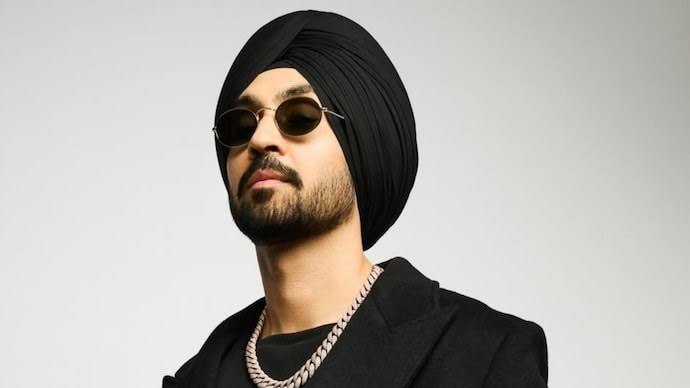
During his recent Aura Tour performance in Canada, Diljit Dosanjh found himself at the center of a viral moment involving pro-Khalistani protesters.
The situation escalated when individuals carrying flags and banners disrupted the concert atmosphere, prompting the singer to instruct his security detail to intervene.
While social media narratives quickly began to swirl, Diljit utilized his Instagram platform on May 11 to provide essential context, emphasizing that his actions were rooted in fan safety rather than political suppression.
Diljit’s clarification focused on the distinction between peaceful expression and targeted harassment. Writing in Punjabi, he noted that while public protest is a common right, it crosses a line when it transitions into the intimidation of ticket-holders.
He observed that banners and flags are typically symbols of pride or regional identity brought by supporters to show their roots. However, when those same symbols are used as tools for verbal abuse or to create a hostile environment for families attending the show, the intent changes from “support” to “disruption.”
The singer was firm in his stance that the “fake narratives” circulating online were misinterpreting his instructions to security. He clarified that he did not take issue with the specific content of the banners, but rather the aggressive behavior of the individuals holding them.
According to Diljit, if a group spends their time outside the venue insulting fans and then attempts to bring that same energy inside the arena, they forfeit their right to stay. He made it clear that his priority is maintaining a professional and safe space for his audience, regardless of the political backdrop.
This public statement marks a shift in Diljit’s usual approach. He admitted to ignoring similar provocations for over a year, choosing instead to focus on his music. However, the direct targeting of his fanbase forced his hand. By addressing the controversy head-on, he sought to dismantle the idea that he was targeting a specific movement, reframing the incident as a matter of venue security and crowd management.
His message was a call for respect: fans should be able to enjoy a performance without being caught in the crossfire of external agendas. Ultimately, Diljit’s response serves as a boundary-setting moment, signaling that while he acknowledges his fans’ diverse backgrounds, he will not allow his stage to become a site for harassment.