


By Our Correspondent
GUJRANWALA: Pakistan’s rice sector is exploring opportunities to conserve irrigation water, reduce greenhouse gas emissions and access potential carbon finance through climate-smart farming practices.
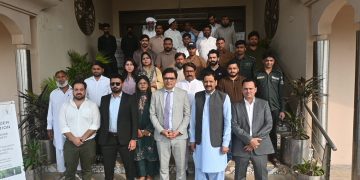
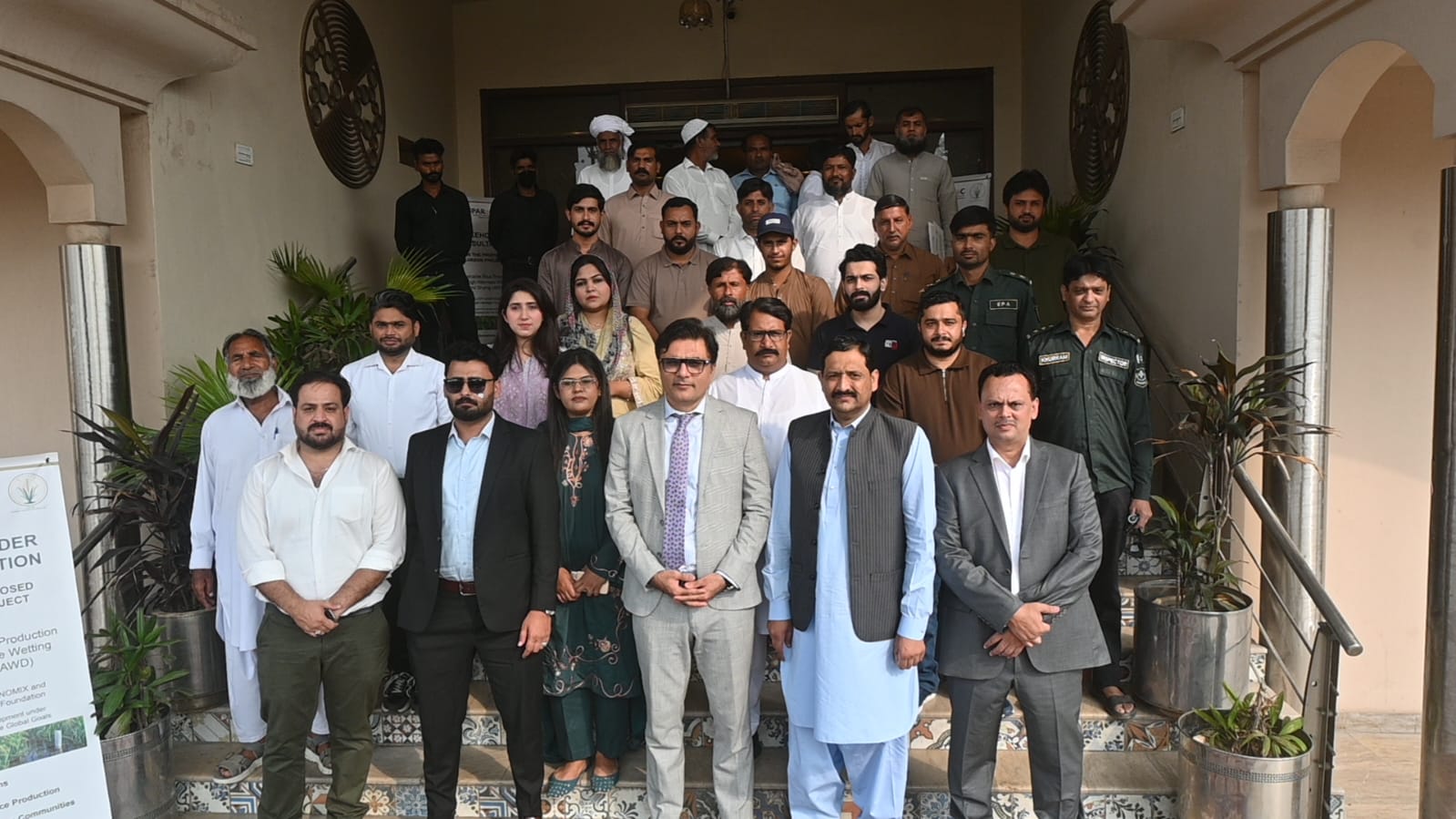
The initiative was discussed at a stakeholder consultation in Gujranwala, attended by hundreds of rice farmers, government officials, researchers and industry representatives.
Read also: Pakistan raises petrol, diesel prices despite sharp fall in global crude oil rates
Muhammad Ali, Commissioner of Gujranwala Division, attended the consultation as chief guest, while Arif Goheer, executive director of the Global Change Impact Studies Centre (GCISC), Ministry of Climate Change and Environmental Coordination, was the guest of honour.
The proposed initiative, supported by the Supporting Preparedness for Article 6 Cooperation (SPAR6C) programme, is expected to be implemented by Galaxy Agrinomix and the Pakistan Basmati Heritage Foundation (PBHF).
The project aims to register under Gold Standard and explore carbon finance opportunities through Article 6 of the Paris Agreement, with support from SPAR6C and the Global Green Growth Institute (GGGI).
The consultation focused on Alternate Wetting and Drying (AWD), a water-management technique that involves allowing rice fields to dry for controlled periods between irrigations instead of maintaining continuous flooding throughout the growing season.
The practice can potentially reduce irrigation requirements and methane emissions, although its effectiveness depends on local soil, water and climatic conditions.
Technical presentations were delivered by Dr Imran Sheikh, national coordinator of PBHF; Shazma Amin, focal person at PBHF; Dr Amjad Bashir, technical expert at PBHF; and Ahsan Kamran, senior consultant for the SPAR6C programme.
The speakers explained the practical application of AWD and the technical requirements for developing a credible carbon project. Farmers were briefed on using perforated field tubes to monitor water levels and determine when irrigation is needed, while taking particular care to protect crops during the flowering stage.
The presentations highlighted the potential for AWD to save around 30 per cent of irrigation water and reduce methane emissions by up to 48 per cent. However, the actual results would depend on field conditions and would need to be established through appropriate measurement.
Participants were also briefed on the requirements for developing carbon projects, including documenting farming practices, monitoring, measuring and independently verifying emission reductions.
The consultation emphasised that installing an AWD tube alone would not qualify a farmer for carbon credits. Participating farms would have to follow documented practices and meet applicable monitoring, reporting and verification requirements.
The proposed initiative could offer rice growers an opportunity to improve water management while potentially benefiting from verified emission reductions. However, access to carbon finance would depend on successful project implementation, independent verification, market conditions and the terms governing farmers’ participation.
Speakers also highlighted the importance of farmer training, suitable field conditions, reliable water control, effective drainage and continued technical assistance to ensure that AWD is implemented without compromising crop performance.
The consultation brought together representatives of Punjab’s agriculture and environmental departments, research institutions, universities, rice processors, fertiliser manufacturers, crop-protection companies and certification organisations.
Participants included Dr Amir Rasool, director general of Pest Warning and Quality Control, Punjab; Dr Ahsan Khan, director of the Rice Research Institute, Kala Shah Kaku; Shahid Tarer, convener of PBHF; Dr Shakeel Ahmed, divisional director of Agriculture Extension; Muhammad Imran, divisional director of On-Farm Water Management; Talfoor ul Hassan, divisional director of Pest Warning and Quality Control; and Muhammad Imran, deputy director of Environment, Gujranwala.
The University of the Punjab was represented by Dr Tehmina Anjum, dean of the Faculty of Agriculture; Dr Bilal Chattha, head of Agronomy; and Dr Sajid Ali, associate professor in the Department of Agronomy, Faculty of Agricultural Sciences.
Online participants from the University of Agriculture Faisalabad included Dr Abdul Wakil, professor of Soil Science; Dr Saddam Hussain, dean and vice chairman of the Confucius Institute; and Dr Fahad Rasool, associate professor in the Department of Agronomy.
Hundreds of rice farmers from Gujranwala, Hafizabad, Sheikhupura and adjoining rice-growing areas also attended the consultation.
SPAR6C is a five-year programme running from 2022 to 2027 and supported by Germany’s International Climate Initiative (IKI). It aims to strengthen carbon-market readiness in Colombia, Pakistan, Thailand and Zambia, with global implementation led by GGGI. The UNEP Copenhagen Climate Centre serves as the package lead for Pakistan.
The consultation provided a platform for stakeholders to discuss the practical requirements of climate-smart rice cultivation and the development of a credible carbon-project framework.
The initiative’s success will depend on measurable environmental benefits, transparent monitoring and independent verification, as well as clear arrangements enabling farmers to understand the requirements, risks and potential financial benefits of participation.