



By M Qadeer
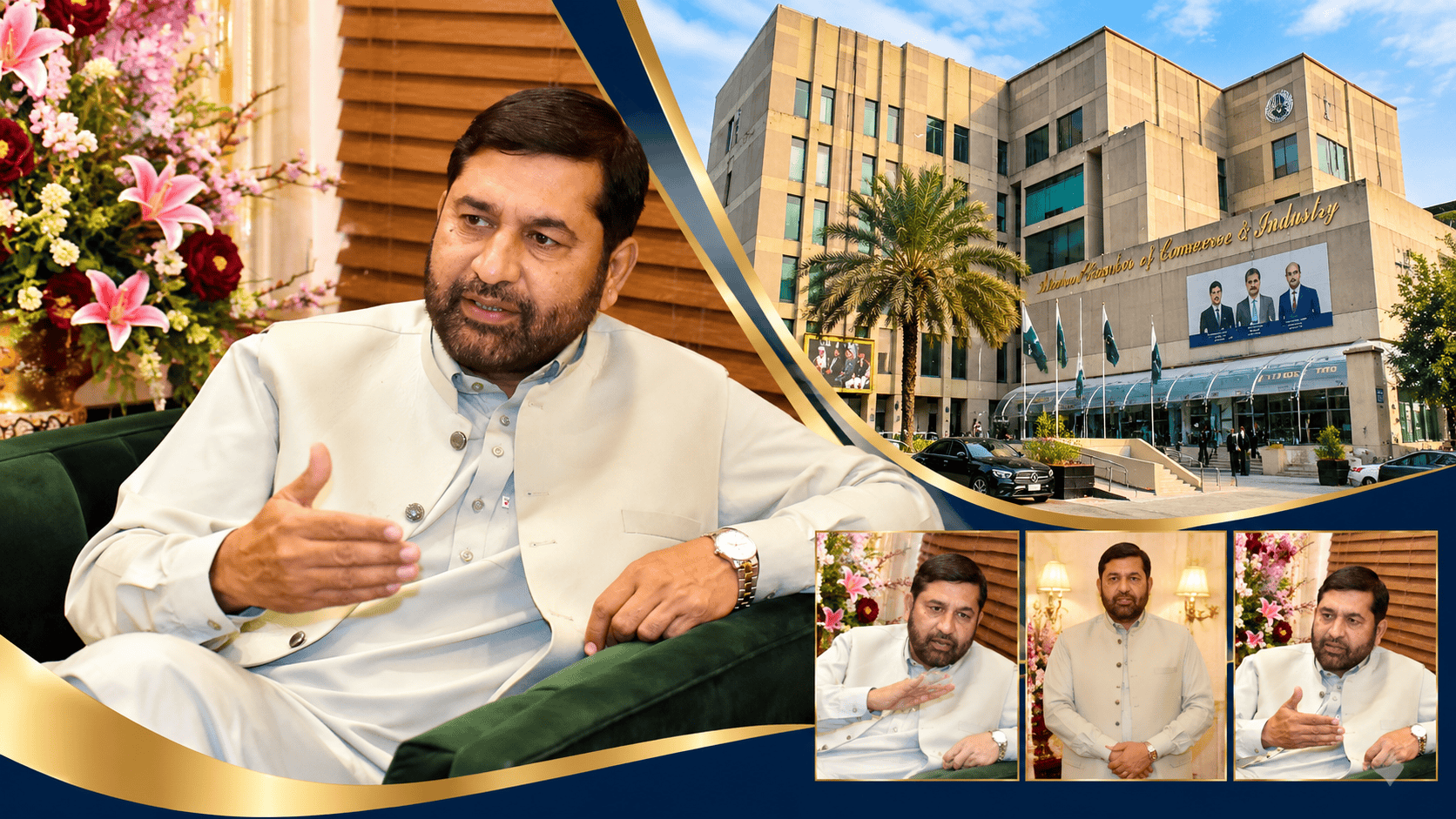
LAHORE: Shahzad Mehmood, an elected member of the Lahore Chamber of Commerce and Industry (LCCI) Executive Committee for 2026–28, has called for practical reforms to address the difficulties faced by importers, improve commercial activity in Lahore’s markets and ensure that regulatory enforcement does not become an unnecessary obstacle to doing business.
With business confidence under pressure from regulatory uncertainty, operational difficulties and administrative challenges, Mehmood believes that creating a genuinely business-friendly environment requires more than policy announcements. It demands consistent implementation of regulations, transparent procedures, effective consultation with traders and a system that allows businesses to operate without unnecessary complications.
Read also: LCCI leadership insight: Shahab Basharat calls for fair treatment of businessmen
Among the issues requiring attention are customs valuation rulings, which directly affect import costs; the difficulties encountered by importers in navigating regulatory requirements; inadequate parking facilities in Lahore’s commercial markets; and concerns about the enforcement powers exercised by the Punjab Enforcement and Regulatory Authority (PERA), particularly the use of FIRs and the need for safeguards against arbitrary action.
These issues have implications beyond individual traders. Lahore’s markets support extensive commercial networks, including wholesalers, retailers, importers, distributors, transporters and employees. When businesses encounter persistent operational difficulties, the consequences can extend throughout the supply chain, affecting prices, employment and investment.
Mehmood’s position highlights the need for a balanced approach in which the government fulfils its regulatory responsibilities while ensuring that legitimate commercial activity is not unnecessarily disrupted.
Customs valuation rulings: A pressing concern for importers
Customs valuation is among the important issues affecting Pakistan’s import-dependent businesses. The value assigned to imported goods plays a significant role in determining customs duties and other applicable taxes, directly influencing the final cost of bringing products into the country.
For importers, uncertainty over the valuation of goods can complicate financial planning, inventory management and commercial commitments.
Businesses often negotiate prices with overseas suppliers, arrange financing, book shipments and make commitments to local customers before imported consignments reach Pakistan. When customs valuation differs from the value anticipated by an importer, the resulting increase in the assessed cost can affect the profitability of the transaction.
Mehmood believes that the concerns of the importing community require serious attention, particularly where valuation procedures create uncertainty or place additional pressure on legitimate businesses.
A predictable and transparent valuation framework would help importers calculate their financial obligations more accurately and make informed commercial decisions.
The issue becomes especially important for businesses operating on relatively narrow profit margins. An unexpected increase in the assessable value of imported goods can affect their ability to maintain prices, fulfil customer orders and compete with other suppliers.
A constructive response would involve regular consultation between customs authorities and representatives of the business community. Such engagement could help identify recurring disputes, clarify the application of valuation rulings and improve communication about changes affecting particular categories of imports.
Clear explanations of valuation decisions and accessible procedures for challenging assessments would also help reduce uncertainty.
The objective should not be to exempt importers from legitimate duties and taxes. Rather, the emphasis should be on ensuring that valuation is carried out transparently, consistently and in accordance with the applicable legal framework.
For Mehmood, improving the relationship between customs authorities and the importing community is an important step towards building confidence in Pakistan’s trading environment.
Importers need predictability, not unnecessary complications
Importers play an important role in supplying industrial inputs, machinery, electronic products, spare parts and consumer goods to Pakistan’s economy.
Many domestic businesses depend on imported raw materials and components to maintain production. Others rely on imported merchandise to supply wholesale and retail markets.
Consequently, difficulties affecting importers can have wider implications for manufacturing, distribution and consumer prices.
Mehmood’s concerns centre on the need to make the operating environment more predictable for businesses that comply with applicable laws and fulfil their financial obligations.
Importers must navigate customs procedures, documentation requirements, taxation, logistics and other regulatory processes. When these requirements are unclear or their implementation becomes unpredictable, businesses can face additional costs and delays.
Such uncertainty can make it difficult to estimate delivery schedules, maintain inventory and honour commitments to customers.
Small and medium-sized enterprises may be particularly vulnerable because they generally have fewer financial resources to absorb unexpected expenses or prolonged delays.
A business-friendly framework should therefore prioritise clear procedures, timely decisions and effective communication between government departments and the private sector.
Mehmood’s position also highlights the importance of distinguishing between deliberate violations of the law and genuine commercial disputes arising from documentation, valuation or procedural interpretation.
Where a business has committed an offence, the relevant authorities must take action under the law. However, legitimate disagreements should be addressed through established procedures that allow the parties concerned to present their positions and seek a lawful resolution.
Simplifying administrative processes, improving coordination among departments and providing accessible channels for resolving disputes could help reduce avoidable difficulties.
The wider objective is to ensure that importers can concentrate on their commercial responsibilities rather than spending excessive time and resources dealing with procedural uncertainty.
Lahore’s markets need a practical parking policy
Parking has become an important operational concern for Lahore’s commercial markets, where large numbers of shoppers, traders, delivery vehicles and commercial transport operators compete for limited space.
Markets depend on accessibility. Customers need convenient ways to reach shops, while traders require space for loading and unloading merchandise. Suppliers and delivery vehicles must also be able to move goods without creating unnecessary congestion.
When parking facilities are inadequate, commercial activity can suffer.
Customers may avoid markets where finding a parking space is difficult. Traders can experience delays in receiving merchandise, while congestion around busy commercial streets can affect the movement of vehicles and pedestrians.
For wholesale markets, where transactions frequently involve substantial quantities of goods, access for loading and unloading is particularly important.
Mehmood believes that the parking difficulties faced by Lahore’s business community deserve a coordinated and practical response from the relevant authorities.
Rather than treating parking solely as a traffic-management issue, policymakers should recognise its connection with commercial activity, customer access and the efficient movement of goods.
A sustainable solution would require market-specific planning based on the needs of traders, customers, residents and transport operators.
Authorities could identify underused spaces suitable for parking, examine the feasibility of designated parking facilities and establish clearly marked loading and unloading zones in suitable locations.
Parking arrangements should also take account of the different requirements of retail and wholesale markets. A shopping area with a high volume of individual customers may require a different system from a wholesale market where goods are transported in commercial vehicles.
Coordination between market associations, traffic police, municipal authorities and other relevant departments would help ensure that measures reflect conditions on the ground.
Enforcement remains necessary to prevent illegal parking and keep roads accessible. However, enforcement alone cannot resolve a shortage of designated parking spaces.
A more effective approach would combine reasonable regulation with adequate facilities and clear information for motorists.
For Lahore’s traders, the aim should be to maintain orderly traffic while protecting the accessibility that commercial markets need to function efficiently.
PERA enforcement: The need for clarity and safeguards
The Punjab Enforcement and Regulatory Authority has introduced another dimension to the discussion about regulatory enforcement and the treatment of businesses.
For traders, an important question is how enforcement powers are exercised and whether the procedures followed by enforcement personnel provide sufficient clarity, accountability and protection against arbitrary action.
Mehmood’s concerns include the potential implications of PERA’s enforcement practices for the business community, particularly regarding the exercise of powers that may lead to criminal proceedings.
Business owners need to understand their legal obligations and the consequences of non-compliance. Equally, they need confidence that enforcement action will be taken according to the law and that their rights will be respected.
The distinction between administrative non-compliance and conduct that constitutes a criminal offence is particularly important.
Not every commercial disagreement or regulatory deficiency necessarily amounts to a criminal offence. The appropriate response depends on the facts, the applicable law and the powers available to the relevant authority.
Where an offence is established, enforcement agencies must be able to act within their lawful mandate. However, the exercise of coercive powers should be accompanied by clear procedures, proper documentation and appropriate accountability.
The registration of an FIR, in particular, must be governed by the applicable legal provisions and the circumstances of the alleged offence. It should not be treated as an automatic consequence of every commercial dispute or administrative irregularity.
Mehmood’s concerns point to the importance of ensuring that traders understand the scope of enforcement powers, the grounds on which action may be initiated and the procedures available to challenge decisions.
Clear operating procedures, accessible complaint mechanisms and appropriate oversight can help prevent misunderstandings and strengthen public confidence.
The objective should be effective enforcement without unnecessary intimidation or disruption of legitimate business activity.
Balancing regulatory authority with business confidence
The debate surrounding enforcement is not simply about whether authorities should have the power to act. It is also about how those powers are exercised.
Government departments and enforcement agencies have legitimate responsibilities to ensure compliance with the law, protect public interests and address violations.
Businesses, meanwhile, are expected to fulfil their legal obligations, maintain appropriate records and cooperate with lawful investigations.
A sustainable relationship between the two sides depends on transparency, proportionality and accountability.
When regulatory procedures are clear, businesses are better able to understand their responsibilities and avoid inadvertent violations. When enforcement decisions are properly explained, the likelihood of misunderstandings and unnecessary disputes can be reduced.
Mehmood’s position underscores the importance of developing a system in which regulatory compliance and commercial confidence reinforce one another.
The business community should have access to appropriate channels for raising concerns, while authorities should have effective mechanisms for investigating genuine violations.
Fair procedures would benefit both sides by reducing uncertainty and encouraging constructive engagement.
For policymakers, the challenge is to ensure that regulatory frameworks achieve their intended objectives without creating avoidable obstacles for enterprises that contribute to employment, investment and economic activity.
An unfriendly business environment can discourage investment
Mehmood’s concerns over valuation rulings, import procedures, parking facilities and enforcement practices reflect different aspects of a broader issue: the conditions under which businesses operate.
Although these matters fall under different departments and regulatory frameworks, they can collectively influence business confidence.
An importer dealing with valuation uncertainty may face financial pressure. A trader operating in a congested market may struggle with access and deliveries. A business owner uncertain about the application of enforcement powers may become more cautious about expanding operations.
When such difficulties occur together, they can complicate business planning and discourage investment.
Entrepreneurs generally assess the likely returns, costs and risks before expanding a business, purchasing equipment, hiring employees or entering new markets.
Predictable regulations and reliable administrative procedures help them make those decisions with greater confidence.
Conversely, uncertainty can encourage businesses to postpone investment or limit expansion until operating conditions become clearer.
Mehmood’s emphasis on improving the business environment therefore extends beyond the immediate concerns of individual traders. It relates to the wider question of how Lahore can sustain its commercial activity and strengthen its position as a major trading centre.
A supportive environment does not mean removing all regulation or overlooking violations. It means ensuring that the rules are understandable, consistently applied and compatible with legitimate economic activity.
LCCI’s role in representing the business community
As an elected member of the LCCI Executive Committee for 2026–28, Mehmood is associated with the chamber’s broader role in representing Lahore’s business community. His professional affiliations include businesses involved in trading and other commercial activities.
LCCI provides a platform through which traders, industrialists, importers and other business representatives can communicate their concerns to policymakers and relevant government departments.
Its role is particularly important when commercial difficulties affect multiple sectors or require coordination among different public institutions.
The concerns raised by Mehmood present opportunities for structured engagement between the chamber, customs authorities, municipal departments, traffic police and enforcement agencies.
For example, a dialogue on valuation rulings could identify recurring problems faced by importers and explore ways to improve transparency. Discussions about parking could bring market associations and municipal authorities together to develop practical solutions. Engagement on enforcement could help clarify procedures and identify areas where businesses require better guidance.
Such discussions are most effective when supported by documented examples, clear recommendations and follow-up mechanisms.
Business representatives can contribute by gathering feedback from affected traders, identifying common concerns and proposing workable reforms.
Similarly, government departments can help build confidence by explaining their procedures, responding to legitimate complaints and communicating changes in regulatory requirements.
The aim should be to move beyond repeated complaints towards practical solutions that can be implemented and evaluated.
A shared responsibility for economic growth
Pakistan’s business environment requires cooperation between the private sector and public institutions.
Businesses must operate lawfully, fulfil their tax obligations and maintain appropriate standards of compliance. Government departments, in turn, must administer regulations fairly, communicate requirements clearly and exercise their powers within the limits of the law.
Mehmood’s concerns highlight the importance of maintaining this balance.
Addressing customs valuation disputes, improving the predictability of import procedures, resolving parking problems in Lahore’s commercial areas and ensuring appropriate safeguards in enforcement could help reduce avoidable difficulties for traders.
These measures would require coordination, institutional commitment and a willingness to consider the practical experiences of businesses.
No single reform can resolve every challenge facing the private sector. However, consistent improvements in administrative procedures and commercial infrastructure can make a meaningful difference to the operating environment.
For Lahore, where commercial markets support a wide network of businesses and livelihoods, such improvements could help preserve market accessibility, strengthen business confidence and support economic activity.
The central message emerging from Mehmood’s concerns is that businesses need a predictable, fair and supportive regulatory environment in which compliance is encouraged, legitimate commercial activity is protected and enforcement is exercised responsibly.
Creating such conditions would serve not only traders and importers but also consumers, employees and the wider economy.
Profile: Dr Shahzad Mehmood — Businessman and elected LCCI Executive Committee member
DR Shahzad Mehmood is a Lahore-based businessman and an elected member of the Lahore Chamber of Commerce and Industry’s Executive Committee for 2026–28. His business affiliations include Marhaba International Trading Co. on Hall Road and Mistle Associates, alongside interests in other commercial ventures.
His professional activities span trading, import-export markets, electronics and related business sectors. He is also associated with trade organisations and community-oriented initiatives.
As an elected member of LCCI’s Executive Committee, Mehmood is part of the chamber’s business representation framework, which provides a platform for discussing commercial challenges and engaging with relevant authorities.
His stated areas of concern include customs valuation rulings, difficulties faced by importers, parking arrangements in Lahore’s markets and the implications of regulatory enforcement for business operations.
His perspective highlights the importance of transparent procedures, fair treatment and effective consultation between businesses and public institutions.