


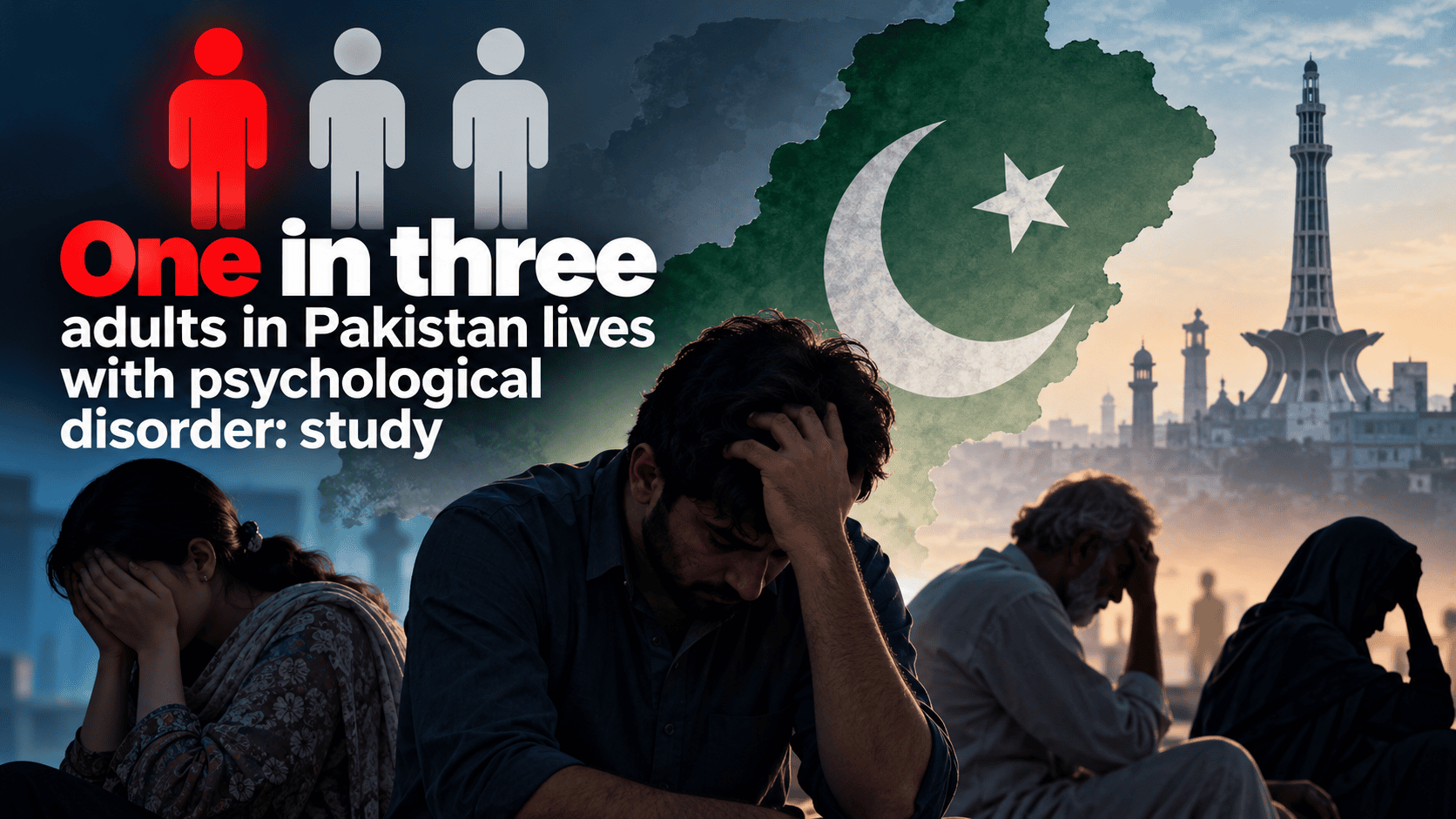
ISLAMABAD (Web Desk) — Nearly one in three adults in Pakistan is living with a diagnosable mental or behavioural disorder, while more than one-third have experienced such conditions at some point in their lives, according to a landmark national study highlighting the scale of the country’s mental health crisis.
The research, based on a survey of nearly 18,000 adults conducted between 2018 and 2022, provides the first nationally representative assessment of mental health conditions across Pakistan’s four provinces.
Published in the British Medical Journal, the five-year study was led by Professor Raza-ur-Rahman of Hamdard University in Karachi, in collaboration with Brighton and Sussex Medical School in the United Kingdom, the University of South Florida in the United States and psychiatric institutions across Pakistan.
Researchers associated with the Pakistan Psychiatric Society described the findings as a significant step towards understanding the country’s mental health needs and improving access to treatment.
Depression and trauma emerge as major concerns
The survey found that 32% of adults were experiencing mental and behavioural disorders at the time of assessment, while 38% reported having experienced a disorder during their lifetime.
Post-traumatic stress disorder (PTSD) emerged as a major concern, with approximately one in five adults meeting the criteria for the condition. More than 10% of respondents met the criteria for depression, while 6% reported suicidal thoughts during the month preceding the survey.
The findings underline the need for accessible mental health services, early diagnosis and effective treatment options across the country.
Mental health conditions can affect multiple aspects of daily life, including family relationships, social interactions and employment. According to the researchers, the survey identified substantial difficulties in these areas among people experiencing psychological disorders.
Vulnerable groups face greater risks
The research also highlighted differences in mental health outcomes across social and economic groups.
Older adults, people with limited education or lower incomes, unemployed individuals and those who were widowed, divorced or separated were found to experience higher rates of mental health disorders.
These findings point to the importance of addressing social and economic disadvantages alongside the provision of mental healthcare.
Financial insecurity, unemployment and social isolation can create additional challenges for people already experiencing psychological distress. The researchers’ findings provide a basis for identifying populations that may require more targeted support.
Researchers call for evidence-based policies
Lead investigator Professor Raza-ur-Rahman said the study offers an important foundation for developing mental health policies and services suited to Pakistan’s needs.
The research team used internationally recognised assessment tools, while the Pakistan Bureau of Statistics helped identify survey areas and determine the sample size.
The national scope of the research provides policymakers and healthcare professionals with evidence to assess the burden of mental illness, identify underserved populations and plan interventions more effectively.
Professor Anjum Memon, chair in epidemiology and public health medicine at Brighton and Sussex Medical School and a senior co-author, described the research as a major advance in understanding mental health conditions in Pakistan.
He noted that the availability of nationally representative evidence could help replace reliance on fragmented local research and international estimates when planning mental health services.
The findings may also offer useful insights for other low- and middle-income countries facing similar challenges in delivering psychological and psychiatric care.
Shortage of mental health services remains a challenge
Despite the scale of the problem, Pakistan faces considerable obstacles in providing adequate mental healthcare.
President of the Pakistan Psychiatric Society Professor Wajid Akhundzada highlighted the need to strengthen services, train healthcare professionals and expand community-based support.
Specialist facilities and trained mental health workers remain insufficient to meet the needs of a population of more than 240 million people. Limited access to care and the stigma associated with mental illness can also discourage individuals from seeking professional assistance.
Researchers have recommended integrating mental health services into primary healthcare facilities so that people can access initial assessment and support closer to their homes.
Other priorities include greater investment in community-based programmes, enhanced training for frontline healthcare workers and sustained public awareness campaigns to challenge misconceptions about mental illness.
Mental health needs greater policy attention
The findings establish mental health as an important public health and economic development issue requiring a coordinated national response.
Integrating psychological support into routine healthcare could help improve early identification, facilitate referrals and reduce the burden on specialist facilities.
Expanding access to affordable treatment, particularly for disadvantaged communities, would also be essential to addressing inequalities highlighted by the research.
The study provides a national evidence base for future planning, but translating its findings into meaningful improvements will require sustained investment, trained personnel and effective implementation of mental health policies.
As Pakistan confronts the scale of psychological disorders identified in the survey, researchers say improved access to care and efforts to reduce stigma will be central to meeting the country’s mental health needs.