


By Our Correspondent
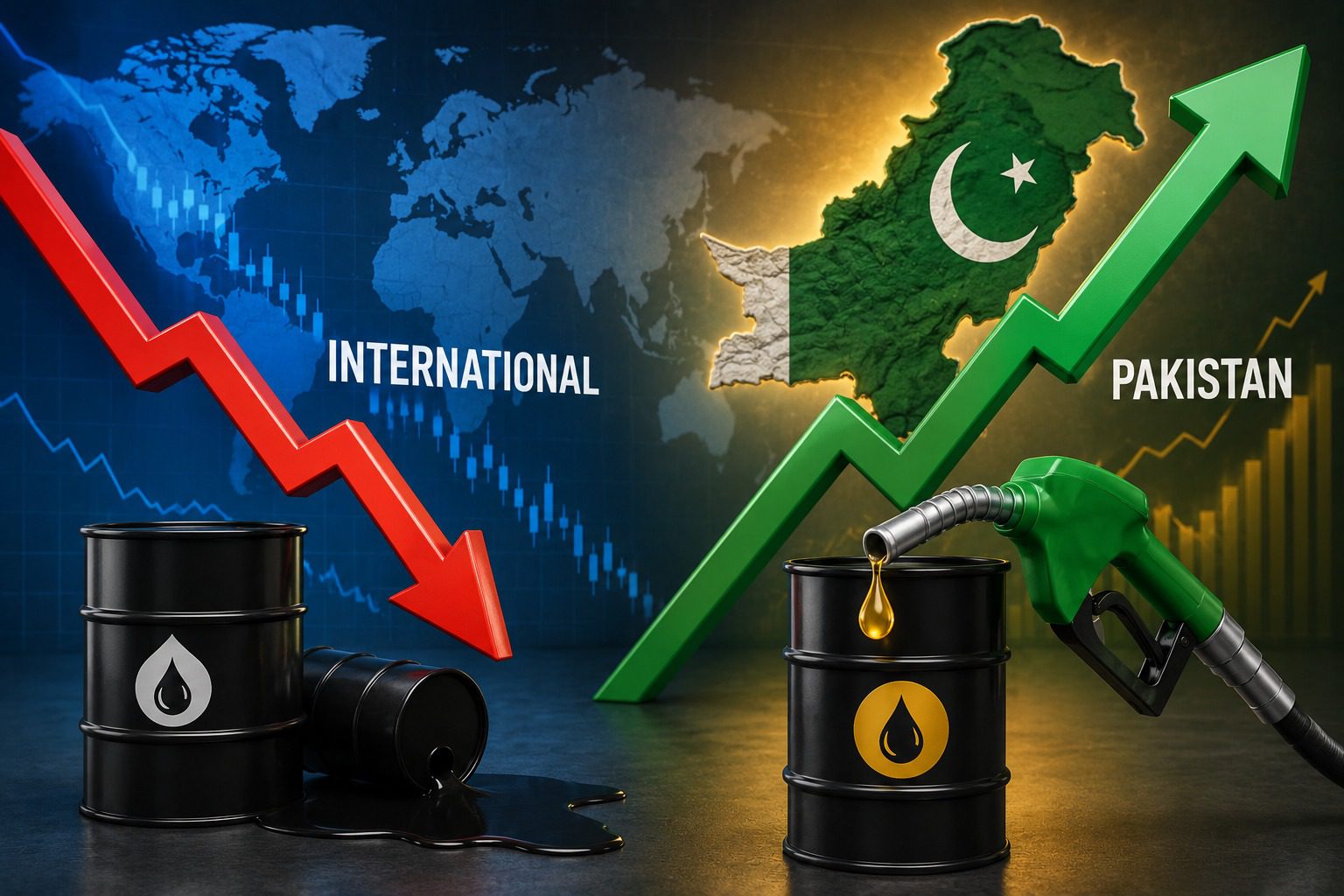
ISLAMABAD: The federal government has increased the prices of petrol and high-speed diesel for the next fortnight despite a significant decline in crude oil prices in international markets, drawing attention to the difference between global oil trends and Pakistan’s domestic fuel pricing mechanism.
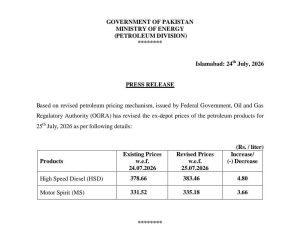
According to a notification issued by the Ministry of Energy (Petroleum Division), on the recommendations of the Oil and Gas Regulatory Authority (OGRA), the price of petrol (Motor Spirit) has been increased by Rs3.66 per litre, raising it from Rs331.52 to Rs335.18 per litre. The price of high-speed diesel (HSD) has been increased by Rs4.80 per litre, from Rs378.66 to Rs383.46 per litre.
The revised prices will come into effect from July 25, 2026, and remain applicable until the next fortnightly review.
The increase comes even as global crude oil prices have declined sharply. In international markets, US West Texas Intermediate (WTI) crude fell around 3% to $89.40 per barrel, while Brent crude also dropped 3% to $97.40 per barrel. Murban crude, a key benchmark for Gulf producers, recorded an even steeper decline of nearly 10%, falling to $97 per barrel.
Although international crude prices have softened, Pakistan’s petroleum prices are determined under a fortnightly pricing formula that takes into account multiple factors, including international refined petroleum product prices, exchange rate fluctuations, import premiums, freight costs, taxes and petroleum levies.
The latest increase is expected to put additional pressure on consumers already grappling with inflation. Higher fuel prices typically increase transportation and logistics costs, which can eventually push up the prices of food items and other essential commodities.
The increase in diesel prices is particularly significant for Pakistan’s economy, as high-speed diesel is widely used by heavy transport vehicles, public transport, the agricultural sector and industrial machinery. Any rise in diesel prices generally raises freight charges and production costs.
Petrol, meanwhile, is mainly consumed by motorcycles, cars and other light vehicles, directly affecting millions of commuters across the country.
Economists say the contrasting trend of declining global crude prices and rising domestic fuel prices may continue unless international refined fuel prices and other components of Pakistan’s pricing mechanism also decline substantially during the next review period.

