
• Latest
  • Trending
  • All
  • Pakistan
  • Business
  • World
  • Epaper
  • Opinion
  • Interview
  • Entertainment
  • News Analysis
  • Sports
  • FBR & Customs
  • Health
  • NGOs
  • Crime
Energy crisis and temporary measures: Where Pakistan stands and how long can it sustain 

Transport shutdown in twin cities: Security imperatives vs public suffering

Pakistan armed forces renew defence pledge on Marka-e-Haq anniversary

Pakistan armed forces renew defence pledge on Marka-e-Haq anniversary

ADVERTISEMENT
Rajab Butt’s Lahore triumphs over Man Dogar in drenched ICL clash

Rajab Butt’s Lahore triumphs over Man Dogar in drenched ICL clash

PM, president condemn Bannu suicide attack that killed 15 police personnel

PM, president condemn Bannu suicide attack that killed 15 police personnel

Kerala Blasters dominate Mohammedan Sporting to keep unbeaten streak alive

Kerala Blasters dominate Mohammedan Sporting to keep unbeaten streak alive

SPSC candidates protest results, allege irregularities and demand probe

SPSC candidates protest results, allege irregularities and demand probe

Suriya and Trisha set stage for legal revolution in new karuppu trailer

Suriya and Trisha set stage for legal revolution in new karuppu trailer

Shilpa Shetty kundra to celebrate motherhood and gen z spark in new comedy cooking series ‘maa hai na’

Shilpa Shetty kundra to celebrate motherhood and gen z spark in new comedy cooking series ‘maa hai na’

Iran sends response to US peace proposal via Pakistan, Islamabad’s mediation gains prominence

Iran sends response to US peace proposal via Pakistan, Islamabad’s mediation gains prominence

Akshaye Khanna’s powerful   stand against set discrimination

Akshaye Khanna’s powerful stand against set discrimination

Actor Vijay sworn in as Tamil Nadu chief minister, offers 200 units of free electricity

Actor Vijay sworn in as Tamil Nadu chief minister, offers 200 units of free electricity

Chinese investment accelerates development of Challenge Special Economic Zone in Lahore

Chinese investment accelerates development of Challenge Special Economic Zone in Lahore

Seven Eid-ul-Azha holidays in B’desh announced

Seven Eid-ul-Azha holidays in B’desh announced

Business leaders urge Ahsan Iqbal to cut energy costs, ease taxes and remove barriers to boost exports

Business leaders urge Ahsan Iqbal to cut energy costs, ease taxes and remove barriers to boost exports

The day a cricket match turned into a pursuit of Rajab Butt

The day a cricket match turned into a pursuit of Rajab Butt

Bollywood action queen Disha Patani scales new heights with Hollywood debut in supernatural epic

Bollywood action queen Disha Patani scales new heights with Hollywood debut in supernatural epic

Sara Ali Khan and Rakul Preet Singh dismantle myth female feud

Sara Ali Khan and Rakul Preet Singh dismantle myth female feud

Sonam Kapoor unveils meaningful name of her second son

Sonam Kapoor unveils meaningful name of her second son

Lahore Super Market Association leader slams  FIRs and businesses sealings, urges business-friendly reforms

Lahore Super Market Association leader slams  FIRs and businesses sealings, urges business-friendly reforms

LCCI president condemens BISP, calls for SME-focused funding

LCCI president condemens BISP, calls for SME-focused funding

Punjab Assembly hosts 3rd Punjab Inclusive Governance Summit 2026

Punjab Assembly hosts 3rd Punjab Inclusive Governance Summit 2026

Kriti Sanon shares her experience working with Rashmika Mandanna in Cocktail 2

Kriti Sanon shares her experience working with Rashmika Mandanna in Cocktail 2

Sanjay Dutt challenges history in explosive new trailer for political thriller Aakhri Sawal

Sanjay Dutt challenges history in explosive new trailer for political thriller Aakhri Sawal

IMF approves $1.2 billion tranche for Pakistan, signals confidence in reform progress

IMF approves $1.2 billion tranche for Pakistan, signals confidence in reform progress

Afridi scripts history with 100th WTC wicket in Bangladesh Test

Afridi scripts history with 100th WTC wicket in Bangladesh Test

KKR choose to chase as playoff race intensifies against Delhi capitals

KKR choose to chase as playoff race intensifies against Delhi capitals

Gulf tensions erupt as UAE repels Iranian missiles and US strikes in Strait of Hormuz

Gulf tensions erupt as UAE repels Iranian missiles and US strikes in Strait of Hormuz

Shanto century puts Bangladesh in command against Pakistan on opening day

Shanto century puts Bangladesh in command against Pakistan on opening day

Eu regulators extend deadline for google in digital markets act probe

Eu regulators extend deadline for google in digital markets act probe

Speakers demand early LG elections in Punjab

Speakers demand early LG elections in Punjab

  • Login
Monday, May 11, 2026
The Tribune International
  • Home
  • Top News
  • World
    • Iran-US-Israel war
  • Pakistan
    • Politics
    • Crime
    • Interview
  • Epaper
  • Entertainment
    • Health
  • Opinion
    • News Analysis
  • Sports
    • Cricket
  • Business
    • Business
      • FBR & Customs
        • Tech
  • History in focus
    • Event News
    • Event Reporting
    • NGOs
      • Weird
        • Blog
          • Fake News
      • #24159 (no title)
No Result
View All Result
  • Home
  • Top News
  • World
    • Iran-US-Israel war
  • Pakistan
    • Politics
    • Crime
    • Interview
  • Epaper
  • Entertainment
    • Health
  • Opinion
    • News Analysis
  • Sports
    • Cricket
  • Business
    • Business
      • FBR & Customs
        • Tech
  • History in focus
    • Event News
    • Event Reporting
    • NGOs
      • Weird
        • Blog
          • Fake News
      • #24159 (no title)
The Tribune International
No Result
View All Result
The Tribune International
No Result
View All Result
  • Home
  • Top News
  • World
  • Pakistan
  • Epaper
  • Entertainment
  • Opinion
  • Sports
  • Business
  • History in focus

Transport shutdown in twin cities: Security imperatives vs public suffering

Transport shutdown in Islamabad–Rawalpindi during US-Iran talks highlights imbalance between security and public welfare, disrupting mobility, economy, and daily life for thousands of citizens.

April 19, 2026 6:12 am
in Opinion
Energy crisis and temporary measures: Where Pakistan stands and how long can it sustain 
Share on FacebookShare on Twitter

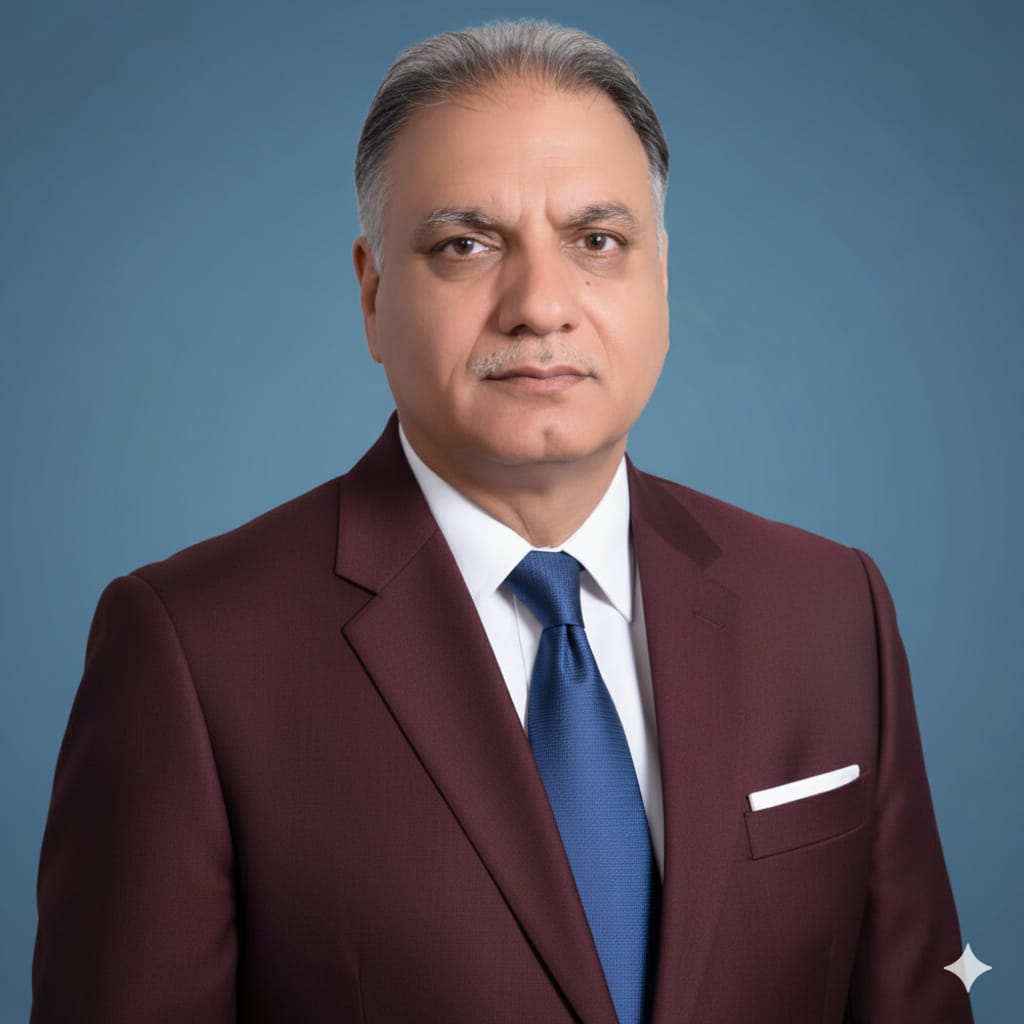
Dr. Alamdar Hussain Malik

The federal capital of Islamabad and its twin city Rawalpindi have once again been thrust into the center of sensitive geopolitical activity and intense security arrangements. Reports of an anticipated second round of high-level negotiations between United States and Iran have triggered an immediate and far-reaching security response from Pakistani authorities. In preparation for this highly sensitive diplomatic engagement, a complete shutdown of public transport systems, including major bus terminals, intercity routes, and feeder services, has been imposed from April 16 to April 26.

Read also: Fuel price jugglery: A policy that humiliates the nation

This ten-day suspension has effectively disrupted the daily movement of hundreds of thousands of citizens who depend on the twin cities’ integrated transport network for survival, employment, education, healthcare access, and essential economic activity. What makes this situation particularly significant is not only the scale of restriction but the depth of dependency that exists between the two cities, where even minor disruptions in mobility tend to produce immediate and widespread social and economic consequences.

To understand the full gravity of this decision, it is essential to recognize that the Islamabad–Rawalpindi urban corridor functions as a single, interdependent metropolitan ecosystem rather than two separate cities. Islamabad, as the administrative and diplomatic hub, relies heavily on the surrounding workforce that resides in Rawalpindi and adjoining regions. Every day, large numbers of government employees, private-sector workers, university students, healthcare patients, small traders, and daily-wage laborers commute across this corridor using public transport as their primary and often only affordable means of mobility. Critical transport hubs such as Faizabad and Pirwadhai are not merely logistical points; they function as the backbone of the region’s socio-economic circulation. When such a system is suspended—even temporarily—the impact is not confined to transportation alone but spreads rapidly into labor markets, educational institutions, healthcare access, and household economies. In this context, a ten-day shutdown is not a routine administrative measure; it is a structural interruption in the functioning of urban life itself.


The broader geopolitical backdrop further complicates the situation. Pakistan’s role as a facilitator or host for sensitive diplomatic engagements places it in a delicate position. The tensions between the United States and Iran are rooted in decades of strategic rivalry, mistrust, and intermittent confrontation. Hosting such negotiations is, in itself, a diplomatic opportunity for Pakistan—one that can enhance its international standing and underscore its relevance in regional peace-building. However, this opportunity comes with significant security responsibilities, particularly in a context where security threats remain a persistent concern.


Admittedly, the state’s security calculus cannot be dismissed. Pakistan has endured a long history of security challenges, and even the perception of vulnerability during such high-profile engagements could have far-reaching consequences. In this sense, heightened security is not only justified but essential. Yet, the critical issue lies not in the existence of security measures, but in their design and implementation.

What is most striking—and deeply concerning—is the apparent lack of proportionality. With what seems to be a single administrative stroke, transport between Islamabad and Rawalpindi—a corridor used by hundreds of thousands daily—has been suspended for ten consecutive days. This raises an uncomfortable but necessary question: was there any serious assessment of the human cost of this decision? Public policy, especially in a democratic framework, demands not only effectiveness but also empathy and foresight.


The absence of these elements is glaring.
For the ordinary citizen, the implications are immediate and severe. Consider the student who relies on public buses to attend university, now facing academic disruption or increased financial burden. Consider the daily-wage laborer, whose survival depends on physical presence at work, now deprived of income for days on end. Consider the patient who must travel for routine treatment, now confronted with uncertainty and risk. These are not marginal concerns; they represent the lived reality of a majority.


The economic repercussions are equally profound. Urban economies function on the principle of movement—of people, goods, and services. When mobility is restricted, productivity declines, supply chains are interrupted, and commercial activity contracts. Small businesses, already operating under tight margins, are particularly vulnerable. For many, a ten-day disruption could translate into losses that take months to recover from.


Equally troubling is the policy contradiction embedded in this decision. On one hand, the government has acknowledged the economic strain on citizens through various relief measures in recent months. On the other hand, the abrupt suspension of the same transport infrastructure reflects a lack of continuity in policy thinking. Governance cannot be episodic; it must be coherent and consistent.


Moreover, the absence of viable alternatives underscores a deeper institutional gap. Around the world, cities hosting high-level diplomatic events adopt layered security strategies: restricted zones, timed closures, controlled corridors, and dedicated transport services. These measures ensure that security objectives are met without bringing civilian life to a halt. In contrast, the current approach reflects a binary mindset—either full operation or complete shutdown—with little room for nuance.

This binary approach also has social and psychological consequences. Prolonged disruption breeds frustration, resentment, and a sense of exclusion among citizens. When people feel that their basic needs are secondary to elite priorities, trust in public institutions erodes.

This erosion, though gradual, can have long-term implications for governance, stability, and civic engagement.It is also important to recognize that the burden of such decisions is not evenly distributed. Those with private vehicles, flexible work arrangements, or financial resources can adapt. It is the lower- and middle-income segments—those most dependent on public systems—who bear the brunt. In effect, a policy intended to ensure collective security ends up disproportionately penalizing the most vulnerable.

RelatedPosts

War impact or policy shift? Why fuel is so expensive in Pakistan now

Labour Day: Workers’ rights and our collective responsibility

Cheap water is not cheap

Attempt to hijack PVMC Act 1996: A direct assault on veterinary profession in Pakistan

A flood of degrees, a drought of jobs

The question, therefore, is not whether security should be prioritized—it must be. The real question is whether security can be pursued in a manner that is inclusive, balanced, and humane. Can the state design policies that protect without paralysing, that secure without suffocating? The answer lies in better planning: limited but functional transport services, designated safe corridors, staggered schedules, and clear public communication. These are not extraordinary solutions; they are standard practices in well-governed systems. Pakistan stands at a critical juncture where its aspirations for global relevance must be matched by improvements in domestic governance.

Hosting international negotiations is a mark of diplomatic maturity, but managing their domestic impact is a test of administrative competence. Success in one domain cannot come at the expense of failure in the other.

Security is essential. Diplomacy is important. But the everyday dignity, mobility, and economic survival of citizens are equally fundamental pillars of a functioning state. A government’s legitimacy is not measured solely by its ability to host high-profile negotiations or manage external threats; it is equally defined by how it treats its own people in moments of internal strain. When citizens are forced to bear disproportionate burdens—when a worker cannot reach their job, a student misses critical academic opportunities, or a patient struggles to access healthcare—the question is no longer about policy efficiency, but about moral responsibility.

A truly capable state does not view such hardships as unavoidable collateral damage; rather, it anticipates them, plans for them, and actively works to mitigate them. This requires a shift from reactive governance to proactive and people-centered policymaking—where security strategies are designed not in isolation, but in integration with social and economic realities. The real test of governance, therefore, lies in balance: the ability to protect without paralysing, to secure without alienating, and to lead without losing public trust.

Pakistan today stands at a point where its global diplomatic ambitions must be matched by a parallel commitment to internal governance reform. The success of any international engagement will ultimately be judged not just by what is achieved at the negotiating table, but by how responsibly and humanely the process is managed at home. A state that can harmonize security, diplomacy, and public welfare will not only strengthen its international standing but will also build a resilient social contract with its citizens—one rooted in trust, fairness, and shared responsibility.

SendShareShareTweetShareSendShare

Get real time update about this post categories directly on your device, subscribe now.

Unsubscribe
ADVERTISEMENT

Related Posts

Pakistan records one of largest recent fuel price increases globally, industry sources say
Opinion

War impact or policy shift? Why fuel is so expensive in Pakistan now

Labour Day: Workers’ rights and our collective responsibility
Opinion

Labour Day: Workers’ rights and our collective responsibility

Pakistan’s water crisis is not unique — How others fixed theirs
Opinion

Cheap water is not cheap

Attempt to hijack PVMC Act 1996: A direct assault on veterinary profession in Pakistan
Opinion

Attempt to hijack PVMC Act 1996: A direct assault on veterinary profession in Pakistan

A flood of degrees, a drought of jobs
Opinion

A flood of degrees, a drought of jobs

Energy crisis and temporary measures: Where Pakistan stands and how long can it sustain 
Opinion

Governance gap: Why Pakistan trails despite vast resources

May 2026
MTWTFSS
 123
45678910
11121314151617
18192021222324
25262728293031
« Apr    

History

Categories

Browse by Category

  • Business
  • Business
  • Cricket
  • Crime
  • Entertainment
  • Epaper
  • Event News
  • Event Reporting
  • Fake News
  • FBR & Customs
  • Health
  • History in focus
  • Interview
  • Iran-US-Israel war
  • Letter to Editor
  • Mobile
  • News Analysis
  • NGOs
  • Opinion
  • Pakistan
  • Politics
  • Sports
  • Tech
  • Top News
  • Weird
  • Word of the day
  • World
  • About Us
  • Blog
  • Blog
  • Checkout
  • Contact Us
  • Disclaimer
  • My account
  • Privacy Policy
  • Terms and Conditions
  • 📰 Advertise With Us

© 2026 The Tribune International. All rights reserved. | Powered by JNews
Disclaimer: The Tribune International is an independent platform and is not affiliated with any other organisation.
Reach us: Thetribuneintl@gmail.com

Welcome Back!

Sign In with Facebook
Sign In with Google
Sign In with Linked In
OR

Login to your account below

Forgotten Password?

Retrieve your password

Please enter your username or email address to reset your password.

Log In
Translate »

Add New Playlist

No Result
View All Result
  • Home
  • Top News
  • World
    • Iran-US-Israel war
  • Pakistan
    • Politics
    • Crime
    • Interview
  • Epaper
  • Entertainment
    • Health
  • Opinion
    • News Analysis
  • Sports
    • Cricket
  • Business
    • Business
      • FBR & Customs
  • History in focus
    • Event News
    • Event Reporting
    • NGOs
      • Weird
      • #24159 (no title)

© 2026 The Tribune International. All rights reserved. | Powered by JNews
Disclaimer: The Tribune International is an independent platform and is not affiliated with any other organisation.
Reach us: Thetribuneintl@gmail.com

This website uses cookies. By continuing to use this website you are giving consent to cookies being used. Visit our Privacy and Cookie Policy.