
• Latest
  • Trending
  • All
  • Pakistan
  • Business
  • World
  • Epaper
  • Opinion
  • Interview
  • Entertainment
  • News Analysis
  • Sports
  • FBR & Customs
  • Health
  • NGOs
  • Crime
How to buy a healthy sacrificial animal without overspending this Eidul Azha?

Empty cattle markets before Eid — A warning bell for Pakistan’s Livestock Sector

Budget 2026-27 and the common citizen: Relief or rising economic hardship?

Budget 2026-27 and the common citizen: Relief or rising economic hardship?

ADVERTISEMENT
Google links Oracle PeopleSoft cyberattacks to ShinyHunters hacking group

Google links Oracle PeopleSoft cyberattacks to ShinyHunters hacking group

Punjab to end free travel on metro and public transport services from June 13

Punjab to end free travel on metro and public transport services from June 13

Budget FY 2026-27: Minimum wage set to reach PKR 40,700 after proposed 10pc increase

Budget FY 2026-27: Minimum wage set to reach PKR 40,700 after proposed 10pc increase

Emmad Irfani calls Fahad Mustafa Pakistan’s biggest superstar

Emmad Irfani calls Fahad Mustafa Pakistan’s biggest superstar

Sindh government likely to unveil 2026-27 budget next week

Sindh government likely to unveil 2026-27 budget next week

Pakistan unveils 2026-27 budget as 8-trillion debt squeeze meets big tax cuts for workers and tech

Pakistan unveils 2026-27 budget as 8-trillion debt squeeze meets big tax cuts for workers and tech

Pakistan proposes income tax relief for salaried employees in federal budget

Pakistan proposes income tax relief for salaried employees in federal budget

Federal cabinet approves 7pc raise in salaries and pensions for government employees

Federal cabinet approves 7pc raise in salaries and pensions for government employees

World Cup 2026: South Korea mounts thrilling comeback to defeat Czechia 2-1 in Guadalajara opener

World Cup 2026: South Korea mounts thrilling comeback to defeat Czechia 2-1 in Guadalajara opener

Uraan Pakistan: A closer look at the country’s economic direction

Agricultural nation or agricultural decline? Pakistan’s cotton sector at a crossroads

Mexico defeat South Africa 2–0 in World Cup opener at Azteca Stadium

Mexico defeat South Africa 2–0 in World Cup opener at Azteca Stadium

Poverty rate in Pakistan rises to 28.9pc, Economic Survey reveals

Poverty rate in Pakistan rises to 28.9pc, Economic Survey reveals

Taylor Swift joins celebrity crowd as Knicks stage historic NBA Finals comeback

Taylor Swift joins celebrity crowd as Knicks stage historic NBA Finals comeback

Opening of $4.7 billion Detroit-Windsor bridge delayed amid unresolved issues

Opening of $4.7 billion Detroit-Windsor bridge delayed amid unresolved issues

Economic Survey reveals persistent infrastructure gaps in public schools

Economic Survey reveals persistent infrastructure gaps in public schools

Gold prices tumble as local market records sharp decline

Gold prices tumble as local market records sharp decline

Interview: Single-digit Sales Tax can transform economy, says Lahore Tax Bar President

Interview: Single-digit Sales Tax can transform economy, says Lahore Tax Bar President

Belfast riots leave 12 policemen injured, dozens arrested amid second night of unrest

Belfast riots leave 12 policemen injured, dozens arrested amid second night of unrest

Economic Survey 2025–26 indicates rising poverty, unemployment and debt despite modest growth

Economic Survey 2025–26 indicates rising poverty, unemployment and debt despite modest growth

US and Iran exchange strikes for second day as Middle East tensions escalate across Gulf region

US and Iran exchange strikes for second day as Middle East tensions escalate across Gulf region

Founders Group holds key meeting in Garden Town, announces new membership drive

Founders Group holds key meeting in Garden Town, announces new membership drive

Traders’ reception held in honour of Pioneer Businessmen Group leadership in Lahore

Traders’ reception held in honour of Pioneer Businessmen Group leadership in Lahore

Pakistan can learn from Bangladesh’s $500 billion economy milestone: A constructive economic perspective

Pakistan can learn from Bangladesh’s $500 billion economy milestone: A constructive economic perspective

Pakistan economy grows 3.7pc aginst revised target of 4.2pc in FY2026: economic survey

Pakistan economy grows 3.7pc aginst revised target of 4.2pc in FY2026: economic survey

22 soldiers laid to rest after Pakistan army helicopter crash in Muzaffarabad

22 soldiers laid to rest after Pakistan army helicopter crash in Muzaffarabad

Bollywood’s item songs face renewed scrutiny as audiences question portrayal of women

Bollywood’s item songs face renewed scrutiny as audiences question portrayal of women

Government likely to maintain tax rates on solar panels, stationery and stock market

Government likely to maintain tax rates on solar panels, stationery and stock market

Karachi swelters as heat index hits 54°C, relief expected after Friday

Karachi swelters as heat index hits 54°C, relief expected after Friday

The Tribune International
Saturday, June 13, 2026
  • Login
  • Home
  • Latest
  • Top News
  • Pakistan
    • Local News
    • Crime
    • Interview
    • Politics
    • Health
  • Business
    • Business
    • FBR & Customs
    • Tech
  • World
    • Iran-US-Israel war
  • Epaper
  • Entertainment
    • History in focus
      • NGOs
      • Weird
      • Word of the day
  • Opinion
    • Letter to Editor
    • News Analysis
  • Sports
    • Cricket
  • Advertise
No Result
View All Result
  • Home
  • Latest
  • Top News
  • Pakistan
    • Local News
    • Crime
    • Interview
    • Politics
    • Health
  • Business
    • Business
    • FBR & Customs
    • Tech
  • World
    • Iran-US-Israel war
  • Epaper
  • Entertainment
    • History in focus
      • NGOs
      • Weird
      • Word of the day
  • Opinion
    • Letter to Editor
    • News Analysis
  • Sports
    • Cricket
  • Advertise
The Tribune International
No Result
View All Result
The Tribune International
No Result
View All Result
  • Home
  • Latest
  • Top News
  • Pakistan
  • Business
  • World
  • Epaper
  • Entertainment
  • Opinion
  • Sports
  • Advertise
Home Opinion

Empty cattle markets before Eid — A warning bell for Pakistan’s Livestock Sector

The time for speeches and temporary measures has passed. What Pakistan urgently needs now is a serious national livestock policy, practical reforms, institutional accountability, and sincere commitment before this silent crisis turns into an irreversible disaster.

May 29, 2026
in Opinion
How to buy a healthy sacrificial animal without overspending this Eidul Azha?
Share on FacebookShare on Twitter

Dr Alamdar Hussain Malik 

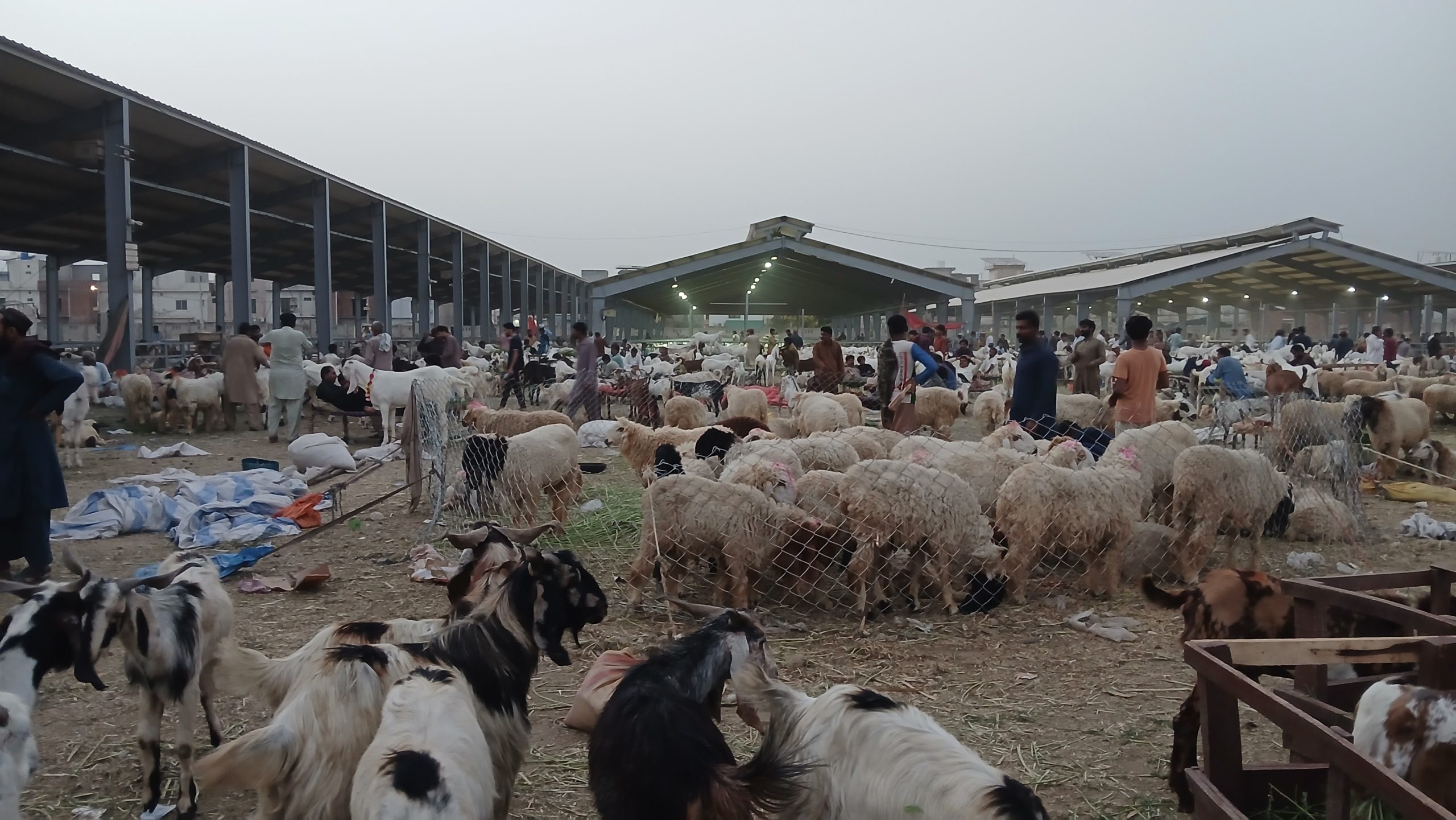
The unusual, alarming, and deeply concerning emptiness of cattle markets across Pakistan just two days before Eid-ul-Adha has created severe anxiety not only among the public but also among circles associated with the livestock sector. Every year, several days before Eid-ul-Adha, cattle markets used to present a vibrant scene of religious, cultural, and economic activity, filled with buyers, children’s excitement, traders’ voices, and sacrificial animals. This year, however, the situation is entirely different. Cattle markets established in different cities of the country appear deserted to an unprecedented extent. Citizens are searching for sacrificial animals, yet the required number of animals is simply not available. This situation is not merely a sign of temporary shortage or economic pressure; rather, it has become a frightening reflection of the silent destruction of Pakistan’s livestock sector, governmental negligence, and an approaching large-scale food crisis.

When viewed in the context of “Empty Cattle Markets Before Eid — Shakir Umar Gujjar Expresses Grave Concern Over the Devastating Crisis in the Livestock Sector,” it becomes evident that this crisis is not seasonal or temporary but points toward a deep structural problem. This situation also proves that the country’s livestock supply chain, breeding system, and policy regulations have been severely damaged. Along with declining animal production at the rural level, the increasing costs of feed, medicines, electricity, transportation, and animal care have weakened small farmers to such an extent that they are unable to maintain even their basic livestock. Consequently, the supply of animals in markets is rapidly decreasing compared to demand, directly affecting the availability of sacrificial animals.

Shakir Umar Gujjar, President of the Pakistan Dairy and Cattle Farmers Association Karachi, described the situation as extremely frightening and stated that the number of livestock animals in the country is declining at a dangerous rate, while the relevant institutions continue to remain silent. According to him, this crisis did not emerge overnight; rather, it is the result of years of flawed policies, governmental negligence, ineffective regulation, and continuous neglect of the livestock sector.

Shakir Umar Gujjar further expressed deep concern that the highly important position of the Animal Husbandry Commissioner at the federal level has remained vacant for almost the last 18 months. He stated that despite the seriousness of challenges faced by Pakistan’s livestock sector, no permanent Animal Husbandry Commissioner has yet been appointed, which clearly reflects the lack of seriousness toward this critical sector.

According to him, the prolonged vacancy of such a key position is badly affecting livestock planning, coordination, policymaking, and development across the country, particularly at the federal level where strategic decisions and national livestock initiatives require effective leadership and continuity. He warned that in the absence of strong and permanent institutional leadership, the country’s livestock sector is gradually moving toward further decline and administrative paralysis.

RelatedPosts

Uraan Pakistan: A closer look at the country’s economic direction

Agricultural nation or agricultural decline? Pakistan’s cotton sector at a crossroads

Pakistan can learn from Bangladesh’s $500 billion economy milestone: A constructive economic perspective

Pakistan can learn from Bangladesh’s $500 billion economy milestone: A constructive economic perspective

Repeated budget patterns highlight worsening tax and revenue challenges

Repeated budget patterns highlight worsening tax and revenue challenges

Sui gas shortage in Pakistan: A growing challenge for citizens

Sui gas shortage in Pakistan: A growing challenge for citizens

Shakir Umar Gujjar revealed that according to available records, nearly 10 million animals used to be sacrificed during Eid-ul-Adha in previous years, but this number has now dropped to approximately 6 million. According to him, this decline is not solely due to economic pressure but is primarily the result of a dangerous reduction in the availability of animals in the country. He stated that the required number of animals for sacrifice is no longer available, and the major reason behind this crisis is the poor and ineffective policies of all four provincial livestock departments and the Office of the Animal Husbandry Commissioner, which are directly contributing to the worsening situation.

According to Shakir Umar Gujjar, the indiscriminate slaughtering of Day Old Calves is continuing in the country, while female dry animals, heifers, milk-producing cows, buffaloes, and other dairy animals are also being slaughtered continuously.

He emphasized that these were the very animals that were supposed to become the foundation of future milk production, meat supply, and sacrificial animals, but today they are being destroyed due to economic pressure and flawed policies.

He questioned that if heifers continue to be slaughtered, where will the future milk-producing cows come from? If female buffaloes disappear, how will the livestock sector survive and progress? And if dairy animals continue to be slaughtered at the current pace, who will provide milk to the public in the coming years? According to him, if this situation persists, Pakistan may eventually be forced to import milk, meat, and even sacrificial animals in the future — a deeply alarming prospect for an agricultural country.

Shakir Umar Gujjar further warned that Punjab alone accounts for nearly 70 percent of Pakistan’s total livestock population.

Therefore, Chief Minister Punjab, Maryam Nawaz Sharif, should immediately take notice of this sensitive and dangerous situation and initiate emergency practical measures. According to him, if Punjab ignores this crisis, its effects will not remain limited to one province but will severely impact the entire country’s food security, rural economy, and milk and meat supply chain. This situation has now evolved from a provincial issue into a national threat that demands immediate, coordinated, and strict policy decisions.

This situation clearly proves that the government is not giving the livestock sector the importance it deserves, despite the fact that this sector serves as the backbone of Pakistan’s food security, rural economy, and agricultural economy. Millions of families in Pakistan are directly or indirectly dependent on livestock for their livelihood, employment, and daily survival. The weakening of this sector therefore does not only affect farmers but also threatens the country’s broader economic stability and food sustainability.

At present, Shakir Umar Gujjar has emerged as a strong and effective voice for Pakistan’s dairy and livestock sector. At a time when relevant institutions appear silent and policymakers continue to ignore the seriousness of the crisis, he is consistently raising the issues of farmers and the livestock sector at the national level. He is not only speaking for the betterment of the sector at every forum but is also standing at the forefront for the protection of livestock, dairy farming, food security, and farmers’ rights. His continuous struggle, courageous stance, and extraordinary commitment toward the sector are undoubtedly commendable and highly respectable.

The observations and opinions of Shakir Umar Gujjar and other experts are extremely valuable and must be seriously incorporated into policymaking because such ground realities and practical analyses can help determine the correct direction for the future.

Unfortunately, the tragic reality is that policymakers often remain disconnected from field conditions, while those who understand the sector’s real problems are rarely included in meaningful decision-making processes.

Shakir Umar Gujjar has warned that if silence continues even now, future generations will hold policymakers, relevant institutions, and silent spectators responsible for this destruction. In an agricultural country like Pakistan, the weakening of the livestock sector is no longer merely an economic issue; it is rapidly becoming a question of national survival. Today, the empty cattle markets are not simply a sign of shortage of animals; they represent a painful image of governmental failure, policy crisis, and national negligence.

This crisis must serve as a wake-up call for the state, policymakers, and relevant departments. Immediate reforms in breeding policies, strict regulation against the slaughtering of productive female animals and calves, financial relief for farmers, affordable animal feed, veterinary support, and long-term livestock development strategies are urgently required. Without serious intervention, Pakistan risks losing one of the most vital pillars of its agricultural economy.

The situation also reflects the growing disconnect between policymaking and the realities of rural Pakistan. Farmers who once considered livestock their greatest asset are now struggling merely to survive. Rising inflation, increasing production costs, lack of institutional support, and collapsing profit margins have pushed many livestock farmers toward financial ruin. If this neglect continues, not only will the livestock sector collapse further, but rural poverty and unemployment will also intensify across the country.

Today, empty cattle markets are silently telling a painful story — a story of disappearing livestock resources, exhausted farmers, policy failures, and institutional indifference. If immediate corrective measures are not taken, Pakistan may soon become dependent on other countries for milk, meat, and even sacrificial animals. For a country blessed with vast agricultural resources and a strong rural economy, such dependence would be nothing less than a national tragedy.

History will undoubtedly question those responsible if they continue to ignore the warning signs appearing today in Pakistan’s livestock sector. The time for speeches and temporary measures has passed. What Pakistan urgently needs now is a serious national livestock policy, practical reforms, institutional accountability, and sincere commitment before this silent crisis turns into an irreversible disaster.

SendShareShareTweetShareSendShare
ADVERTISEMENT

Related Posts

Uraan Pakistan: A closer look at the country’s economic direction
Opinion

Agricultural nation or agricultural decline? Pakistan’s cotton sector at a crossroads

Pakistan can learn from Bangladesh’s $500 billion economy milestone: A constructive economic perspective
Opinion

Pakistan can learn from Bangladesh’s $500 billion economy milestone: A constructive economic perspective

Repeated budget patterns highlight worsening tax and revenue challenges
Opinion

Repeated budget patterns highlight worsening tax and revenue challenges

Sui gas shortage in Pakistan: A growing challenge for citizens
Opinion

Sui gas shortage in Pakistan: A growing challenge for citizens

World Milk Day and Pakistan’s white tragedy
Opinion

World Milk Day and Pakistan’s white tragedy

Uraan Pakistan: A closer look at the country’s economic direction
Opinion

Pakistan’s $1.6 billion mobile phone imports in first ten months of fiscal year 2025–26 amid economic crisis

History

Newsletter

June 2026
MTWTFSS
1234567
891011121314
15161718192021
22232425262728
2930 
« May    

Browse by Category

  • Business
  • Business
  • Cricket
  • Crime
  • Entertainment
  • Epaper
  • Event News
  • Event Reporting
  • Fake News
  • FBR & Customs
  • Health
  • History in focus
  • Interview
  • Iran-US-Israel war
  • Latest
  • Letter to Editor
  • Mobile
  • News Analysis
  • NGOs
  • Opinion
  • Pakistan
  • Politics
  • Sports
  • Tech
  • Top News
  • Weird
  • Word of the day
  • World
  • About Us
  • Blog
  • Blog
  • Checkout
  • Contact Us
  • Disclaimer
  • My account
  • Privacy Policy
  • Terms and Conditions
  • 📰 Advertise With Us

© 2026 The Tribune International. All rights reserved. | Powered by JNews
Disclaimer: The Tribune International is an independent platform and is not affiliated with any other organisation.
Reach us: Thetribuneintl@gmail.com

Welcome Back!

Sign In with Facebook
Sign In with Google
Sign In with Linked In
OR

Login to your account below

Forgotten Password?

Retrieve your password

Please enter your username or email address to reset your password.

Log In
Translate »

Add New Playlist

No Result
View All Result
  • Home
  • Latest
  • Top News
  • Pakistan
    • Local News
    • Crime
    • Interview
    • Politics
    • Health
  • Business
    • Business
    • FBR & Customs
    • Tech
  • World
    • Iran-US-Israel war
  • Epaper
  • Entertainment
    • History in focus
      • NGOs
      • Weird
      • Word of the day
  • Opinion
    • Letter to Editor
    • News Analysis
  • Sports
    • Cricket
  • Advertise

© 2026 The Tribune International. All rights reserved. | Powered by JNews
Disclaimer: The Tribune International is an independent platform and is not affiliated with any other organisation.
Reach us: Thetribuneintl@gmail.com

This website uses cookies. By continuing to use this website you are giving consent to cookies being used. Visit our Privacy and Cookie Policy.
wpDiscuz
0
0
Would love your thoughts, please comment.x
()
x
| Reply