


By The Tribune Int’l Staff
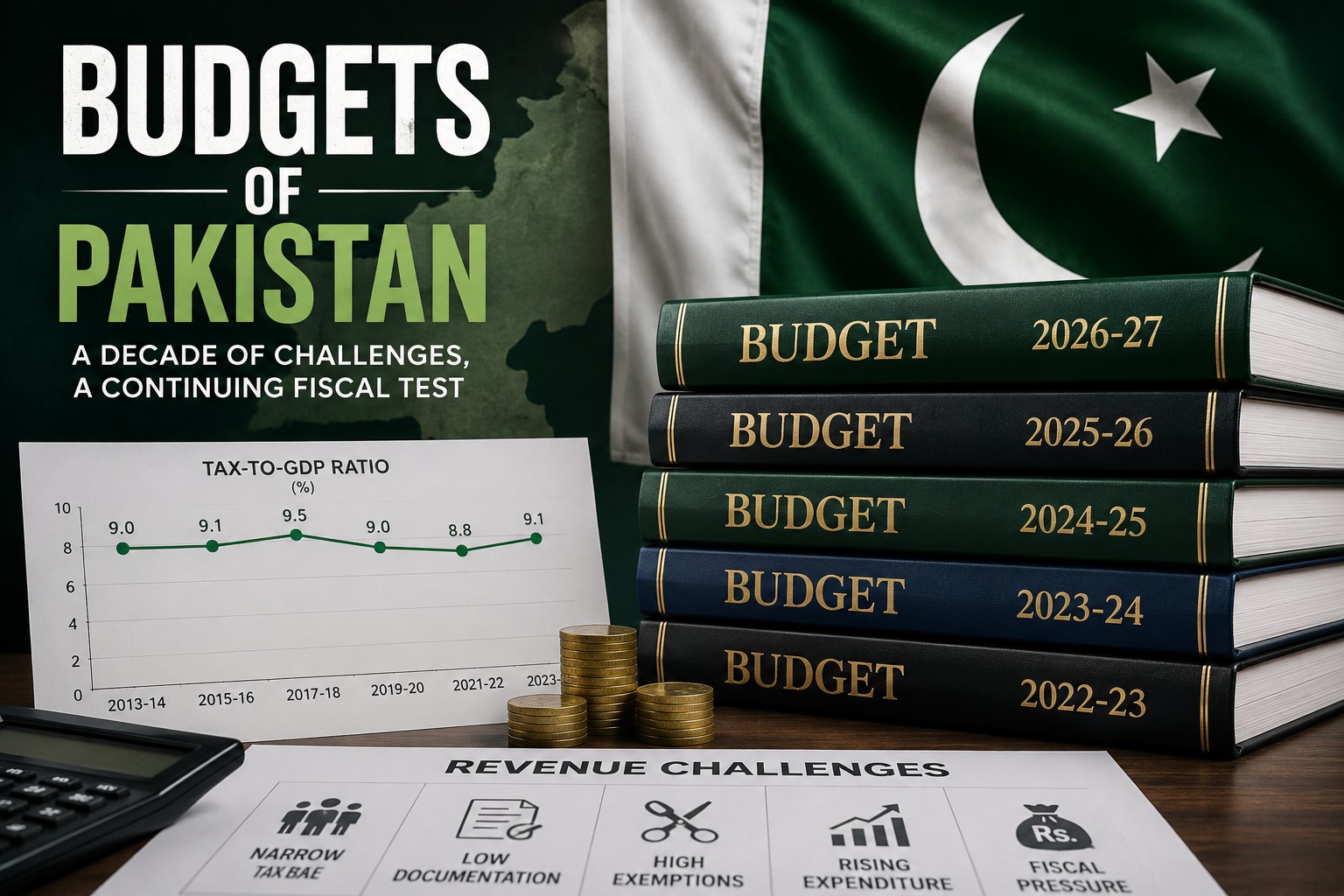
Pakistan’s upcoming federal budget for FY27 is expected to follow a familiar pattern of revenue-focused measures rather than deep structural reform, reflecting a long-standing reliance on short-term fixes instead of comprehensive tax system overhaul. Despite repeated attempts over the past decade to broaden the tax base and document the economy—particularly the rapidly expanding services sector—the country continues to face a widening gap between economic growth and revenue collection. As fiscal pressures intensify and policy options narrow, the government is once again preparing a budget that will be closely watched for its ability to generate incremental revenues amid mounting economic constraints.
Here are 10 points:
1. Pakistan’s budgets have become repetitive – Most budgets over the last decade have followed the same pattern with only minor changes, especially regarding revenue collection measures.
2. Tax reform efforts largely failed years ago – Pakistan abandoned serious tax reform efforts more than a decade ago and has since relied on temporary fixes and short-term measures.
3. Services sector dominates the economy but not tax collection – The services sector now makes up nearly 60% of GDP but contributes less than 40% of government revenues.
4. Tax system struggles to capture services growth– Successive governments failed to modernize taxation to keep pace with the rapidly expanding services economy.
5. VAT was considered the solution but was abandoned – Value Added Tax (VAT) was viewed as a key reform tool to document the economy, but political failures prevented proper implementation.
6. Governments replaced reforms with ‘gimmicks’– Authorities introduced amnesty schemes, withholding taxes, POS systems, database tracking, and retail documentation campaigns instead of structural reforms.
7. These measures produced limited results – Despite multiple initiatives, Pakistan’s tax-to-GDP ratio remained stagnant while fiscal pressures increased.
8. Governments increasingly relied on easy revenue sources – Fuel taxes, electricity charges, withdrawal of exemptions, and money printing became common methods to manage deficits.
9. FY27 budget will be heavily focused on revenue generation – The upcoming budget is expected to prioritize raising additional revenues rather than broader economic reforms.
10. Options for new taxation are becoming limited – With industry under pressure, salaried classes demanding relief, and existing taxes already high, the government has fewer choices for raising revenue, making the upcoming revenue strategy crucial.


