


By Our Correspondent
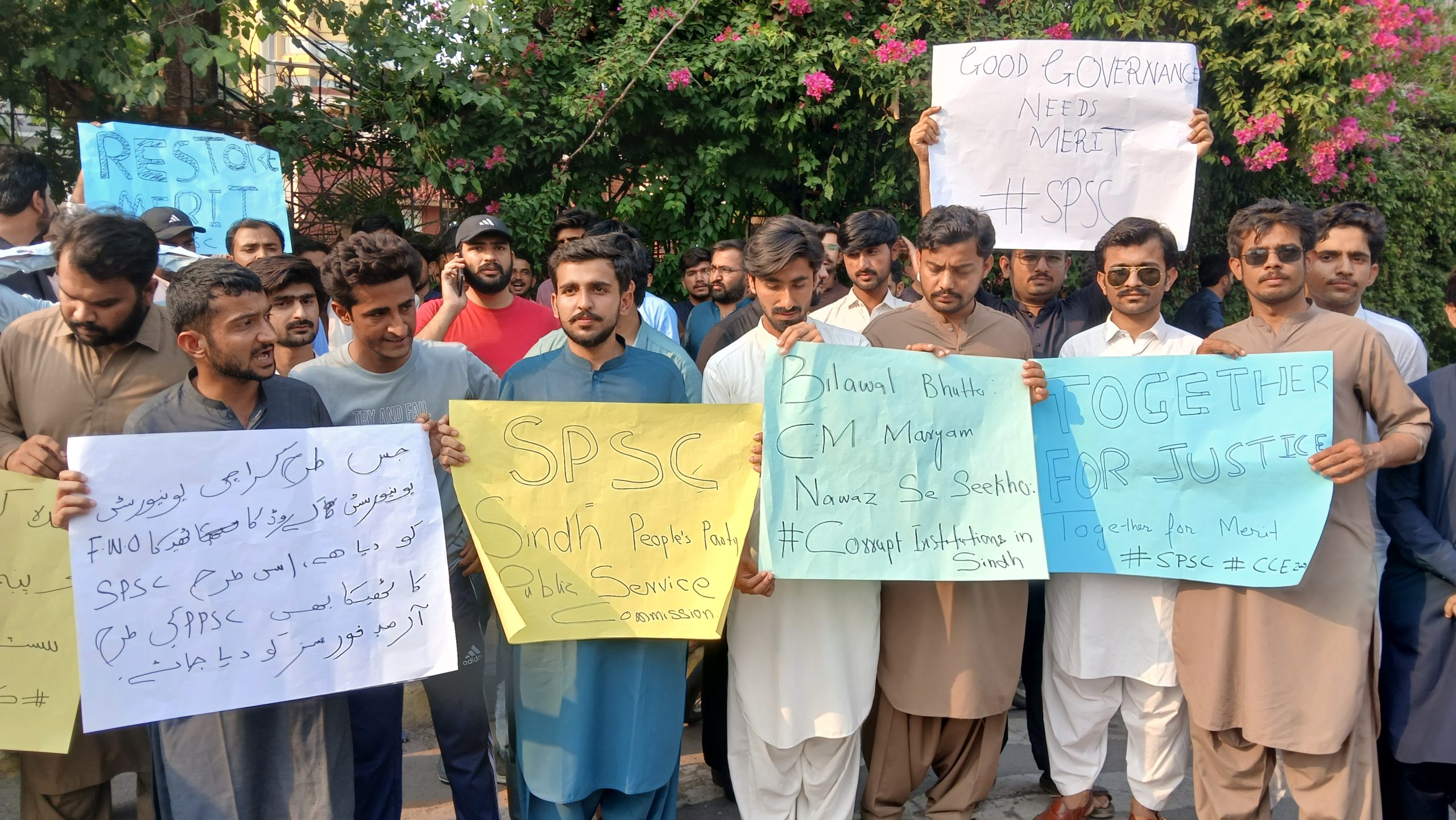
LAHORE: Candidates of CSS and PMS examinations staged protests against the 2024 results announced by the Sindh Public Service Commission, alleging lack of transparency, irregularities, and deviations from merit.
Protesters gathered in LAHORE outside Lahore Press Club, rejecting the results and claiming that the selection process did not meet established standards of fairness.
According to the candidates, around 70 individuals were declared successful out of nearly 6,500 applicants, a ratio they described as unusually low.
The demonstrators alleged that there was no clearly defined or publicly available criterion for evaluation, particularly in the interview stage.
They claimed that merit was not consistently followed and that some candidates with connections or influence may have been favored, though no independent verification of these claims was immediately available.
Some protesters also questioned the evaluation process, describing the results as “AI-like” or lacking human consistency. However, they did not provide technical evidence to support these assertions and called for greater transparency from the commission.
“The system should be transparent and merit-based. We are not against failure, but we demand fairness,” a protesting candidate said.
The candidates demanded that the examinations be reconducted under stricter oversight to ensure impartiality. They also called for an independent audit of the entire process to address their concerns.
In addition, the protesters urged the Federal Investigation Agency to look into the matter and appealed to the Prime Minister and the Chief Justice of Pakistan to take notice and ensure justice.
No official response from the SPSC was available at the time of filing this report while the attempts to contact SPSC officials for comment are ongoing.
Public service commissions play a key role in ensuring merit-based recruitment. Allegations of irregularities, even if unverified, can undermine public confidence in such institutions.
The controversy may lead to protests, legal challenges, and increased scrutiny of recruitment processes in Sindh, potentially affecting future examinations and candidate participation.
Experts suggest that transparency measures, clear evaluation criteria, and independent oversight could help restore trust. The authorities’ response will be crucial in resolving the issue.
Merit and transparency in recruitment remain critical governance issues in Pakistan. Developments in this case may influence broader reforms in public sector hiring practices nationwide.