


TTAP rejects emergency in KP, vows legal challenge and peaceful long march
By Our Correspondent
ISLAMABAD: The Tehreek-i-Tahafuz Ayin-i-Pakistan (TTAP) on Sunday condemned the imposition of governor’s rule and an emergency in Khyber Pakhtunkhwa, describing the measures as unconstitutional and contrary to democratic principles, while announcing plans to challenge them through legal and political forums.
Read also: Federal government imposes emergency, governor’s rule in KP
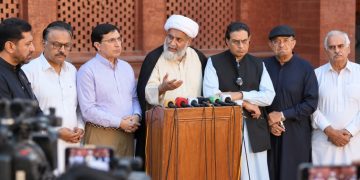
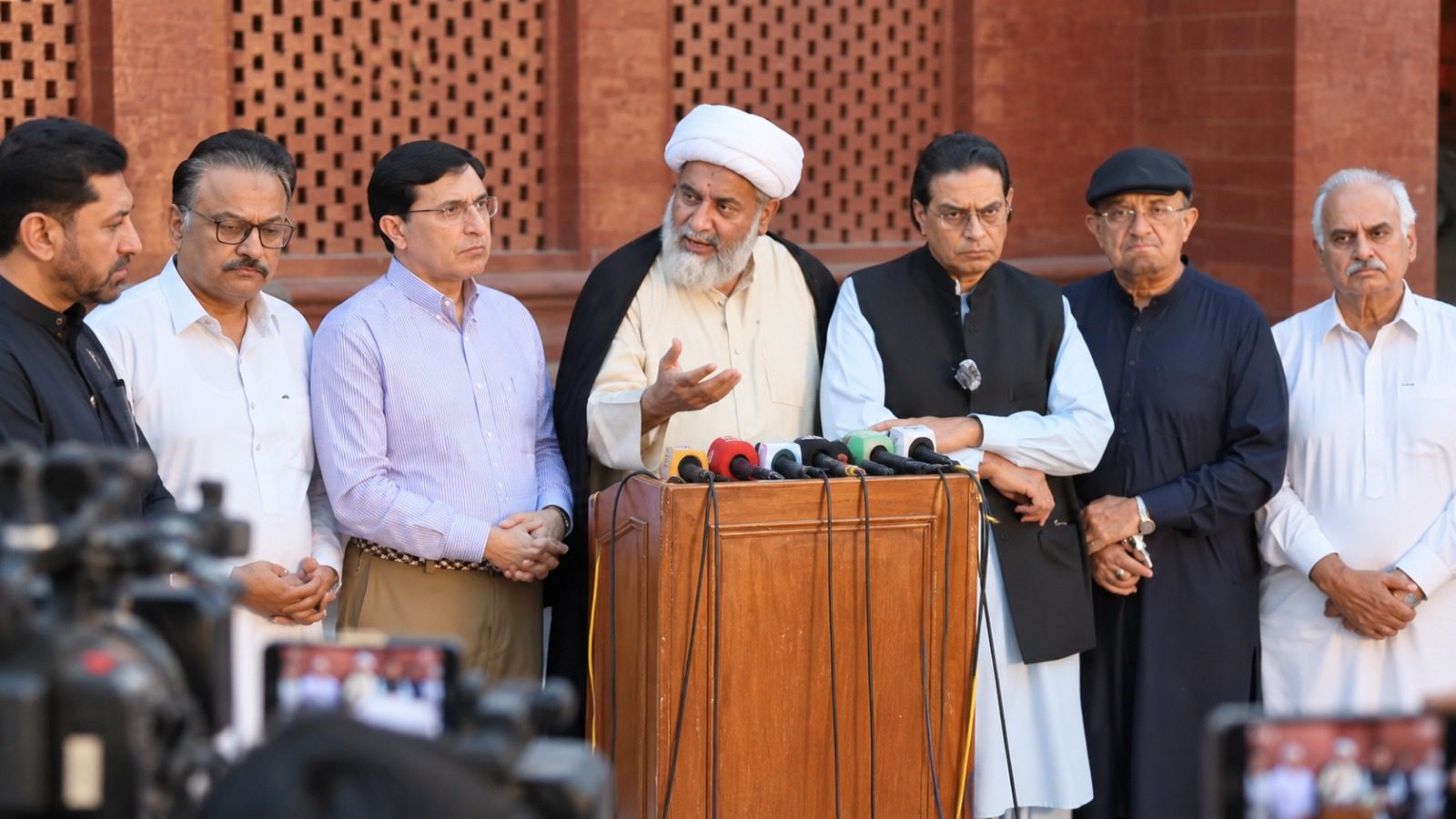
At a press conference, Pakistan Tehreek-i-Insaf (PTI) Chairman Barrister Gohar Ali Khan said the measures would not resolve the province’s security challenges and called for a unified counterterrorism strategy developed through political consensus.
The alliance said its planned long march would proceed as announced, maintaining that peaceful protest was a constitutional right.
Gohar rejected allegations that the PTI-led provincial government had failed to cooperate with the federal government in tackling terrorism. He said the provincial administration remained committed to combating militancy and questioned the decision to impose emergency measures across the province.
“If the problem of terrorism exists in 12 districts, why has governor’s rule been imposed across the province?” he asked.
He said the PTI had consistently condemned terrorism and recognised national security as a priority, but argued that counterterrorism efforts should not be used to justify political action against his party.
The PTI chairman said the party would pursue its opposition to governor’s rule through courts, assemblies and public forums.
PTI seeks relief for Imran Khan, detained workers
Gohar also called for the release of political prisoners and the restoration of the legal rights of PTI founder and former prime minister Imran Khan.
He demanded that Imran be transferred to a hospital for treatment, that his family be allowed to meet him and that they receive information about his health and medical care.
According to Gohar, the party had approached the Supreme Court and high courts 19 times seeking relief for its incarcerated founder.
He said the long march had been announced after the party failed to secure the desired relief through legal channels.
Gohar claimed that around 1,500 PTI workers were imprisoned in Punjab. He also alleged that 10 members of the Khyber Pakhtunkhwa Assembly, including three ministers, and eight members of the National Assembly had been arrested.
These figures were presented by the PTI chairman and were not independently verified in the information available.
Gohar further argued that the provincial government’s authority had been weakened by federal interference, saying that sidelining an elected chief minister was inconsistent with democratic principles.
He maintained that the KP government had strengthened police capacity, provided security resources and participated in counterterrorism meetings.
The PTI chairman also claimed that terrorism had not been discussed during 15 meetings with government representatives before October 2.
TTAP calls for political consensus on security
PTI Secretary General Salman Akram Raja said the party had consistently advocated a mutually agreed strategy to address terrorism and called for political parties to be consulted before major security decisions were taken.
Referring to the Parachinar agreement, Raja said the party wanted previously agreed decisions to be implemented rather than new conditions introduced.
He cited the February 2026 meeting of the Apex Committee and a resolution adopted at a peace jirga as part of the basis for moving forward.
Raja said the provincial government could not give the federal government unrestricted authority to undertake security measures without appropriate consultation and constitutional safeguards.
“We cannot give anyone written permission to do whatever they want and then endorse it,” he said.
He described the imposition of emergency measures as premature, claiming that negotiations had been progressing satisfactorily before the decision was announced.
Raja said consultations had involved Mahmood Khan Achakzai and Allama Raja Nasir Abbas, while Maulana Fazlur Rehman and other political leaders had also been attempting to facilitate an agreement.
He further criticised the reported arrest of a provincial assembly speaker, arguing that the provincial legislature remained in existence.
Despite what he described as pressure on the PTI, Raja said the party would continue its political struggle through peaceful means.
He confirmed that there had been no change to the long march announced by Chief Minister Sohail Afridi.
“We will not throw stones. Through peaceful protest, we have to express our moral position,” Raja said, adding that citizens should be able to demonstrate peacefully to communicate their concerns.
MWM urges implementation of National Action Plan
Majlis Wahdat-i-Muslimeen (MWM) chief Allama Raja Nasir Abbas also criticised the measures in KP, describing Pakistan as a federation whose provinces operated under a common Constitution.
Abbas alleged that the PTI had been targeted despite what he described as its public support following the elections. His remarks reflected the opposition alliance’s position on the political dispute.
He called for the implementation of the National Action Plan (NAP), arguing that the period during which negotiations had been under way could have been used to make progress towards a political settlement.
Abbas also expressed concern about military operations in which civilians could be harmed, saying security measures should prioritise the protection of ordinary people and contribute to lasting peace.
He attributed the prevailing insecurity to government policies, although his assessment was not independently established by the information presented at the press conference.
Constitutional debate and security concerns
The opposition alliance’s objections come as the federal government moves to impose emergency measures in Khyber Pakhtunkhwa, citing security concerns and the need for stronger coordination in the fight against terrorism.
The dispute has brought questions about provincial authority, the constitutional basis for federal intervention and the effectiveness of existing counterterrorism policies into sharper focus.
The federal government’s position, as reported separately, is that the provincial administration has not provided adequate cooperation in tackling terrorism. The PTI-led provincial leadership rejects that allegation and says it has taken steps to strengthen security and participate in joint efforts.
The competing claims underscore the need for a clear account of the security situation, the legal basis for the measures and the respective responsibilities of federal and provincial authorities.
TTAP leaders have pledged to challenge the decision through legal and political channels while proceeding with the planned long march. They say negotiations and political consensus should remain central to resolving the dispute.
The government’s response to the opposition’s announced legal challenge and protest plans, as well as any subsequent court proceedings, will be important in determining how the confrontation develops.