


Federal government imposes emergency, governor’s rule in KP
By Our Correspondent
ISLAMABAD: The federal government has imposed emergency and governor’s rule in Khyber Pakhtunkhwa after President Asif Ali Zardari approved recommendations submitted by the federal cabinet, marking a significant development in relations between the Centre and the province.
Read also: Sanaullah says PTI cannot pressure govt through protests, instability
The decision was taken under Articles 232 and 234 of the Constitution, which provide for the proclamation of an emergency and the imposition of governor’s rule under specified circumstances.
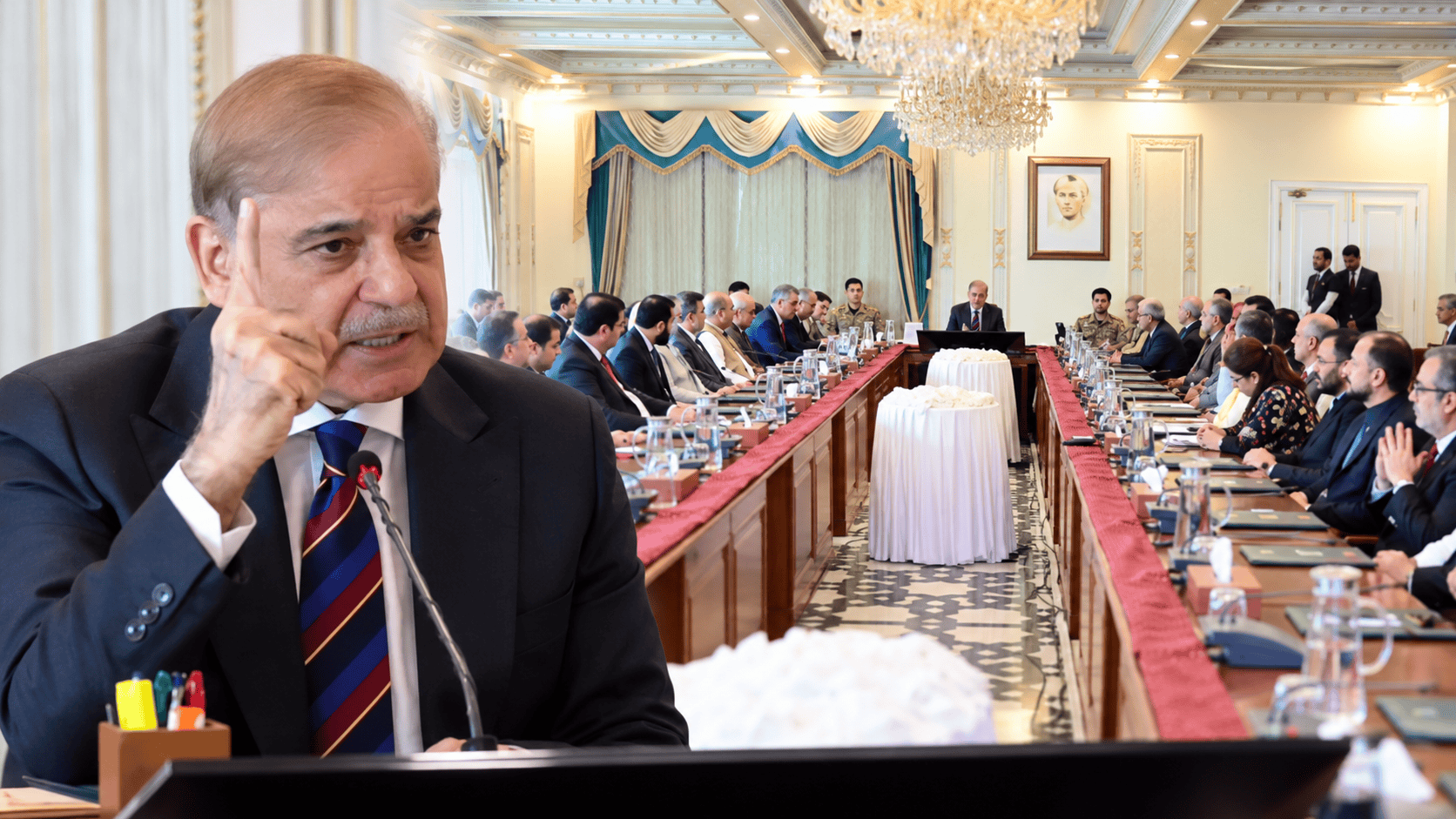
The move followed a meeting of the federal cabinet chaired by Prime Minister Shehbaz Sharif, during which ministers reviewed the security situation in the province and discussed concerns regarding the provincial administration’s role in combating terrorism.
Khyber Pakhtunkhwa Governor delivers his first address to the public as the province’s constitutional head.
According to an official statement, cabinet members expressed concern over what they described as the provincial government’s disengagement from counterterrorism efforts. The cabinet subsequently recommended that the prime minister advise the president to exercise his constitutional powers in view of the prevailing situation.
The decision is likely to intensify political tensions between the federal government and the Pakistan Tehreek-e-Insaf (PTI)-led administration in KP, while raising questions about the constitutional, administrative and political implications of the federal intervention.
Federal government appoints new chief secretary
Following the approval of the measures, the federal government appointed Dr Muhammad Fakhr Alam Irfan as the chief secretary of Khyber Pakhtunkhwa.
An official notification stated that the appointment would take effect immediately and remain in force until further orders.
Dr Irfan, a Grade 22 officer of the Pakistan Administrative Service, was serving as secretary of the Power Division under the federal Ministry of Energy before his new assignment. He belongs to Mardan.
The appointment comes at a critical time for the province, where security challenges and disagreements between the federal and provincial governments have remained key issues.
The chief secretary is the province’s senior-most bureaucrat and plays a central role in coordinating government departments, implementing administrative decisions and maintaining liaison between provincial authorities and the federal government.
What the Constitution says
Article 232 of the Constitution deals with the proclamation of an emergency when the security of Pakistan, or any part of the country, faces a grave threat arising from war, external aggression or internal disturbance beyond a provincial government’s capacity to control.
The constitutional framework also establishes procedures for parliamentary oversight. Where the president issues an emergency proclamation on his own authority, it must be placed before both houses of parliament for approval within the prescribed period of 10 days.
The article also provides for federal legislative powers concerning provincial matters during an emergency, subject to the constitutional provisions governing such action.
Article 234, meanwhile, addresses situations in which the constitutional machinery of a province is considered to have failed. It provides a mechanism for presidential intervention under the conditions specified in the Constitution.
The exercise of these powers carries significant implications for provincial administration and the distribution of authority between the Centre and the provinces.
Article 233, which concerns the suspension of certain fundamental rights during an emergency, is a separate constitutional provision. Any action affecting fundamental rights must be assessed against the applicable constitutional safeguards and legal requirements.
The implementation of emergency measures and governor’s rule is therefore expected to draw attention to the precise scope of the federal government’s authority, the applicable procedural requirements and the role of parliament.
PM raises concerns over security and economic stability
Addressing the cabinet, Prime Minister Shehbaz Sharif emphasised the need to maintain economic stability while addressing the country’s security challenges.
He said political differences should not undermine efforts to stabilise the economy, expressing concern over the potential consequences of confrontation between the federal government and the PTI-led administration in KP.
The prime minister also highlighted the human cost of terrorism, referring to casualties among civilians, police personnel, security officials, women and children.
He reiterated Pakistan’s calls for Afghanistan to take effective measures against militant groups operating from its territory, maintaining that regional security remained essential for peace and stability.
Terrorism has continued to pose a serious challenge to Pakistan, particularly in KP and Balochistan, where attacks on security personnel and civilians have remained a major concern.
IMF programme and regional diplomacy
The prime minister also discussed Pakistan’s economic outlook, expressing hope that the country would receive a $1.2 billion tranche from the International Monetary Fund (IMF) within the year.
He referred to the recent staff-level agreement with the lender and recalled his meeting with IMF Managing Director Kristalina Georgieva on the sidelines of the United Nations General Assembly last month.
Shehbaz Sharif credited cooperation between the country’s political and military leadership for efforts to strengthen fiscal discipline and improve economic management.
He also highlighted Pakistan’s engagement with international financial institutions and diplomatic efforts aimed at reducing tensions in the Middle East.
The prime minister reiterated Pakistan’s support for Saudi Arabia following a reported Houthi attack, emphasising the longstanding relationship between the two countries and Islamabad’s opposition to aggression against the kingdom.
Political and administrative implications
The imposition of emergency and governor’s rule in KP represents a major development in federal-provincial relations. Its practical consequences will depend on the scope of the measures, their implementation and compliance with constitutional procedures.
The decision is also expected to intensify debate over provincial autonomy, democratic governance and the division of responsibilities between federal and provincial authorities.
Legal and political observers are likely to examine the constitutional basis for the intervention, the required parliamentary process and its implications for the functioning of the provincial government.
The coming days will be crucial in determining how the measures are implemented and whether the federal intervention changes the province’s administrative arrangements or leads to further political confrontation.