


By Commerce Reporter
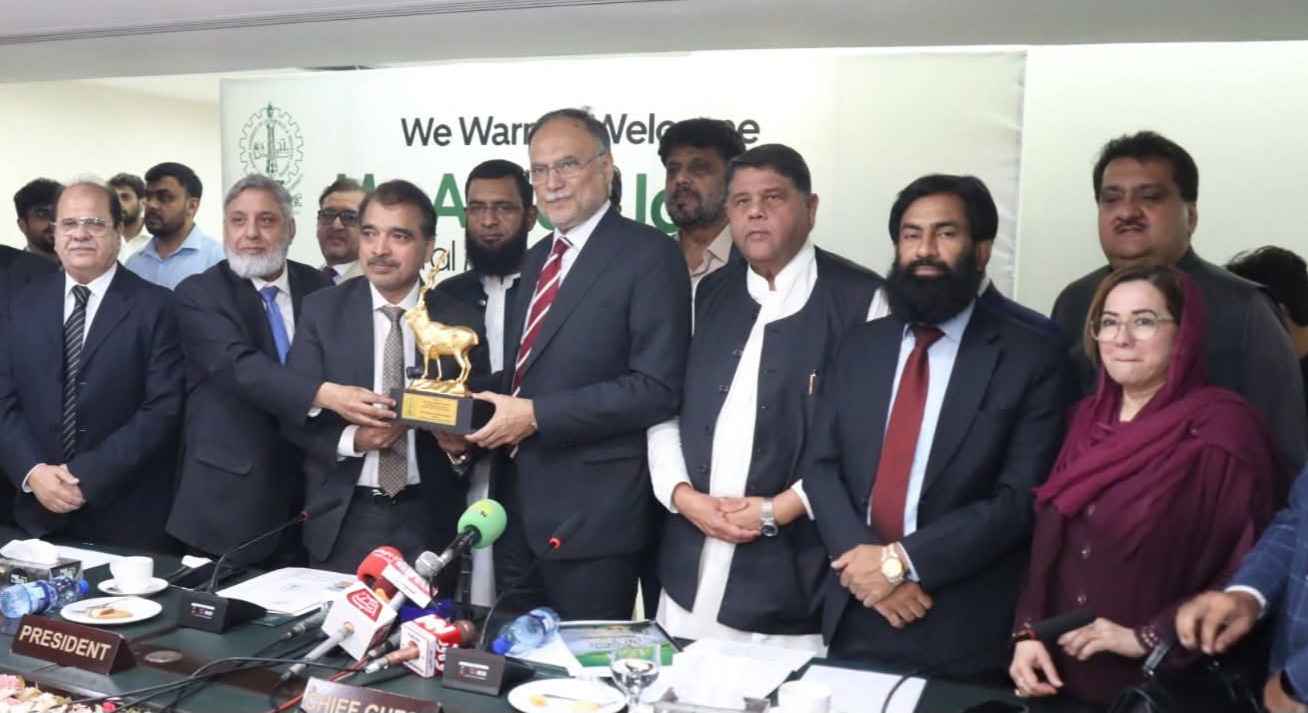
LAHORE: Prominent business leaders have urged Federal Minister for Planning, Development and Special Initiatives Ahsan Iqbal to immediately reduce energy costs, rationalize taxes and eliminate regulatory hurdles to boost exports and industrial growth.
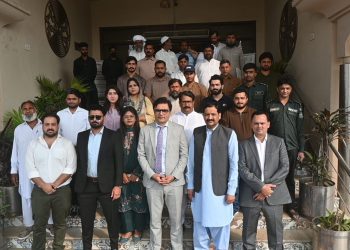
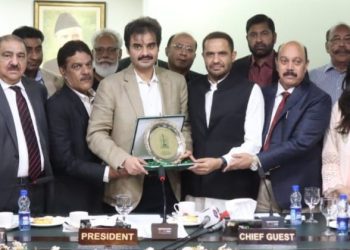
The demands were presented during a meeting at the Lahore Chamber of Commerce and Industry, where the business community highlighted growing concerns over the rising cost of doing business in the country.
The meeting was also attended by Senior Vice President Tanveer Ahmed Sheikh, former President Muhammad Ali Mian, former Vice President Shahid Nazir Chaudhry, Pakistan’s Ambassador to China Khalil Hashmi, and Executive Committee members Waqas Aslam, Firdos Nisar, Ahad Amin Malik, Ali Imran, Abdul Majeed, Irfan Qureshi, Rana Shoban Akhtar, Syed Hasan Raza, Omer Sarfaraz, Amna Randhawa, Kramat Ali Awan, Rana Nisar, Ehtisham ul Haq and Mohsin Bashir.
In his address, Faheem Ur Rehman Saigol appreciated the effective diplomatic role played by the Government of Pakistan during recent global and regional tensions. He said Pakistan promoted peace, stability and dialogue through a balanced and responsible approach, which further strengthened the country’s positive image around the world. He also praised the Ministry of Planning’s “Uraan Pakistan 2024–2029” program, saying that its targets related to exports, digital economy, infrastructure, energy, environment and social development are encouraging.
Ahsan Iqbal said that the success in the “Battle of Truth” has placed a responsibility on the entire nation to strengthen the economy because history has shown that weak economies cannot sustain strong defense systems. He said the government is working with the private sector to promote exports, industrial growth and expansion of the tax net. He added that the target of achieving 100 billion dollars in exports by 2035 is as important for Pakistan as achieving nuclear capability once was.
Faheem Ur Rehman Saigol said that Pakistan’s trade deficit has reached nearly 32 billion dollars in just ten months, making it essential for the country to immediately adopt a strong export-led growth strategy. He said planning, industrial policies and incentives should be aligned with export-oriented sectors so Pakistani products can compete effectively in global markets.
He also stressed the importance of value addition, export diversification and participation in global supply chains. He said reducing the cost of doing business should be the government’s top priority. Expensive electricity, high interest rates, multiple taxes and complex regulations are creating serious difficulties for industries. He added that the current regional situation, supply chain disruptions and uncertainty have further increased business costs.
The LCCI President appreciated the government’s focus on development projects under the Public Sector Development Programme and said development funds should be spent on projects that directly improve industry, exports, logistics and productivity.
He also stressed the need for timely completion and effective monitoring of development projects. He said that Ahsan Iqbal played a key role in the successful launch of China-Pakistan Economic Corridor from the very beginning. Due to his efforts, economic cooperation between Pakistan and China strengthened, creating new opportunities in energy, infrastructure, industry and transport sectors.
He added that the second phase of CPEC is focusing on industrial cooperation, Special Economic Zones, agriculture, IT, technology transfer and business partnerships. However, local business communities must be given an active role in joint ventures.
Senior Vice President Tanveer Ahmed Sheikh also supported the demands, emphasizing the need for business-friendly policies and stronger coordination between the government and private sector.
Senior Vice President Tanveer Ahmed Sheikh said the government has long turned a deaf ear to traders and industrialists, ignoring their genuine concerns. He stressed that rising costs, heavy taxation and policy uncertainty are hurting businesses, urging authorities to listen seriously and take immediate steps to support industry and restore confidence.
The business leaders pointed out that Pakistan’s trade deficit has widened significantly, making it essential to adopt an export-led strategy. They called for targeted incentives for export-oriented sectors, along with policies that promote value addition and diversification of products.
They further stressed the importance of improving logistics, enhancing shipping capacity and ensuring better connectivity, particularly with Gwadar, to facilitate trade and investment activities.
The participants also highlighted the need to fully capitalize on opportunities under the China-Pakistan Economic Corridor, especially in its second phase focusing on industrial cooperation and Special Economic Zones, while ensuring meaningful participation of local businesses.
In response, Ahsan Iqbal acknowledged the concerns of the business community and reiterated the government’s commitment to facilitating industry and promoting exports. He said the government is working to remove unnecessary barriers and create a more enabling environment for businesses.
He emphasized that export growth is the only sustainable path for Pakistan’s economy and called for close collaboration between the public and private sectors to achieve long-term economic stability and prosperity.
The meeting concluded with a consensus that urgent policy measures and continued dialogue between stakeholders are essential to steer Pakistan toward a stronger, export-driven economy.