


By Commerce Reporter
LAHORE: President of the Lahore Chamber of Commerce and Industry, Faheemur Rehman Saigol, on Saturday strongly criticized the Benazir Income Support Programme (BISP), arguing that the initiative risks fostering dependency rather than promoting sustainable economic growth.
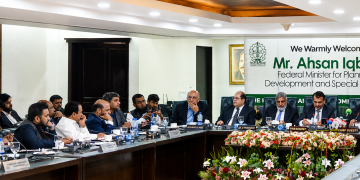
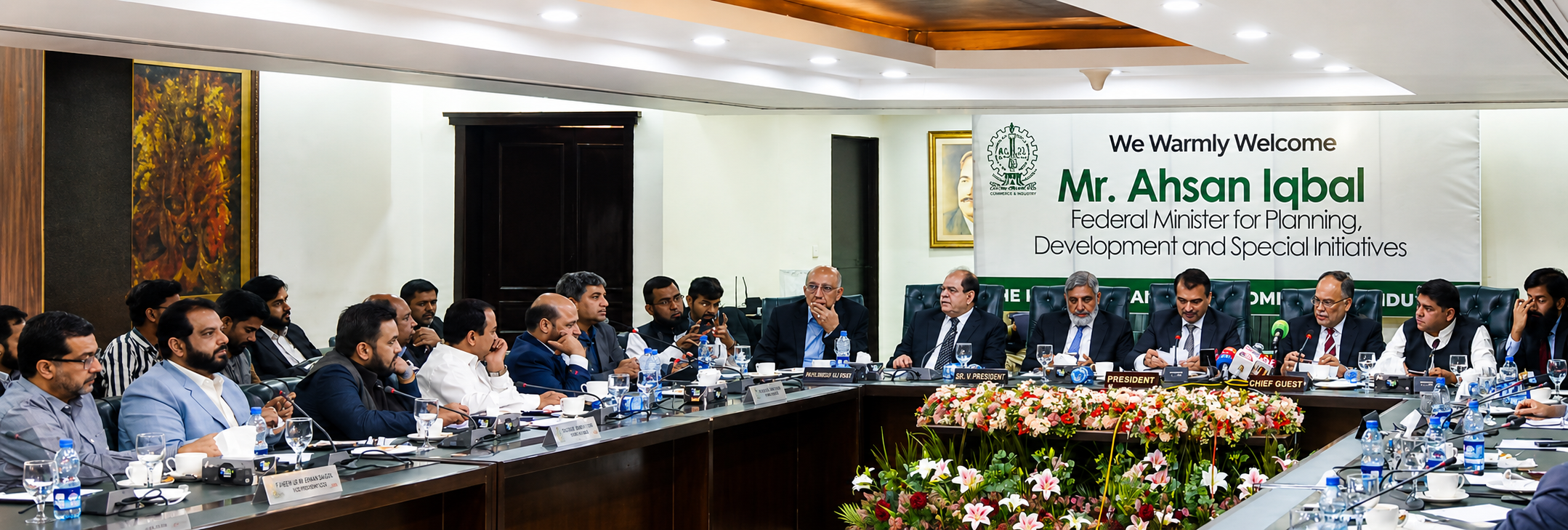
Speaking during a meeting with Federal Minister for Planning and Development Ahsan Iqbal in Lahore, Saigol said that while social protection programmes have their place, long-term economic stability requires a shift in policy focus towards productive sectors, particularly small and medium enterprises (SMEs).
He expressed concern that continued reliance on cash assistance schemes could discourage workforce participation and entrepreneurial activity. “Such programmes may provide temporary relief, but they do not address the root causes of poverty,” Saigol stated, adding that empowering citizens through business opportunities would yield more durable economic benefits.
The LCCI president emphasized that SMEs are the backbone of Pakistan’s economy, contributing significantly to employment generation and industrial output. He urged the government to redirect a portion of social welfare funds into financing, training, and capacity-building initiatives for small businesses. According to him, easier access to credit, simplified regulations, and targeted incentives could help SMEs expand operations and create jobs.
Saigol further noted that Pakistan’s economic challenges, including inflation, unemployment, and slow industrial growth, require structural reforms rather than short-term relief measures. He called for a comprehensive strategy to support entrepreneurs, particularly in urban and semi-urban areas, where small businesses face increasing financial constraints.
During the meeting, Planning Minister Ahsan Iqbal acknowledged the importance of SMEs in driving economic growth and reiterated the government’s commitment to economic reforms. He highlighted ongoing efforts under national development frameworks aimed at boosting industrial productivity and enhancing export competitiveness.
However, he also defended the role of social safety nets like BISP, stating that such programmes are essential for protecting vulnerable segments of society, especially during periods of economic hardship. Iqbal stressed that welfare initiatives and economic development policies should complement each other rather than be viewed as mutually exclusive.
The discussion reflected a broader debate within policymaking circles over balancing immediate social support with long-term economic development. Analysts note that while programmes like BISP play a critical role in poverty alleviation, there is growing consensus on the need to strengthen Pakistan’s productive sectors to achieve sustainable growth.
The meeting concluded with both sides agreeing on the importance of continued dialogue between the government and the business community to align economic policies with ground realities and ensure inclusive development across the country.