


By asim shahzad
LAHORE: The late His Highness Sheikh Zayed Bin Sultan Al Nahyan (May his soul rest in peace) was known worldwide for his far-reaching humanitarian initiatives spanning multiple sectors of human development.
Read also: UAE leadership’s enduring contribution to education in Pakistan
A visionary leader with deep compassion for marginalized communities, His Highness consistently translated concern into action. During his visits to Pakistan, particularly to desert retreat areas, he would invariably announce and sponsor welfare projects aimed at uplifting local populations and improving their quality of life.
Among these initiatives, access to clean and safe drinking water remained a top priority. His Highness recognized water as the foundation of survival, dignity, health, and economic sustainability—especially in arid and semi-arid regions. This humane legacy was not only honored but has been diligently carried forward by the late His Highness Sheikh Khalifa Bin Zayed Al Nahyan (May his soul rest in peace) and is presently being advanced by His Highness Sheikh Mohamed Bin Zayed Al Nahyan, President of the United Arab Emirates and Ruler of Abu Dhabi.
Clean Water Supply for Desert and Rural Communities
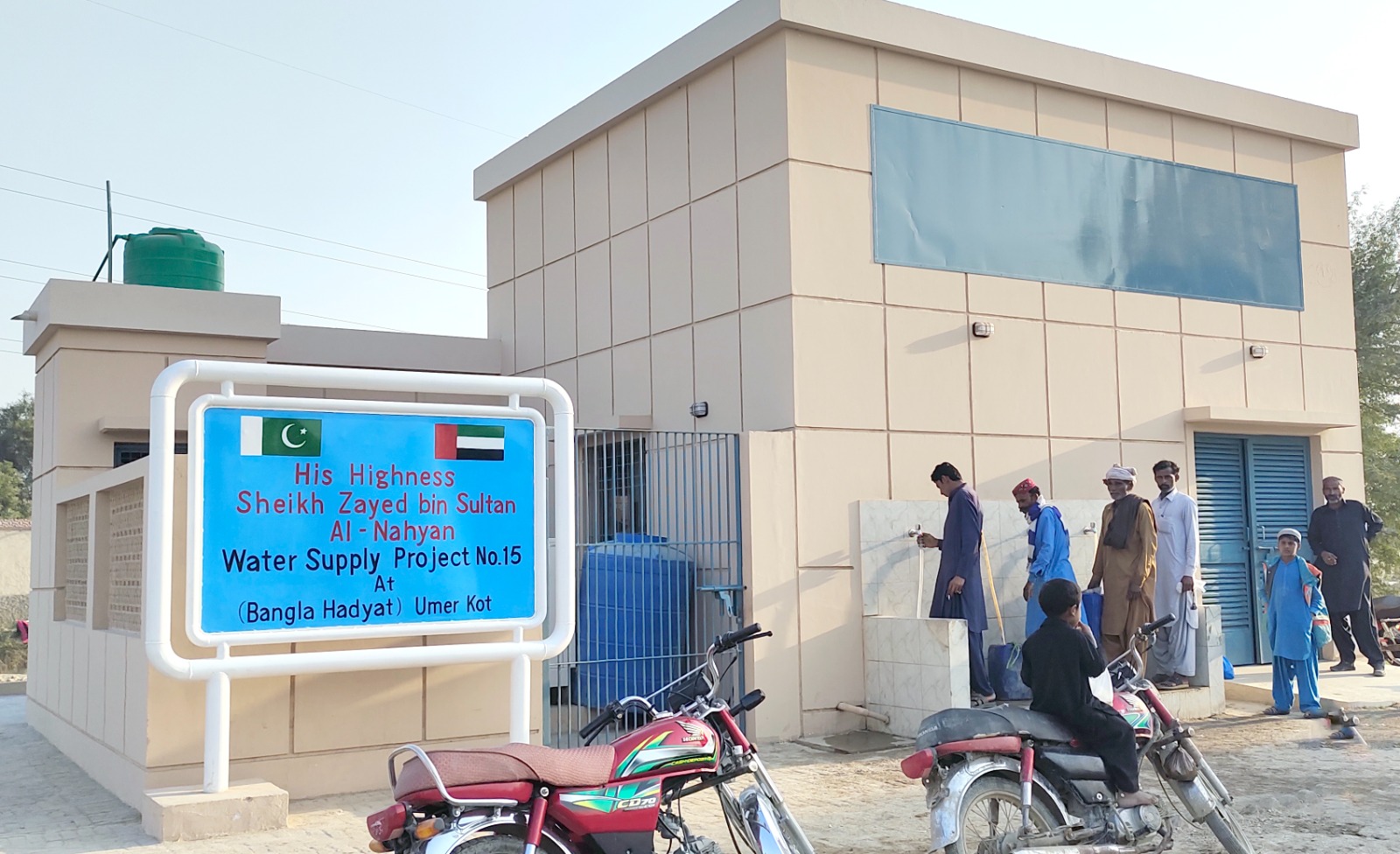
Being acutely conscious of the acute water scarcity faced by humans and livestock in Pakistan’s harsh desert environments, the UAE leadership has sponsored over 100 clean water projects across some of the most water-stressed regions of the country. These projects have significantly addressed water shortages in Kharan (Balochistan), Rahim Yar Khan, Rojhan, Rajanpur, and Dera Ghazi Khan districts, where communities previously depended on unreliable and often contaminated water sources.
In addition, 100 hand pumps have been installed in Rajanpur and Dera Ghazi Khan, providing immediate and sustainable access to potable water for rural households. These hand pumps have proven especially vital for women and children, who traditionally bear the burden of fetching water over long distances.
Addressing Drought Conditions in Cholistan Desert
The Cholistan Desert, characterized by low annual rainfall and extreme climatic conditions, frequently experiences prolonged droughts. As a result, the traditional rainwater reservoirs known locally as “tobas” often dry up, leaving nomadic communities and their livestock without reliable water sources.
To mitigate this recurring hardship, regular water replenishment operations are carried out using water bowzers to recharge depleted water points. Furthermore, pumping stations have been established to transport water deep into the desert, ensuring sustained access for nomadic populations and their animals.
These critical interventions are implemented through the collaborative efforts of Houbara Foundation International Pakistan (HFIP) and the Human Welfare & Nature Conservation Society (HWNCS), whose on-ground presence ensures efficient delivery and long-term maintenance of water infrastructure.
Health, Livelihoods and Environmental Impact
Beyond addressing thirst, these water projects have produced far-reaching benefits. Improved access to clean water has significantly reduced the incidence of water-borne diseases in rural and remote areas, contributing to better public health outcomes. Reliable water supply has also supported livestock survival, safeguarded livelihoods, and strengthened food security in desert communities.
Moreover, these initiatives reflect a holistic approach that integrates human welfare, environmental conservation, and sustainable resource management, reinforcing resilience in regions highly vulnerable to climate change.
An Enduring Humanitarian Vision
The UAE-supported water projects stand as a powerful testament to the leadership’s belief that solving water scarcity is central to peace, development, and human dignity. This universal truth is aptly reflected in the words of John F. Kennedy, who once observed:
“Anybody who can solve the problems of water will be worthy of two Nobel Prizes—one for peace and one for science.”
Through sustained commitment and compassionate leadership, the water initiatives championed by the UAE leadership continue to transform lives across Pakistan’s most challenging landscapes. They symbolize enduring friendship, shared responsibility, and a profound humanitarian bond between the people of Pakistan and the United Arab Emirates.


