


By Asim Shahzad
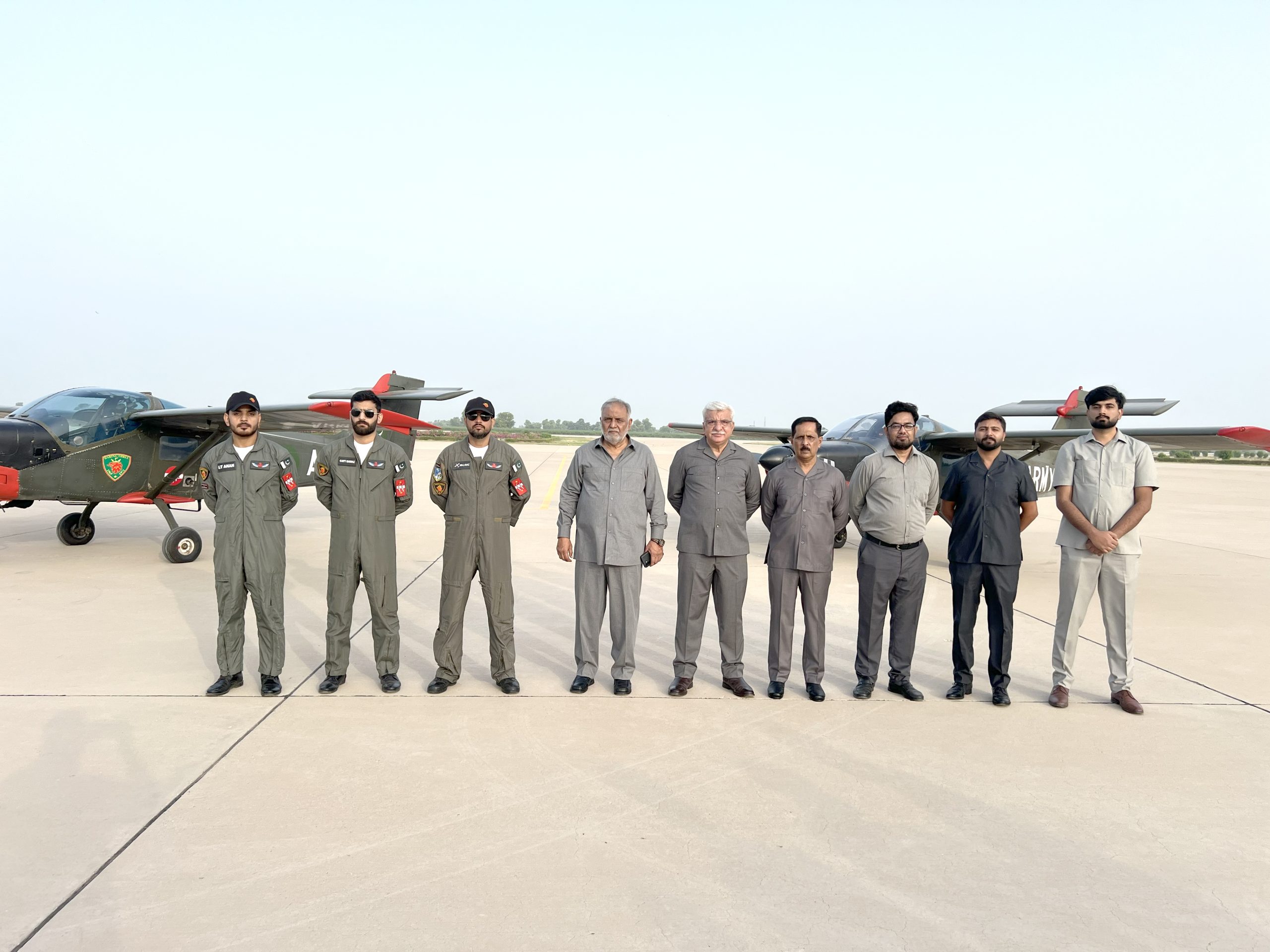
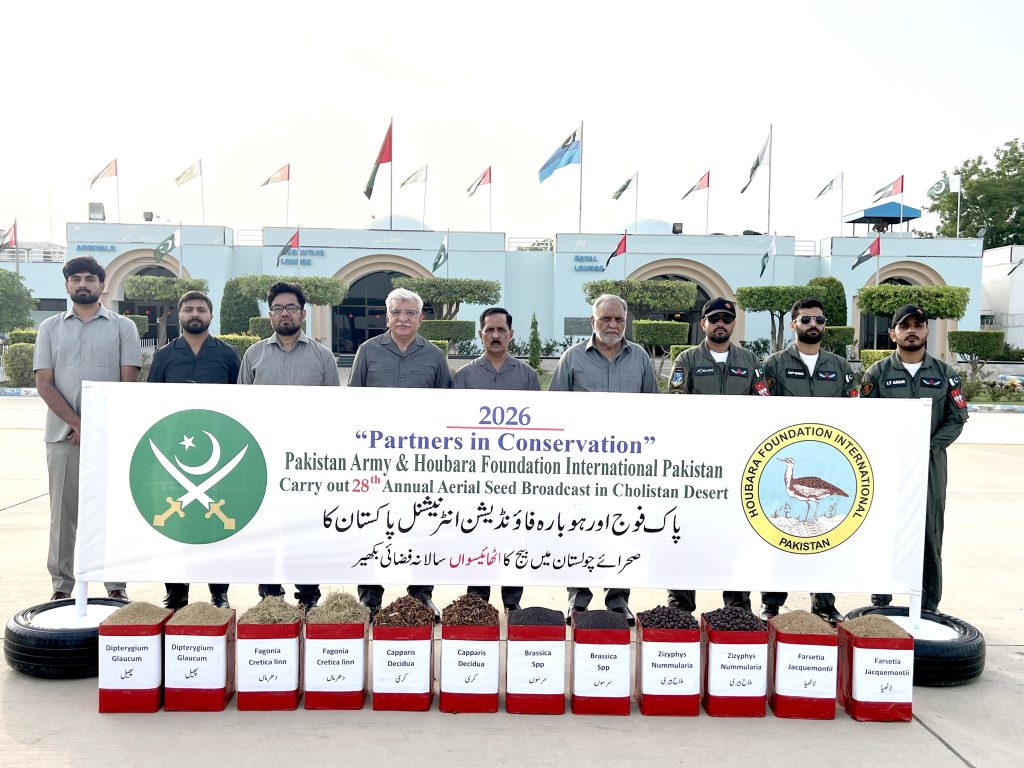
LAHORE – Pakistan Army and Houbara Foundation International Pakistan (HFIP) have jointly continued their decades-long habitat restoration initiative by broadcasting seeds of native desert plants across the Cholistan Desert for the 28th consecutive year.
The initiative aims to revive declining desert vegetation, strengthen wildlife habitats, and restore ecological balance in one of Pakistan’s most important desert ecosystems.
Wildlife habitats across the world are facing degradation due to deforestation and unsustainable human activities. The decline in natural vegetation has reduced food availability for wild animals and birds, contributing to population decline and ecological disturbances.
In 1998, Houbara Foundation International Pakistan, in collaboration with the Pakistan Army, launched a programme to replenish disappearing vegetation in the Cholistan Desert, a key wintering ground for the Houbara Bustard and other wildlife species.
During the latest campaign, 110 kilograms of seeds of indigenous desert plants and grasses were aerially broadcast over the desert landscape. With this year’s contribution, the total quantity of seeds dispersed under the project over the past 28 years has exceeded 3,437 kilograms.
Regular monitoring of restored areas has shown encouraging results, with improved vegetation growth and expectations of further successful germination as the project continues.
Experts emphasize that complete habitat restoration is a long-term and challenging process requiring sustained efforts. With continued support from the Pakistan Army, Houbara Foundation International Pakistan remains committed to restoring desert ecosystems, strengthening wildlife populations, and preserving the natural heritage of the Cholistan Desert.
Environmental Impact
The project represents a significant conservation effort aimed at combating desert degradation, improving biodiversity, and ensuring sustainable habitats for native wildlife species.


