



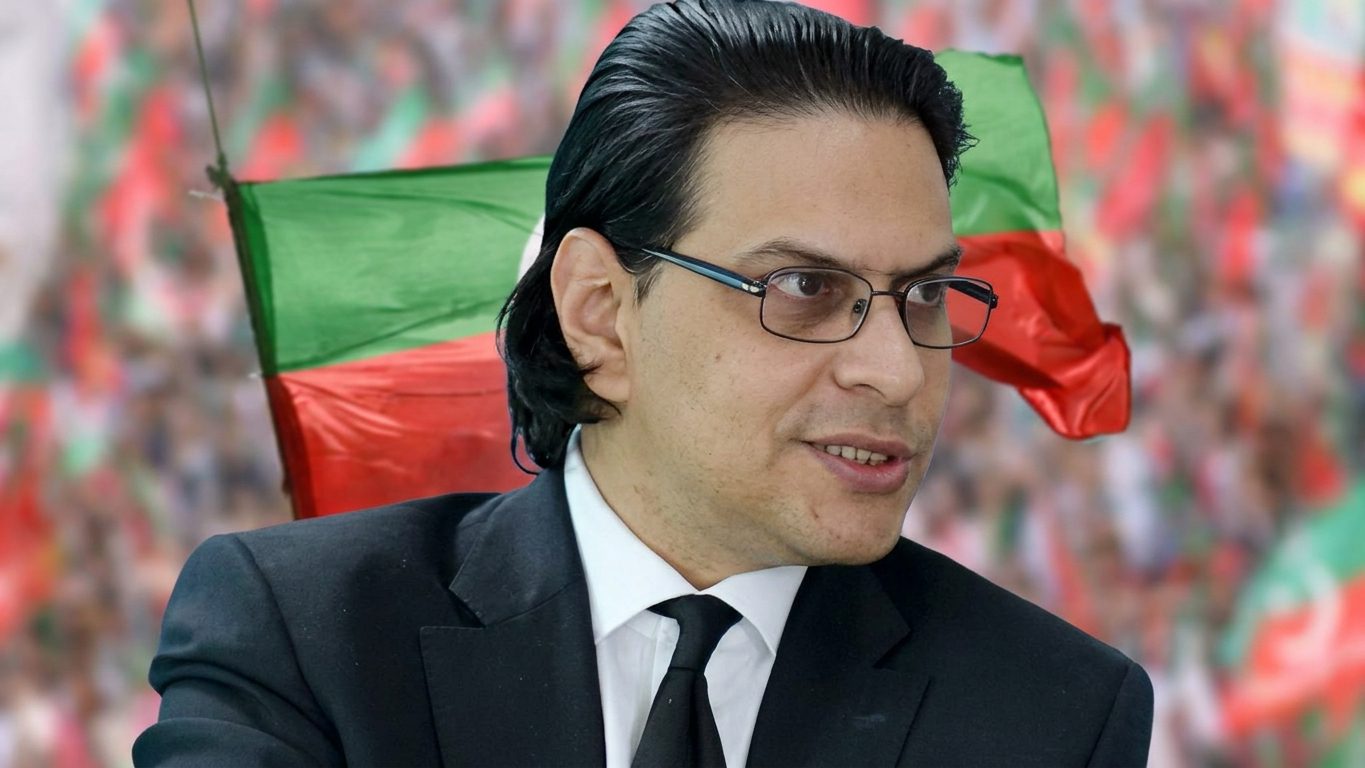
PTI Secretary General Salman Akram Raja said Imran Khan had conveyed through his lawyer, Salman Safdar, that anyone wishing to discuss the proposed amendment or other important political issues should approach him directly.
Speaking to private tv channel programme “Tonight with Samar Abbas”, Raja questioned why decision-makers were holding lengthy discussions with other individuals instead of arranging a meeting with the former prime minister.
He said a three-hour meeting with another person could not replace direct engagement with Imran Khan, particularly when discussions involved constitutional changes and the future administrative structure of the country.
The PTI leader stressed that the party founder remained central to its political position and that any major decision concerning the proposed constitutional amendment required his participation.
PTI questions consultation process
Raja said discussions were already taking place about the possibility of creating new provinces, but argued that such proposals could not move forward without consulting Imran Khan.
He also pointed out that the complete text of the proposed 28th Constitutional Amendment had not yet been made public, raising questions about the substance and direction of the discussions.
According to Raja, the establishment of additional provinces was another important matter that needed to be discussed directly with the PTI founder.
He described PTI as the country’s largest representative political party and maintained that its leadership and parliamentary representatives should be included in consultations on constitutional reforms.
The secretary general said Imran Khan would not support any proposal that contradicted his political principles or the party’s established position.
His remarks reflected the party’s insistence that constitutional negotiations should not proceed through selective consultations while its founder remained excluded from the process.
Party seeks meetings with nominated individuals
Raja also raised concerns over arrangements for meetings with Imran Khan, alleging that the individuals being proposed for consultations did not always match the names provided by the former prime minister.
He said Imran Khan had asked that meetings be arranged with specific individuals whose names he had communicated through his lawyer.
However, Raja alleged that additional names were being included instead of those requested by the PTI founder.
He said repeatedly submitting the same alternative names for meetings had created suspicions within the party about the intentions behind the process.
The PTI leader further argued that allowing only one member of the National Assembly to meet Imran Khan was insufficient, particularly when broader party consultations and important political matters were involved.
He called for arrangements that would allow relevant party leaders to meet the founder and discuss constitutional and political developments directly.
Raja rejects speculation about his position
During the television programme, Raja also addressed speculation surrounding his position within the party and possible internal differences.
He acknowledged that some individuals might have personal ambitions but made clear that he had no intention of abandoning his responsibilities as PTI secretary general.
Raja said Imran Khan had personally appointed him to protect the party founder’s political narrative and ideology.
He added that he intended to continue defending those principles for the rest of his life.
The secretary general also urged party workers to avoid being distracted by comments from individuals he described as irrelevant to the party’s political direction.
His remarks appeared aimed at reinforcing party unity at a time when PTI faces important political and constitutional challenges.
Constitutional debate adds to political tensions
The proposed 28th Constitutional Amendment has emerged as another potential source of political debate, particularly as discussions reportedly involve changes concerning provincial arrangements and the country’s constitutional structure.
Any constitutional amendment requires parliamentary support and must follow the procedures established under Pakistan’s Constitution.
The question of creating new provinces is particularly sensitive, involving political representation, administrative arrangements, financial resources and constitutional requirements.
Raja’s statement indicates that PTI intends to make Imran Khan’s participation a central condition for meaningful discussions on these matters.
The party’s position also highlights the continuing political importance of its founder despite his imprisonment and limited direct participation in political activities.
For now, it remains unclear when the proposed amendment will be formally presented or whether arrangements will be made for the consultations demanded by PTI.
The disagreement over access to Imran Khan could further complicate efforts to build political consensus on constitutional changes.
With major questions surrounding provincial restructuring and constitutional reforms still unresolved, PTI is insisting that no agreement should be reached without hearing directly from its founder.