


By Our Correspondent
LAHORE – Punjab Assembly Speaker Malik Muhammad Ahmad Khan has called for stronger industrial development, technological cooperation and sustained efforts to eliminate terrorism, saying Pakistan’s economic future depends on peace, investment and the adoption of modern technologies.
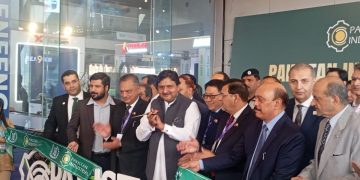
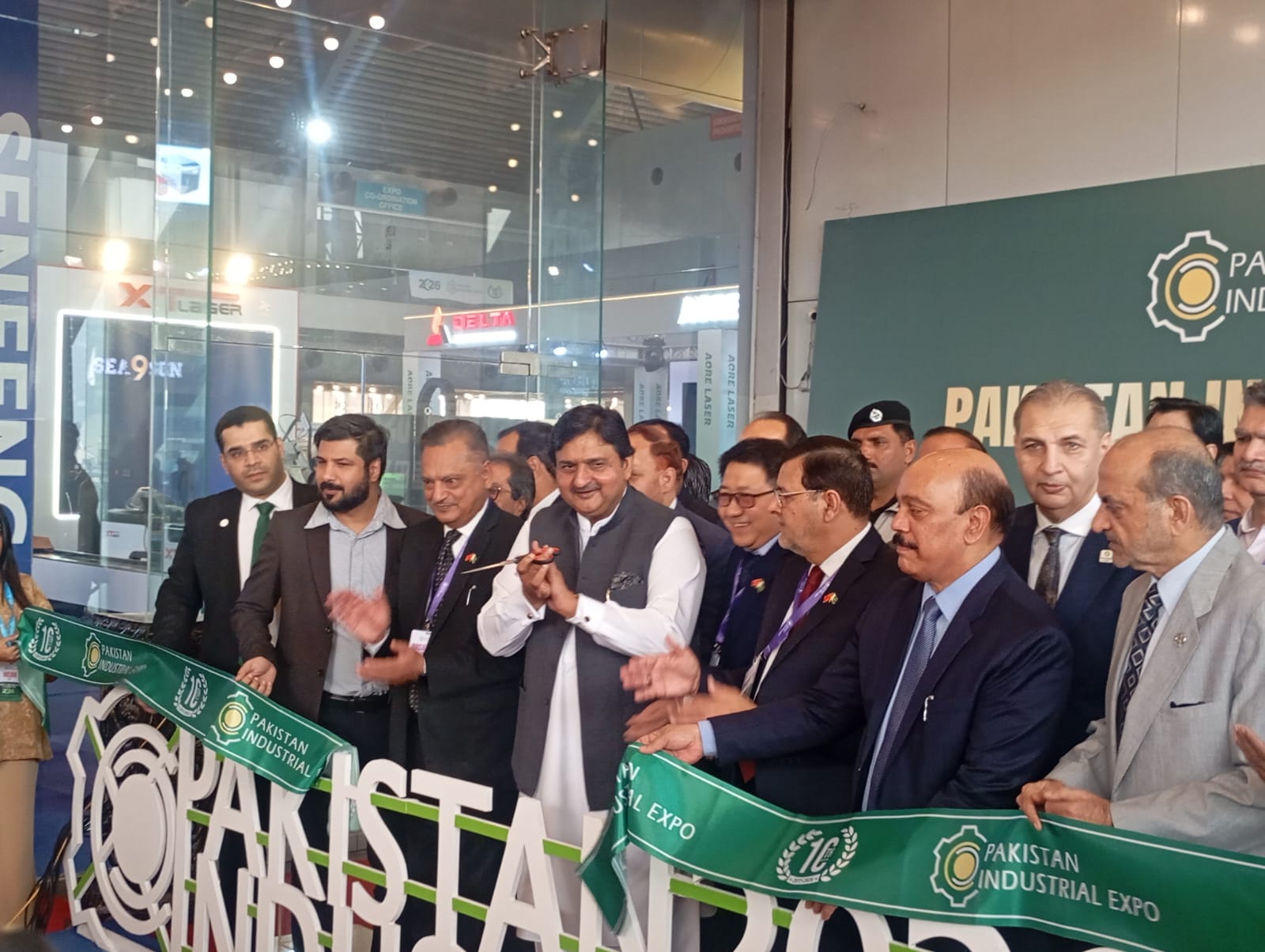
Addressing the inaugural ceremony of the 10th Pakistan Industrial Expo at the Expo Centre Lahore, he said economic progress could not be achieved without a secure environment, investor confidence and long-term policies aimed at strengthening the country’s industrial base.
The exhibition, featuring 156 Chinese and Pakistani companies from various industrial sectors, will continue until November 16, bringing together manufacturers, business representatives and technology stakeholders to explore opportunities for commercial cooperation.
Organised by Everest International, the exhibition aims to strengthen industrial links between Pakistan and China, particularly in technology transfer, manufacturing, investment and employment generation.
Malik Muhammad Ahmad Khan expressed satisfaction over the progress of Pakistani businesses and institutions in science and technology, saying that industrial improvement and innovation were essential for national development.
He appreciated the business community for its contribution to economic activity and urged industrialists to remain mindful of their social responsibilities, particularly towards disadvantaged sections of society. He said economic growth should benefit ordinary citizens and warned against exploiting economically vulnerable people.
Highlighting the growing environmental challenge, the Speaker said smog had become a serious concern for Lahore and could not be addressed through temporary measures or short-term campaigns.
He stressed that tackling air pollution required consistent planning, institutional coordination and years of uninterrupted efforts. Referring to Beijing’s experience in controlling air pollution, he observed that even adopting a similar model would require at least a decade of sustained work to produce meaningful results in Pakistan.
He called for a long-term approach to environmental protection, emphasising the importance of continuity in government policies and public participation in addressing pollution.
The Speaker also highlighted the growing significance of Artificial Intelligence (AI), robotics and automation, saying these technologies could transform agriculture, healthcare and industrial production.
He said cooperation between Pakistani and Chinese businesses and institutions could help improve productivity, modernise manufacturing processes and introduce advanced technologies into the local industrial sector.
According to him, Pakistan had considerable potential to benefit from technological developments if the country focused on skills development, research, innovation and investment in modern industrial infrastructure.
Turning to the security situation, Malik Muhammad Ahmad Khan said terrorism remained a major obstacle to economic development and national stability. He recalled that terrorist attacks had previously caused serious damage to industrial activity and weakened investor confidence.
He described Pakistanis investing in their own country as national contributors, saying their efforts deserved recognition and protection.
Paying tribute to the government’s efforts and the Field Marshal, he maintained that terrorism must be eliminated without ambiguity. He rejected distinctions between different categories of militant groups, arguing that violence and terrorism could not be justified on political grounds.
He said no individual carrying weapons and engaging in violence could claim the status of a political actor. The country, he added, needed a collective and firm response to ensure that citizens could live without fear.
The Speaker acknowledged that difficult national decisions might not produce immediate results but said Pakistan could no longer afford to compromise its future because of insecurity.
On constitutional and democratic matters, he said dialogue and consultation were fundamental principles of democracy. Parliament and provincial assemblies had clearly defined responsibilities under the Constitution, which must be respected.
Discussing proposals for the creation of new provinces, he stressed that public opinion should remain an important consideration in such decisions. Elected representatives, he said, must take the views of affected populations into account while exercising their constitutional authority.
Commenting on Pakistan’s relations with India, he said political differences between the two countries should not necessarily be regarded as permanent. He criticised the political approach of Indian Prime Minister Narendra Modi, saying regional tensions were influenced by divisive politics.
He maintained that the use of force could not change another country’s geographical boundaries and warned that any aggression against Pakistan would receive a strong response.
At the same time, he emphasised the importance of regional trade and economic cooperation, saying improved commercial relations could create opportunities for development and prosperity.
Speaking on the occasion, Everest International Expo Chief Executive Officer Yousuf Fa said the exhibition had been serving as a bridge between Pakistani industries and Chinese manufacturing expertise since 2017.
He said the 10th edition would further expand cooperation in technology transfer, local manufacturing, investment and job creation.
He added that AI, robotics and automation were reshaping global industrial practices and Pakistan could benefit significantly by adopting these technologies and strengthening partnerships with international manufacturers.
The participation of 156 companies, he said, reflected continued interest in expanding industrial and commercial engagement between Pakistan and China.
The exhibition is expected to provide a platform for business networking, exchange of expertise and exploration of new investment opportunities, further strengthening industrial cooperation between the two countries.