


TEL AVIV (Web Desk) – Speaking at the Smart Mobility Summit via video link, Elon Musk outlined an aggressive vision for a near-term transformation in transport, robotics, and human-machine integration, emphasizing that fully autonomous driving systems are already operating in limited form in the United States and are set to expand rapidly.
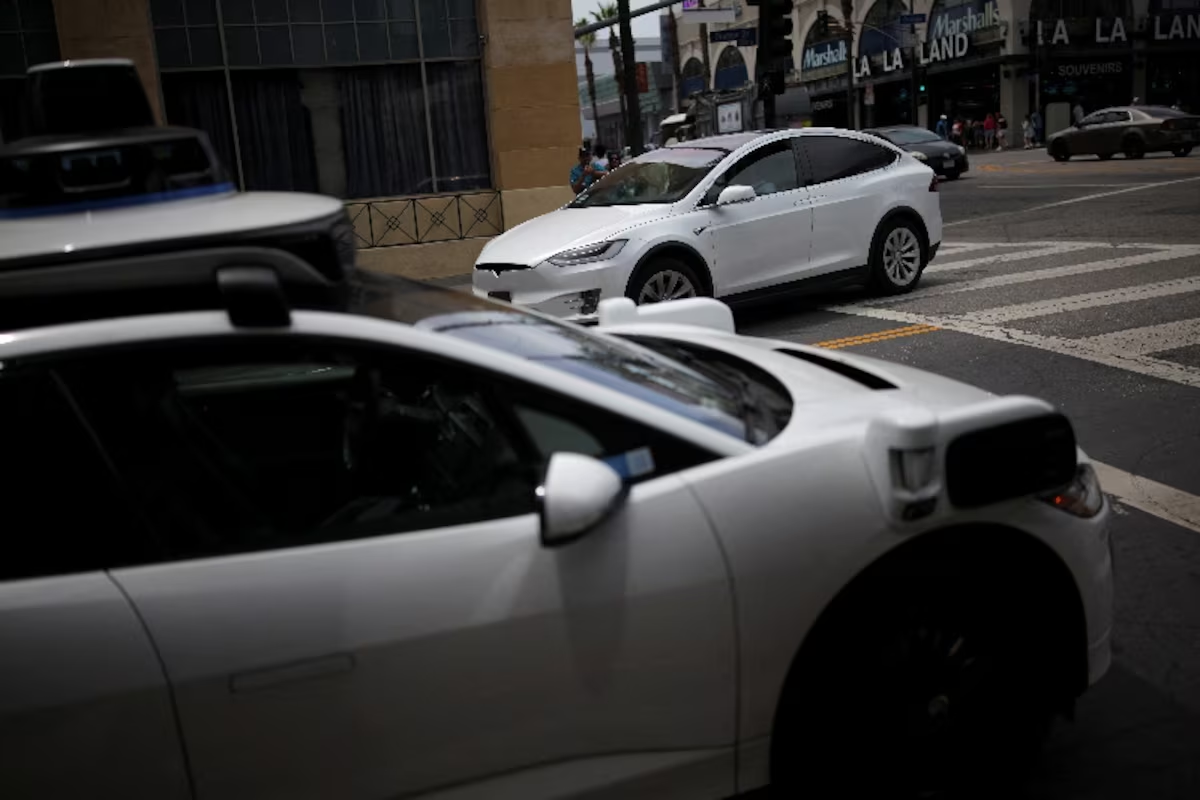
Musk said that in parts of Texas, vehicles are already running without human safety monitors, and he expects such deployments to scale across the U.S. before the end of the year. He framed this as an early stage of a broader shift in mobility, suggesting that human-driven cars could become increasingly rare within the next decade as artificial intelligence takes over most driving tasks.
He projected that within 10 years, autonomous systems could account for the vast majority of total driving distance, estimating that up to 90% of miles traveled may be handled by AI-driven vehicles. In his view, personally driving a car would become an uncommon, even niche, activity rather than the norm. His comments come as Tesla, Inc. continues expanding its autonomous ride-hailing operations in cities such as Austin, Dallas, and Houston, though real-world performance has reportedly faced operational constraints including inconsistent availability and routing inefficiencies.
Regulatory and safety scrutiny continues to shadow the sector. The U.S. National Highway Traffic Safety Administration recently flagged a recall involving more than 200,000 Tesla vehicles due to rearview camera delays that could increase crash risk. Meanwhile, competitors are also encountering technical setbacks. Alphabet Inc.’s self-driving subsidiary Waymo recently recalled several thousand robotaxis after identifying risks of unsafe behavior in flood-prone conditions.
Beyond transportation, Musk broadened his remarks to other frontier technologies. He said his space company, SpaceX, is approaching what he described as a breakthrough in fully reusable rocket systems that could significantly reduce the cost of space launches. He suggested such a milestone could arrive as early as this year and called it a pivotal step toward making humanity a “space-faring civilization.”
He also highlighted progress at Neuralink, stating that the company plans its first use of its Blindsight implant aimed at restoring vision for people with severe visual impairment. Initial results, he said, would likely provide limited sight, with the potential for more advanced visual capability over time, including what he described as “superhuman” vision. Neuralink is also working on interfaces intended to restore mobility for individuals with paralysis.
Looking further ahead, Musk reiterated his belief that humanoid robots could become widespread within the next decade, reshaping labor markets and potentially enabling what he described as a future of “universal high income” driven by machine productivity.