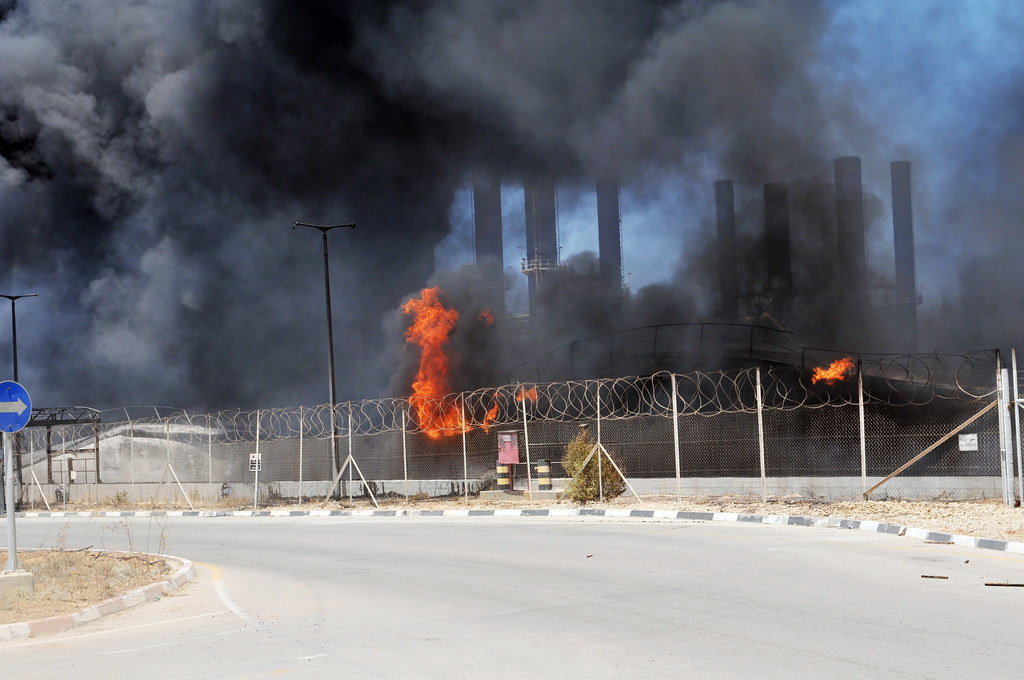
GAZA (Web Desk) Israeli military operations continued across the Gaza Strip on Tuesday as airstrikes and ground offensives coincided with ongoing diplomatic efforts aimed at securing a ceasefire, while both sides reported new casualties and military developments.
According to Palestinian and Arab media reports, at least nine Palestinians, including a woman and a child, were killed in separate Israeli strikes during the past 24 hours. Medical officials and local authorities said several other people were injured as attacks were reported in different parts of the enclave.
Gaza’s Interior Ministry stated that one of the strikes targeted a police post in the Jabalia refugee camp in northern Gaza. The ministry said seven people were killed and several others wounded in the attack. Those killed reportedly included the director of the Jabalia Police Centre, along with a number of police officers and administrative personnel.
Israeli military officials, however, maintained that their operations were directed at individuals and infrastructure they say are linked to Hamas and other armed groups operating inside Gaza.
In a separate statement, the Israeli military announced that it had killed Osama Naim Hamdi, whom it identified as the commander of Hamas’ naval unit, during operations in the Gaza Strip. Israeli authorities alleged that Hamdi had been involved in planning and coordinating maritime operations against Israel.
The military also reported that three additional Hamas members were killed during an operation in northern Gaza. According to Israeli officials, the individuals were preparing to launch attacks against Israeli forces when they were targeted.
Hamas had not immediately issued an official response regarding the Israeli military’s claims, and the reported battlefield developments could not be independently verified.
The latest escalation comes as international mediators continue efforts to bridge differences between Israel and Hamas in pursuit of a ceasefire agreement. Diplomatic initiatives involving regional and international partners have focused on halting hostilities, increasing humanitarian access and advancing negotiations over the release of hostages and detainees.
Despite those efforts, fighting has persisted across several areas of Gaza, with residents reporting continued bombardment and military activity. Humanitarian organizations have repeatedly warned that ongoing violence is worsening conditions for civilians already facing shortages of food, medicine, clean water and shelter.
Aid agencies say repeated displacement has left hundreds of thousands of people living in overcrowded temporary shelters, while damage to hospitals, roads and public infrastructure continues to complicate relief operations.
International organizations have urged all parties to comply with international humanitarian law by protecting civilians and facilitating the safe delivery of humanitarian assistance. Calls have also been made for expanded humanitarian corridors to allow aid convoys to reach communities affected by the fighting.
The conflict has continued to generate concern among regional and global leaders, who warn that prolonged hostilities could further destabilize the Middle East. Diplomatic efforts remain focused on achieving a sustainable ceasefire that would create conditions for humanitarian relief and renewed political dialogue.
Analysts note that while military operations continue, negotiations remain active behind the scenes, with mediators attempting to narrow differences on key issues. However, recurring clashes on the ground continue to complicate progress toward a comprehensive agreement.
Residents across Gaza described another day marked by explosions, emergency rescue efforts and uncertainty, as emergency services worked to recover casualties and assist displaced families. Hospitals operating under difficult conditions continued treating the wounded despite shortages of medical supplies and personnel.
The latest developments underscore the fragile security situation in Gaza, where military operations and diplomatic efforts are unfolding simultaneously. While negotiations continue, the humanitarian situation remains critical, with international agencies renewing calls for restraint, protection of civilians and an immediate reduction in violence.