


NEW YORK (News Desk) – Global oil prices recorded a sharp decline on Wednesday, sending ripples across international energy markets and raising fresh questions about the outlook for demand, supply dynamics, and economic stability.
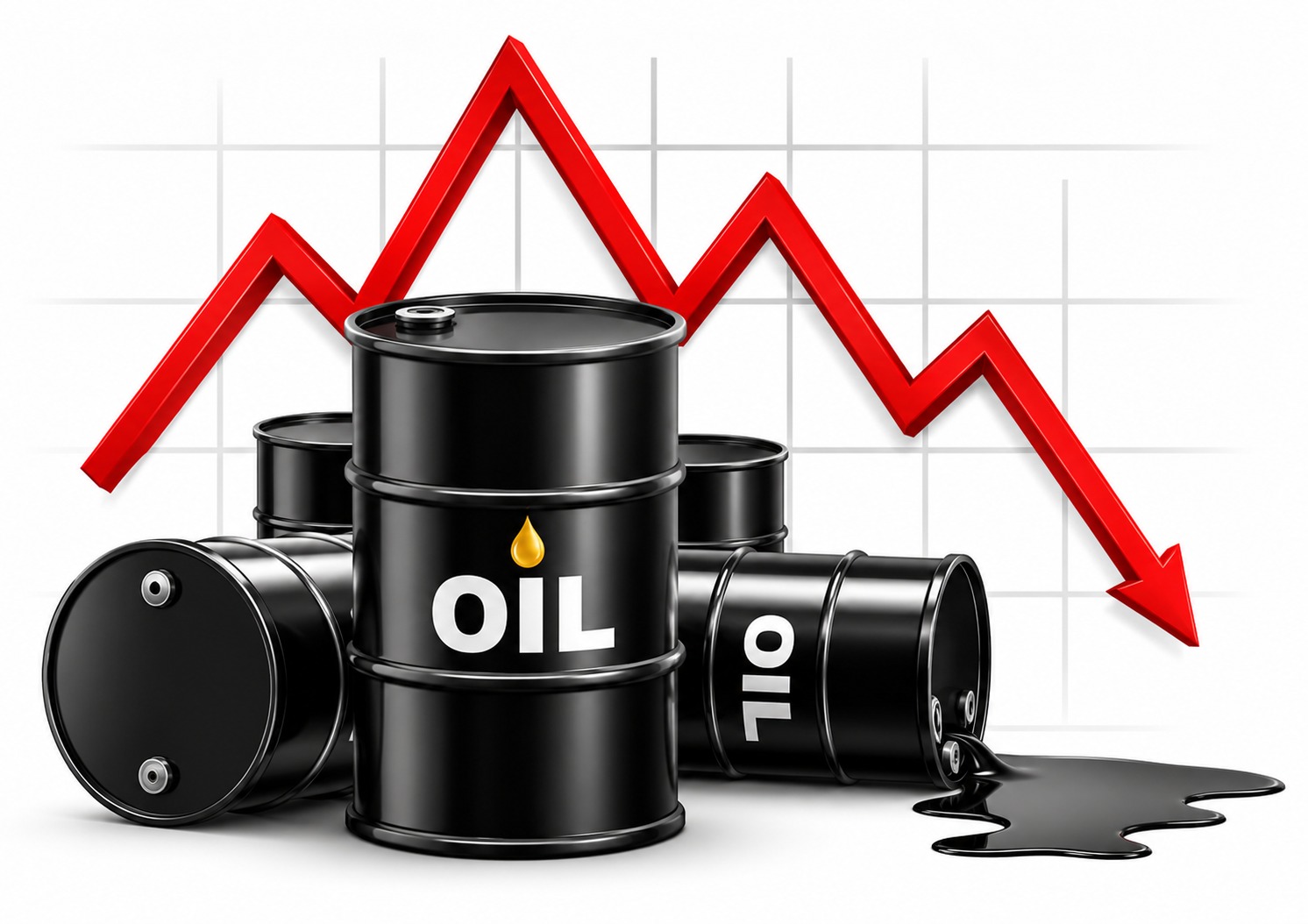
According to market data, the price of US benchmark crude, West Texas Intermediate, fell significantly by $12.30 per barrel, settling at $89.94. Similarly, the international benchmark Brent Crude dropped by $11.28, trading at $98.25 per barrel during the session.
The steep decline reflects a notable shift in market sentiment, with investors reacting to a combination of macroeconomic signals and evolving supply conditions. Analysts suggest that concerns over slowing global demand have played a central role in pushing prices downward, particularly as major economies show signs of reduced industrial activity and moderated consumption.
In addition to crude oil, natural gas prices also moved lower. Market figures show that gas prices declined by 2.76 per cent, reaching $2.73 per MMBtu. This downward movement further highlights the broader weakness in the global energy complex.
Experts point to multiple factors behind the recent drop in oil prices. One of the primary drivers is the perception of weakening demand in key markets, including North America, Europe, and parts of Asia. Economic uncertainty, persistent inflationary pressures, and cautious consumer behaviour have collectively dampened energy consumption forecasts.
At the same time, increased supply levels have added to the downward pressure. Higher production output from major oil-producing countries, along with stable inventories, has created a supply-demand imbalance that is weighing on prices. Some analysts believe that the market is currently experiencing a period of oversupply, which could persist if production levels remain elevated.
Geopolitical and financial uncertainties have also contributed to volatility in the energy sector. Fluctuations in currency markets, shifting trade policies, and ongoing global economic challenges have made investors more cautious, prompting sell-offs in commodity markets, including oil.
Market observers warn that if the current trend continues, it could have far-reaching implications not only for global energy producers but also for importing nations. Lower oil prices often translate into reduced revenue for exporting countries, while offering potential relief to economies heavily reliant on energy imports.
For countries like Pakistan, which depend significantly on imported petroleum products, the decline in global oil prices could provide some economic breathing room. Reduced import costs may ease pressure on foreign exchange reserves and help stabilise domestic fuel prices, benefiting both consumers and businesses.
However, experts caution that the situation remains fluid, and any sustained recovery in global demand or unexpected supply disruptions could quickly reverse the trend. Energy markets are known for their sensitivity to external shocks, and price movements can change rapidly in response to new developments.
In the broader context, the decline in oil prices is being closely monitored by policymakers, investors, and industry stakeholders. It serves as a reminder of the interconnected nature of global markets, where shifts in one sector can have cascading effects across economies.
As the situation evolves, analysts will continue to assess whether the current downturn represents a temporary correction or the beginning of a longer-term trend in the energy market.