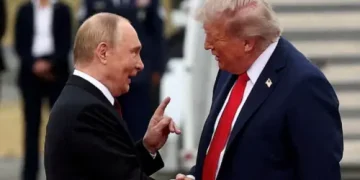



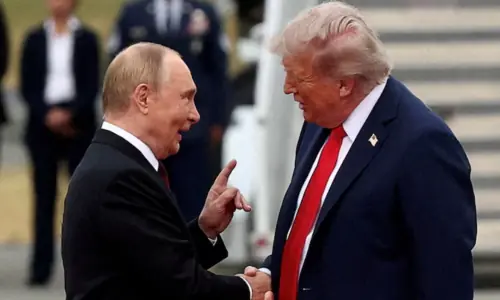
WASHINGTON: (Web Desk)- Russia has warned of serious global risks if hostilities against Iran resume, following a phone call between Vladimir Putin and Donald Trump, as tensions remain high over a fragile ceasefire and ongoing US-Iran standoff.
Kremlin foreign policy adviser Yuri Ushakov said Putin conveyed to Trump that any renewed military action, particularly a ground operation on Iranian territory, would be “dangerous and unacceptable.” He emphasized such escalation could destabilize not only Iran but the wider international community.
The warning comes as Trump rejected Iran’s latest proposal to reopen the Strait of Hormuz, keeping a critical blockade in place and prolonging the deadlock. The waterway remains central to global oil supply routes, making the standoff economically and strategically significant.
According to Ushakov, Putin supported extending the ceasefire, calling it “the right decision” to allow diplomatic negotiations to continue and reduce tensions. Trump, speaking at the Oval Office, described the conversation as constructive and indicated Putin had even offered assistance regarding uranium enrichment efforts, though Trump redirected focus toward ending the Ukraine war.
Meanwhile, US Defense Secretary Pete Hegseth told lawmakers that Iranian nuclear facilities had been “obliterated,” a claim that sparked sharp debate during a congressional hearing. Alongside Joint Chiefs Chairman Dan Caine, Hegseth defended the administration’s military strategy amid growing bipartisan scrutiny.
Lawmakers questioned the objectives and long-term implications of the conflict, which began in February without formal congressional authorization and has already cost an estimated $25 billion. Critics raised concerns over military readiness and resource strain, while Hegseth accused some members of undermining national efforts.
Despite calls for a swift resolution, mixed signals from Washington suggest the conflict could persist. Iran remains unwilling to abandon its nuclear ambitions, while the US continues to demand concessions tied to sanctions relief and security guarantees.
With the Strait of Hormuz still blocked and negotiations stalled, the situation remains tense, raising fears of further escalation in an already volatile region.