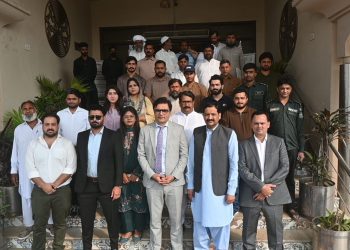



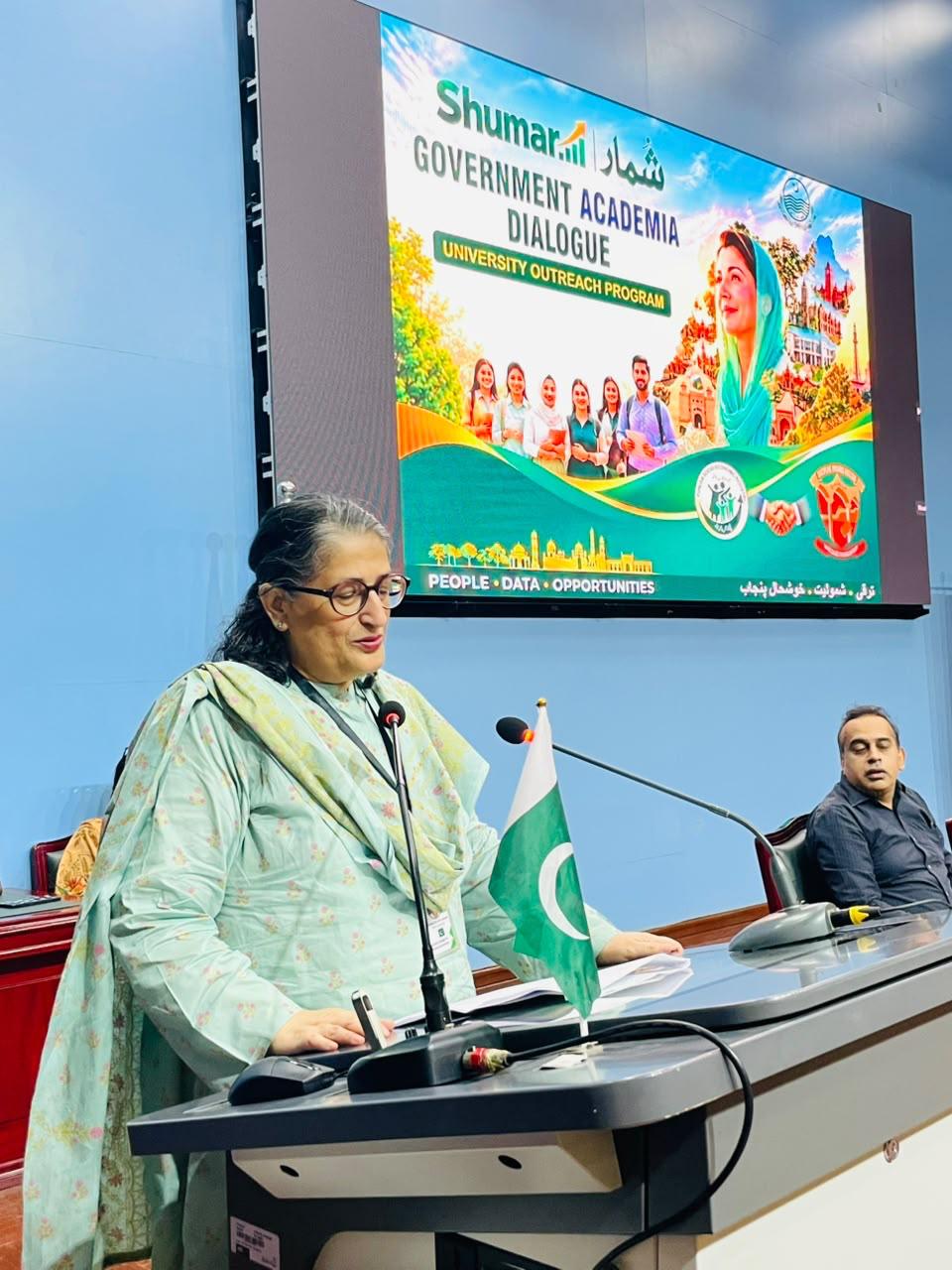
LAHORE, Oct. 15: The Punjab Socio-Economic Registry (PSER) has launched SHUMAR, a government-academia dialogue initiative aimed at strengthening research, promoting evidence-based policymaking and improving the delivery of public welfare programmes.
The initiative was launched at Lahore College for Women University (LCWU) through an inaugural seminar titled “Punjab Socio-Economic Registry: Building Evidence for Inclusive Development”.
Organised by the university’s Department of Economics under the patronage of Vice Chancellor Prof. Dr Uzma Quraishi, the seminar was held at Iqra Auditorium.
PSER is one of the key initiatives of Punjab Chief Minister Maryam Nawaz Sharif, aimed at developing a comprehensive database of households across the province to support more effective and targeted public assistance.
Addressing the seminar, Prof. Dr Uzma Quraishi highlighted LCWU’s contribution to women’s education, leadership and empowerment. She said the launch was particularly significant as the university provided female students with an opportunity to learn about government initiatives, research and public policymaking.
She also noted that Maryam Nawaz, Punjab’s first woman chief minister, had studied at LCWU.
Data-driven approach to welfare
PSER Project Director Qamar Zaman Qaisrani delivered a presentation titled “Seeing Punjab Clearly: From Counting Homes to Understanding Them”.
He explained that government departments had previously relied on separate, outdated or incomplete records, creating challenges in identifying deserving families and distributing public assistance effectively.
Under the chief minister’s vision and the guidance of Senior Minister Marriyum Aurangzeb, PSER is developing a comprehensive record of households’ socioeconomic conditions across Punjab to help ensure that subsidies, assistance and welfare programmes reach deserving families fairly and transparently, he said.
Qaisrani encouraged students and researchers to use the data to examine socioeconomic challenges and develop practical recommendations for addressing public issues.
He also said future government subsidies would be provided on the basis of PSER data, emphasising that completing the survey was not the end of the process but the beginning of improved decision-making and more effective governance.
Universities encouraged to contribute to policymaking
Prof. Dr Muhammad Afzal, chairperson of LCWU’s Department of Economics, highlighted the importance of reliable data in economic research and development planning.
He said researchers and students had often relied on limited information and estimates to study socioeconomic conditions. The PSER database would create new opportunities to analyse Punjab’s economic and social realities through evidence-based research.
Saad A. Sheikh, advocacy specialist at PSER, described the registry as more than a survey, calling it an important form of digital public infrastructure that could provide a common information base for different government programmes.
He said SHUMAR would connect universities, faculty members and students with the registry, enabling them to analyse data, identify public challenges and contribute to practical solutions.
The seminar concluded with an interactive session titled “Ask the Registry”, during which faculty members and students questioned the project director about the registry’s procedures, the use of socioeconomic data and its role in government welfare programmes.
In her concluding remarks, Prof. Dr Uzma Quraishi thanked the PSER team, faculty members and students for their participation, expressing hope that stronger collaboration between government and universities would improve research, policymaking and inclusive socioeconomic development.