



By Our Correspondent
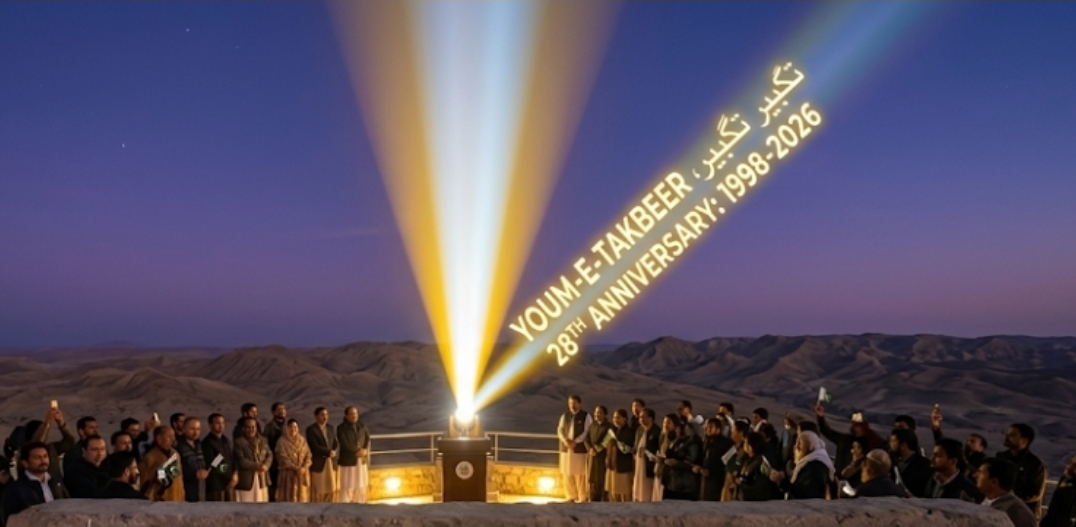
LAHORE: Every year on May 28, Pakistan observes “Youm-e-Takbeer,” or the “Day of Greatness,” to mark the anniversary of the Chagai-I and Chagai-II nuclear tests conducted in 1998. This historic event transformed Pakistan into the seventh nuclear-armed nation globally and the first within the Muslim world, establishing a credible deterrent to safeguard its territorial integrity.
The tests were a direct, necessary response to India’s Pokhran-II nuclear explosions, which had significantly altered the regional security landscape and posed a threat to Pakistan’s stability. Despite immense international pressure, economic sanctions, and various threats, the political and military leadership of the time, led by then-Prime Minister Nawaz Sharif, proceeded with the tests to restore the strategic balance of power in South Asia.
The journey to this achievement began in 1972 under the visionary leadership of former Prime Minister Zulfikar Ali Bhutto, who laid the foundation for the nation’s nuclear program following the 1971 war. The program was later supported and advanced during the tenure of President Muhammad Zia-ul-Haq.
This multi-decade effort relied on the dedication of numerous scientists, engineers, and armed forces personnel, most notably the efforts of Dr. Abdul Qadeer Khan and Dr. Samar Mubarakmand, whose technical expertise was instrumental in realizing the nation’s nuclear aspirations.
On this year’s commemoration, Pakistan’s leadership, including the Prime Minister and the President, paid glowing tributes to the architects of the program and the sacrifices of the entire nation. They emphasized that the nuclear capability achieved in 1998 serves as a symbol of national dignity and unity, acting as a decisive deterrent against any form of aggression or adventurism.
As the nation reflects on this milestone, there is a renewed commitment to maintaining this strategic strength while simultaneously pursuing a policy of peace and regional stability. Youm-e-Takbeer serves as a reminder that Pakistan remains a peace-loving state that is, nonetheless, fully prepared to defend its sovereignty against all challenges.


