


By Commerce Reporter
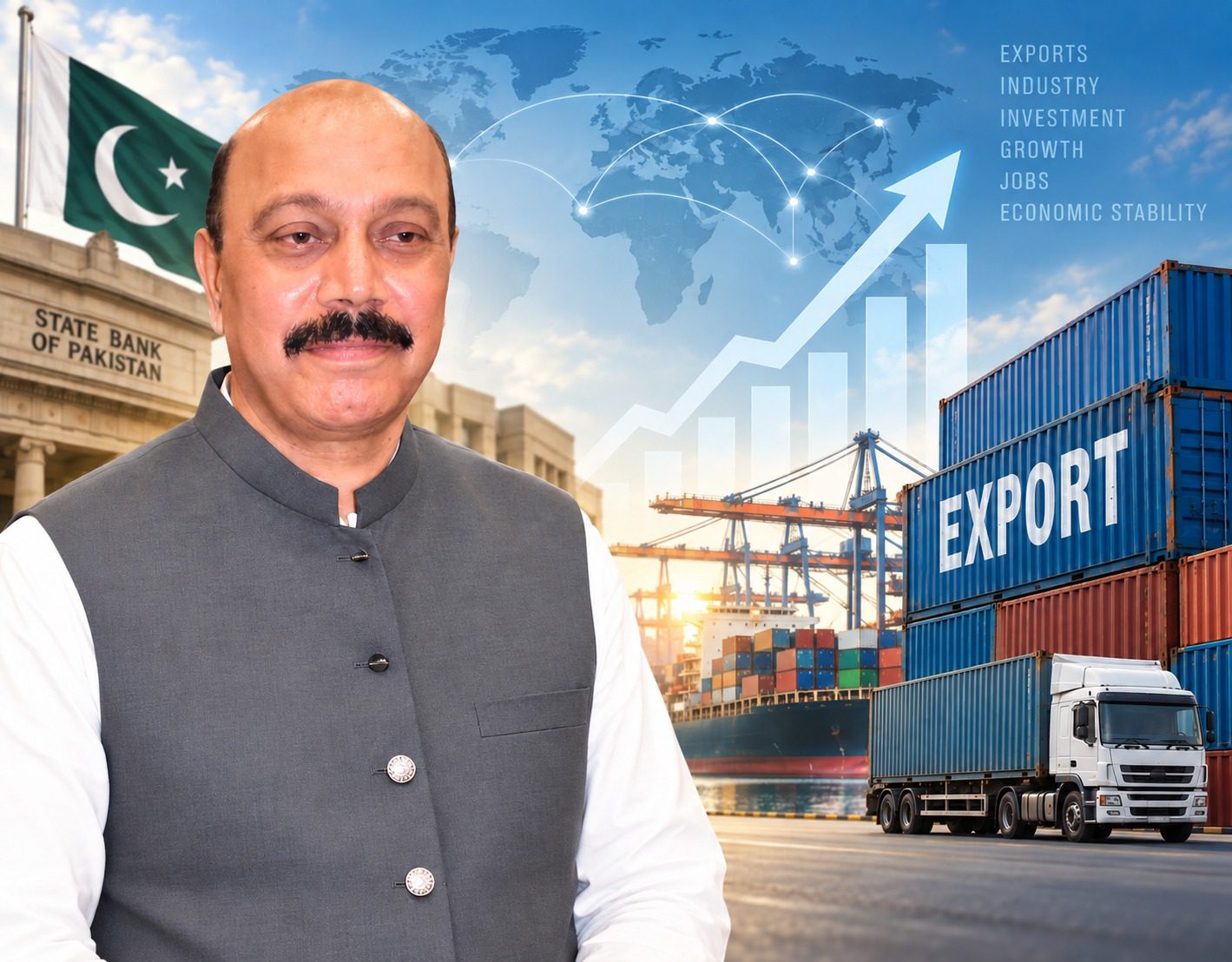
LAHORE: Pakistan needs a comprehensive strategy to expand exports and strengthen domestic productive capacity instead of relying continuously on external financing to support foreign exchange reserves and meet repayment requirements, senior Founders Group member Khadim Hussain said on Friday.
Hussain, who is also a member of the Board of Directors of the Pakistan Stone Development Company, senior vice president of the Ferozepur Road Board and a former Executive Committee member of the Lahore Chamber of Commerce and Industry (LCCI), said sustainable economic stability could only be achieved by building a stronger production- and export-oriented economy.
His comments come as Pakistan continues to arrange external financing to strengthen its foreign exchange position. Finance Minister Muhammad Aurangzeb said this week that Pakistan intends to seek an expansion of its 30 billion yuan currency swap line with China when the facility expires in 2027. He also said the government expects a response within two months regarding a proposed $10 billion US exchange stabilisation facility.
Hussain, Former LCCI Executive Committee member and candidate for LCCI EC member in the upcoming election, Khadim Hussainwhi is also a candidate for LCCI EC member in the the upcoming election Khadim Hussain said such financing arrangements could provide important short-term support for the country’s foreign exchange requirements, but argued that they could not substitute for reforms aimed at increasing exports, industrial output and investment.
“Pakistan has to move beyond external financing and strengthen its own productive and export capacity if it wants sustainable economic stability,” he said.
He called on the government to formulate a long-term economic strategy centred on export growth, industrial expansion and an improved business environment capable of attracting both domestic and foreign investment.
Hussain said continued dependence on external loans, deposits, swaps and other financing facilities would not by itself eliminate pressure arising from Pakistan’s external payment requirements.
He stressed that industries should have access to competitively priced energy, a simpler taxation system, lower costs of doing business and greater continuity in economic policies.
According to Hussain, these measures would encourage existing industries to expand production while also creating conditions for fresh investment and employment.
He said the government should address problems faced by export-oriented sectors on a priority basis and facilitate the private sector in gaining greater access to international markets.
The senior Founders Group member said high international energy prices and changing global economic conditions had made it increasingly important for Pakistan to reduce avoidable imports and expand domestic production.
He suggested that external financial assistance should, wherever possible, be linked with productive projects capable of generating exports, increasing industrial output and creating employment rather than being viewed solely as a mechanism for managing immediate financing pressures.
Hussain said stronger cooperation between the government and private sector could help Pakistan gradually develop an economy supported by domestic production, investment and exports.
He added that improving competitiveness, reducing unnecessary business costs and providing policy predictability would help Pakistani businesses compete more effectively in international markets.
“The objective should be to build an economy that earns more foreign exchange through exports and productive economic activity,” Hussain said, adding that a coordinated government-private sector strategy could reduce the country’s vulnerability to recurring external financing pressures over the longer term.
Meaning and impact
Hussain’s statement highlights a longstanding economic policy challenge for Pakistan: balancing immediate external financing requirements with structural measures intended to increase the economy’s capacity to generate foreign exchange through exports and investment.
Pakistan’s existing 30 billion yuan Chinese swap facility has been fully drawn, according to the finance minister, while the government has yet to determine the size of any additional financing it may seek when the arrangement comes up for renewal.
Future outlook
The effectiveness of an export-led approach would depend on several factors, including energy costs, taxation, exchange-rate conditions, access to finance, global demand and the ability of Pakistani manufacturers to improve productivity and competitiveness.
The government has itself said it wants to move increasingly from aid towards trade and investment, while continuing structural reforms aimed at productivity, competitiveness and private-sector-led economic growth.


