



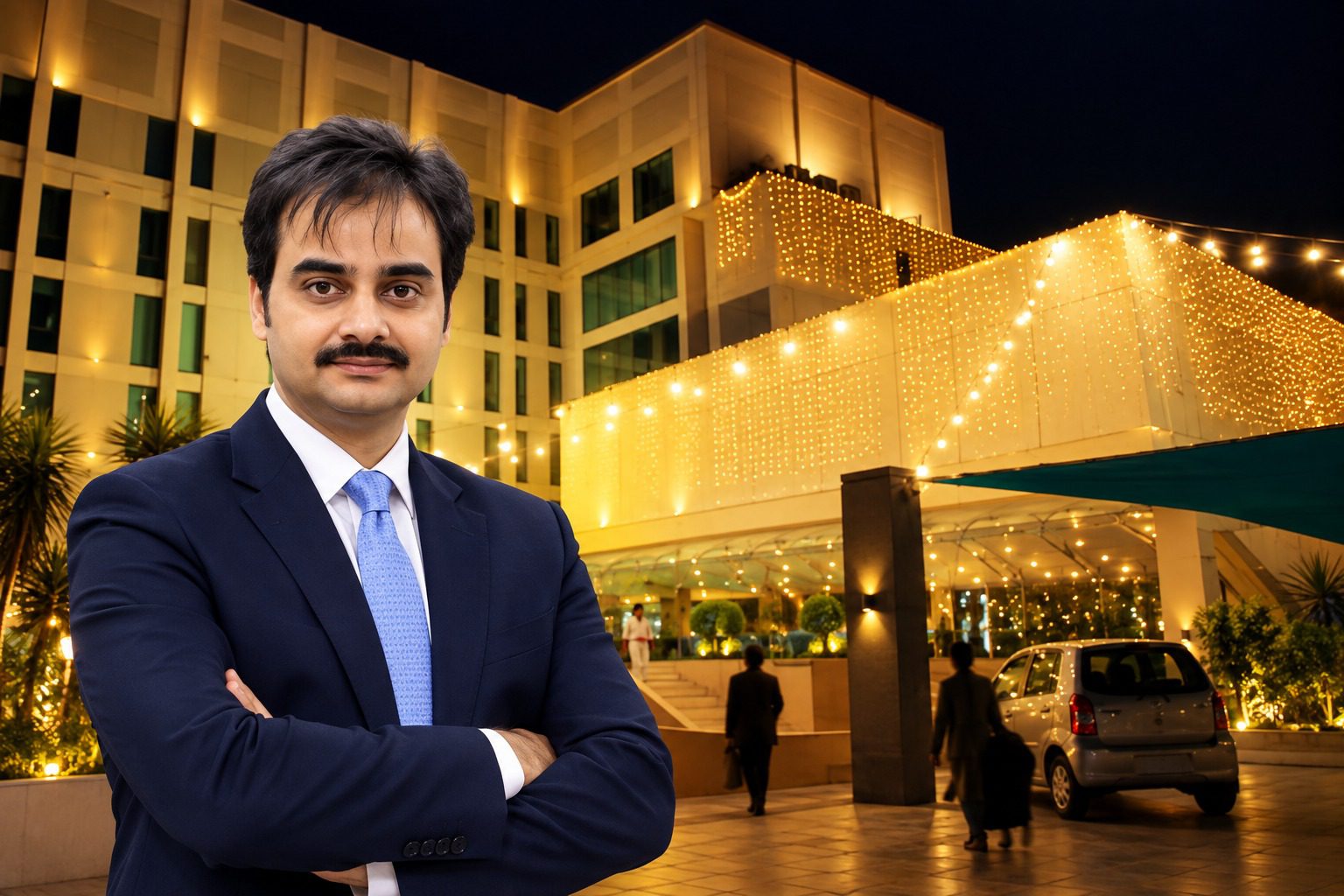
By M Qadeer
LAHORE: The Lahore Chamber of Commerce and Industry (LCCI) must become a stronger, more accessible and result-oriented voice for traders and industrialists, ensuring that legitimate business concerns are effectively presented before policymakers and followed through until practical solutions are explored, Ali Hussam Asghar, chairman of the Pioneer Businessmen Group and a candidate for LCCI president, said in a statement.
Asghar said Lahore’s business community was dealing with interconnected challenges ranging from the cost of energy and taxation to regulatory compliance, expensive financing, infrastructure deficiencies, parking and congestion, industrial competitiveness and difficulties faced by small and medium enterprises.
He said the chamber’s effectiveness should ultimately be measured by its ability to represent members and maintain meaningful engagement with federal, provincial and local authorities.
Business community needs effective representation
Asghar said traders and industrialists invest capital, generate employment, contribute taxes and sustain economic activity, and their legitimate concerns therefore deserve serious institutional representation.
He maintained that LCCI should remain accessible not only to large industrial groups but also to SMEs, market traders, exporters, startups and emerging entrepreneurs.
“The strength of LCCI should come from the confidence of its members,” Asghar said, adding that elected representatives should remain connected with businesses after the election rather than limiting interaction to formal chamber events.
He said regular visits to markets and industrial areas could help elected representatives better understand problems at the point where businesses actually experience them.
Cost of doing business needs sustained attention
Asghar identified the overall cost of doing business as one of the major concerns requiring sustained policy attention.
He said businesses had to manage electricity, financing, taxation, transportation, wages, rents, raw materials and regulatory compliance while trying to remain competitive.
The impact, according to him, becomes particularly serious when several costs increase simultaneously.
Asghar said LCCI should analyse the cumulative impact of policies on businesses instead of treating each problem in isolation.
He maintained that an economic environment encouraging investment, expansion and employment would ultimately benefit businesses, consumers and government revenues.
Tax system should be simpler and predictable
On taxation, Asghar said businesses understood their obligation to comply with applicable laws and pay legitimate taxes, but the system should be simple, predictable and administratively efficient.
He said greater documentation of the economy should be encouraged through facilitation and clarity.
Businesses already operating in the documented economy should not face unnecessary procedural complexity, he added.
Asghar called for better coordination among relevant authorities and said LCCI should continue presenting evidence-based proposals for simplification and rationalisation of overlapping requirements where appropriate.
He said businesses should clearly understand their tax obligations, deadlines and procedures without having to devote excessive resources to routine compliance.
Energy costs directly affect industrial competitiveness
Asghar described energy as an issue directly linked with Pakistan’s industrial and export competitiveness.
He said manufacturers could not compete effectively in domestic and international markets unless production remained commercially viable.
Electricity and other energy costs influence the final price of manufactured goods and therefore affect investment, production and employment decisions, he added.
Asghar said LCCI should collect sector-specific data on the impact of energy costs and place evidence-based recommendations before policymakers.
He also encouraged businesses to improve energy efficiency and adopt modern technologies wherever economically feasible.
Parking and congestion are economic issues
Highlighting difficulties in Lahore’s commercial centres, Asghar said parking and traffic congestion should not be dismissed as minor municipal matters because they directly affect commercial activity.
Customers require convenient access to markets, while traders need efficient movement of employees, suppliers and goods, he said.
According to Asghar, LCCI should coordinate with the relevant city, traffic and development authorities to explore market-specific solutions.
He said better traffic management, designated loading and unloading arrangements and, where technically feasible, structured or multi-storey parking facilities could form part of the discussion.
Each commercial area, however, should be examined according to its own requirements rather than applying a single solution across Lahore, he added.
Regulatory enforcement should remain transparent
Asghar said legitimate regulatory enforcement was necessary and businesses were required to comply with applicable laws.
However, he maintained that enforcement should be transparent, predictable and proportionate, with appropriate mechanisms available for addressing genuine grievances.
He said LCCI should not interfere with lawful enforcement or encourage businesses to avoid their legal obligations.
Instead, the chamber should help members understand applicable requirements and document genuine difficulties before taking them up with the competent authorities through lawful channels.
Asghar said recurring complaints affecting an entire sector should be studied carefully to determine whether a wider procedural or policy issue existed.
Stronger grievance mechanism needed at LCCI
Asghar proposed strengthening business facilitation and grievance handling within the chamber.
He said when a member approached LCCI with a genuine problem involving a government department, the chamber should help identify the relevant authority and appropriate procedure.
Where a matter affected a wider section of the business community, LCCI could document the issue and pursue it institutionally.
“The objective should not be confrontation with government. The objective should be resolution,” Asghar said.
He added that systematic documentation would also allow the chamber to distinguish between individual disputes and broader problems requiring policy intervention.
Industrial areas require targeted solutions
Turning to Lahore’s industrial base, Asghar said problems should be identified industrial area by industrial area rather than discussing manufacturing challenges only in broad terms.
Industrial businesses require reliable utilities, functional roads, efficient logistics, transportation links, skilled workers and a predictable regulatory environment, he said.
Asghar maintained that LCCI could work with industrial associations to prepare area-specific priorities and pursue them with the authorities responsible.
Protecting existing investment, he said, was just as important as attracting new investment.
An existing manufacturer purchasing machinery, expanding production or employing additional workers was also contributing fresh investment to the economy, he added.
SMEs should be helped to grow
Asghar placed particular emphasis on small and medium enterprises, saying SMEs represented an important source of entrepreneurship, employment and future exports.
He said many smaller businesses possessed strong products and entrepreneurial potential but faced difficulties involving finance, technology, management skills, market access and information.
LCCI could help connect SMEs with financial institutions, government programmes, technology providers, established businesses and prospective buyers, he said.
Asghar also called for stronger training and awareness programmes covering digitalisation, taxation, export procedures, branding and modern business practices.
He said today’s small enterprise could become tomorrow’s major employer or exporter if provided with an enabling environment.
Export growth must remain a national priority
Asghar said Pakistan needed sustainable foreign exchange earnings and greater export competitiveness.
Lahore, he maintained, possessed significant manufacturing and entrepreneurial capabilities that could be connected more effectively with international markets.
He said LCCI could strengthen relationships with foreign chambers and trade organisations, provide market intelligence and help businesses understand standards, certification requirements and potential export opportunities.
Businesses successfully serving the domestic market should also be encouraged to examine opportunities abroad, he added.
Asghar stressed that export promotion could not be separated from domestic business conditions.
“If our manufacturers are not competitive at home, competing internationally becomes much more difficult,” he said.
Technology and innovation essential for future growth
Asghar said Lahore’s businesses must accelerate technology adoption as competition increasingly depended on productivity, innovation and digital capabilities.
Technology, he said, was relevant not only to IT companies but also to manufacturers, traders and traditional businesses.
Digital tools could improve inventory management, production, marketing, customer relations and access to new markets.
He called for greater interaction between LCCI members, universities, startups, technology companies and young entrepreneurs.
Asghar said Lahore had the potential to strengthen its position as a centre for entrepreneurship, technology, manufacturing and value-added business.
Young entrepreneurs need greater access to LCCI
Asghar said the chamber should also provide greater space to young entrepreneurs and emerging businesses.
Many young people were entering new areas of business and required mentoring, networking, market access and interaction with established entrepreneurs, he said.
At the same time, established companies could benefit from the younger generation’s knowledge of technology, digital commerce and changing consumer behaviour.
Asghar said LCCI could provide a platform connecting experience with innovation.
Government and business should work as partners
Asghar called for sustained consultation between government and the business community.
He said government required private-sector investment, employment, exports and tax revenue, while businesses required stability, infrastructure, predictable regulation and efficient institutions.
The relationship should therefore be based on constructive engagement rather than unnecessary confrontation, he maintained.
Asghar said LCCI should support measures beneficial to economic activity while respectfully presenting concerns when policies created difficulties for legitimate businesses.
He stressed that criticism should be accompanied by evidence and workable alternatives.
LCCI advocacy should become more research-driven
Asghar also called for stronger research capacity within LCCI.
He said general complaints were less effective than properly documented cases supported by facts and sector-specific information.
Before approaching policymakers, the chamber should be able to explain how many businesses were affected, what economic impact an issue was creating and what practical alternative the business community proposed, he said.
Asghar maintained that research-based advocacy would strengthen LCCI’s credibility and improve the quality of government-business dialogue.
Members should judge leadership by results
Asghar said elected representatives should ultimately be judged by their accessibility, participation, advocacy and follow-up.
He acknowledged that LCCI itself did not determine electricity tariffs, taxation policies or statutory regulatory decisions, which remained within the jurisdiction of the relevant government institutions.
The chamber could, however, ensure that legitimate business concerns were researched, properly presented and consistently pursued, he said.
According to Asghar, members should be able to see whether an issue raised by LCCI had been followed up and what response had been received.
Chamber must represent both trader and industrialist
Asghar said the interests of Lahore’s traders and industrialists should not be viewed separately because markets, manufacturing and services were interconnected.
Factories required suppliers and customers, while traders depended on producers, transporters, warehouses and service providers.
A stronger industrial base could generate employment and support exports, while thriving commercial markets could create demand and expand economic activity, he said.
“LCCI must become a stronger voice for every legitimate business — from the trader operating in a market to the industrialist running a factory,” Asghar said.
He maintained that the chamber’s leadership should remain visible and accessible throughout its tenure.
Business-first agenda for Lahore
Asghar said his agenda for LCCI centred on reducing unnecessary barriers to business, improving institutional representation and encouraging conditions conducive to investment and expansion.
Tax simplification, competitive energy costs, regulatory facilitation, parking and infrastructure improvements, SME development, industrial competitiveness, exports, technology, skills development and stronger government-business coordination would remain interconnected priorities, he said.
Asghar maintained that Lahore already possessed the entrepreneurial talent, industrial capacity and commercial strength required for significantly greater economic activity.
What businesses needed, he said, was an environment in which entrepreneurship was facilitated and legitimate concerns received serious institutional attention.
“The real test of LCCI leadership should be whether traders and industrialists feel that their chamber stands with them when they face genuine business problems,” Asghar said.
He added that a stronger chamber should not merely identify problems but should develop solutions, approach the competent authorities and maintain follow-up.
For Asghar, the objective is to ensure that Lahore’s businesses can devote more resources to investment, production, trade, exports and employment rather than avoidable administrative and operational difficulties.


