


Pezeshkian rejects surrender, says Iran remains open to diplomacy
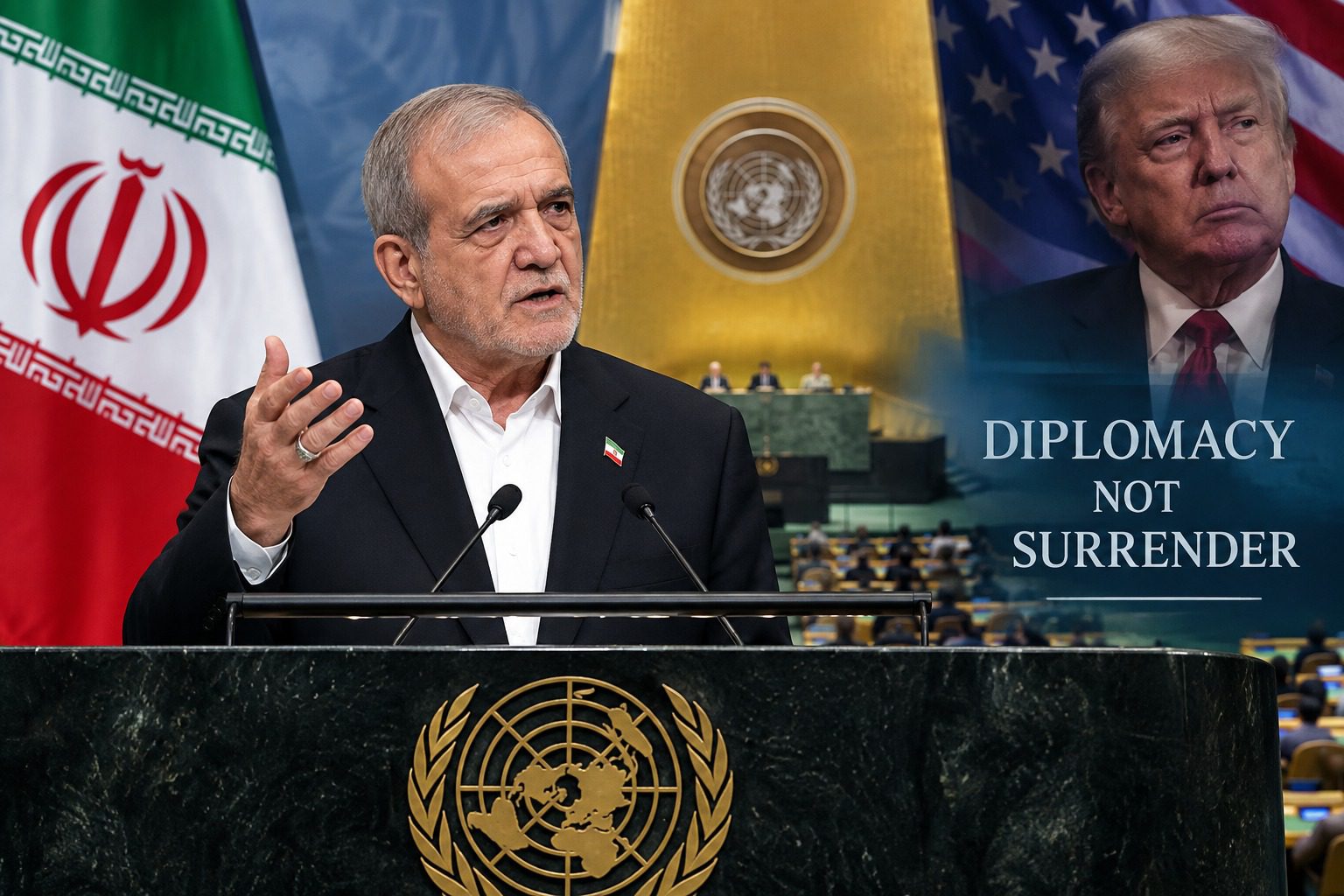
NEW YORK: Iranian President Masoud Pezeshkian said Wednesday that Tehran would not surrender to the United States but remained committed to diplomacy, delivering a firm response to President Donald Trump’s warning that Iran could face annihilation without a peace agreement.
Addressing the 81st session of the United Nations General Assembly in New York, Pezeshkian said increased sanctions, pressure and threats would not force Iran to abandon its position. Reuters reported that he accused Washington of adopting what he described as a “bullying mentality.” (Reuters)
Pezeshkian also defended Iran’s military actions as defensive and said Tehran was not seeking nuclear weapons. He stressed that Iran remained prepared to pursue diplomacy despite the continuing conflict with the United States.
His remarks came a day after Trump addressed the same UN forum and said he was considering whether to “annihilate” Iran if a peace agreement could not be reached. Trump also referred positively to ongoing contacts between the two sides. (Reuters)
The contrasting statements came as diplomatic contacts between Washington and Tehran resumed on the sidelines of the UN General Assembly.
Iranian Foreign Minister Abbas Araghchi and US representatives Steve Witkoff and Jared Kushner communicated through mediators in New York, marking the first known indirect contacts between the two sides since a ceasefire collapsed in July. (Jerusalem Post)
The Iranian government said its position included demands for an end to the conflict and what it described as US acts of aggression. The discussions have not yet produced a publicly announced agreement.
Pezeshkian also addressed the strategic importance of the Strait of Hormuz, saying Iran would not allow the waterway to be used for actions against the country. The strait has become a major concern for international energy markets during the conflict.
The confrontation has also created wider economic risks, particularly because the Strait of Hormuz is a major route for global oil shipments.
Despite the sharp rhetoric from both sides, diplomatic channels remain open. Trump has said he believes a settlement can eventually be reached, while Iranian officials have continued to indicate that diplomacy remains possible under certain conditions. (Reuters)
Pezeshkian’s UN speech therefore underscored the gap between Washington and Tehran’s public positions while also leaving room for continued negotiations through intermediaries.