


Read More : Punjab Assembly motion seeks details of Maryam Nawaz’s London visit expenses
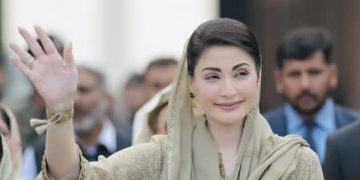
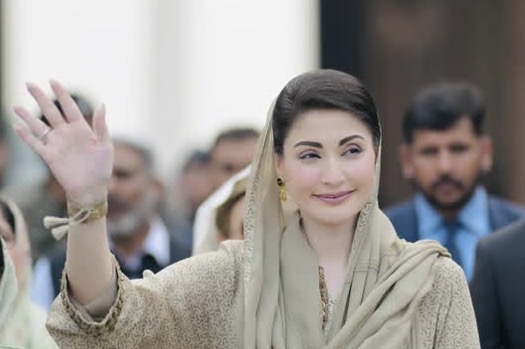
Addressing an event in Jhelum, Maryam questioned why ministers who had concerns about her government’s performance remained in office.
“Those who have a problem should resign. Why are they sitting there as ministers?” she said, responding to criticism of her administration.
Her remarks came amid a public dispute with federal minister Chaudhry Salik Hussain, a member of the Pakistan Muslim League-Quaid (PML-Q), who recently raised concerns about alleged corruption in Punjab.
Hussain, an ally of the ruling Pakistan Muslim League-Nawaz (PML-N), said in a television interview on November 2 that he heard stories about corruption in the province on a daily basis. He acknowledged, however, that he did not have evidence to substantiate the allegations.
Maryam subsequently issued a legal notice seeking five billion rupees in damages from the minister over his comments.
The six-page notice, sent on the chief minister’s behalf by Additional Advocate General Punjab Chaudhry Muhammad Nawaz, argued that Hussain had failed to provide documentary evidence or identify any official inquiry, audit observation, investigation, complaint or other verifiable material supporting his remarks.
The dispute has drawn attention to tensions between political figures who are part of the broader governing alliance, with the chief minister publicly defending her administration against accusations made by a federal minister.
Speaking in Jhelum, Maryam said people who had failed to deliver results in the past often found it easier to accuse others of corruption.
She nevertheless rejected the suggestion that her government had claimed to eliminate corruption entirely from the province.
“I have never said that corruption has been completely eliminated in Punjab,” she said, while maintaining that her administration was taking steps to identify and address wrongdoing.
The chief minister also questioned whether corruption was confined to Punjab, asking if similar problems did not exist in Sindh, Balochistan and Khyber Pakhtunkhwa.
She argued that her government was actively identifying corruption cases and said the provincial administration should not be singled out without examining the situation elsewhere in the country.
Maryam invited anyone with evidence against a member of her cabinet to bring it forward, promising that allegations supported by proof would be taken seriously.
“If anyone comes forward with evidence against my minister, I will not spare them,” she said.
Her comments appeared aimed at drawing a distinction between unsubstantiated political accusations and complaints that could be supported through documents or other evidence.
The chief minister also sought to present her administration as a defender of people from poorer and working-class backgrounds, saying the government was standing alongside ordinary citizens.
She claimed that influential individuals could no longer act with impunity or intimidate members of the public because of their social or political standing.
To illustrate her point, Maryam referred to an incident involving a shopkeeper who allegedly assaulted a young girl. She said she had instructed officials to bring the girl to a police station and told her to slap the shopkeeper in return.
The account was presented by the chief minister as an example of her government’s efforts to support people who might otherwise struggle to challenge influential individuals. Further details about the incident were not provided in her remarks.
Maryam’s comments come as allegations of corruption remain a recurring feature of political debate in Pakistan, where rival parties frequently accuse one another of mismanagement and misuse of public resources.
The legal notice against Hussain has added a legal dimension to the dispute, although the allegations and the demand for damages have yet to be resolved.
The chief minister’s latest remarks also leave open the question of whether any serving minister or other official will face a formal inquiry arising from the accusations.
She said she would act against members of her cabinet if credible evidence established their involvement in wrongdoing, while rejecting criticism that was not backed by verifiable material.