


By Commerce Reporter
ISLAMABAD — Pakistan’s inflation rate surged to its highest level in nearly two years in May 2026, according to the latest monthly report released by the Pakistan Bureau of Statistics, highlighting renewed pressure on household budgets and economic stability.
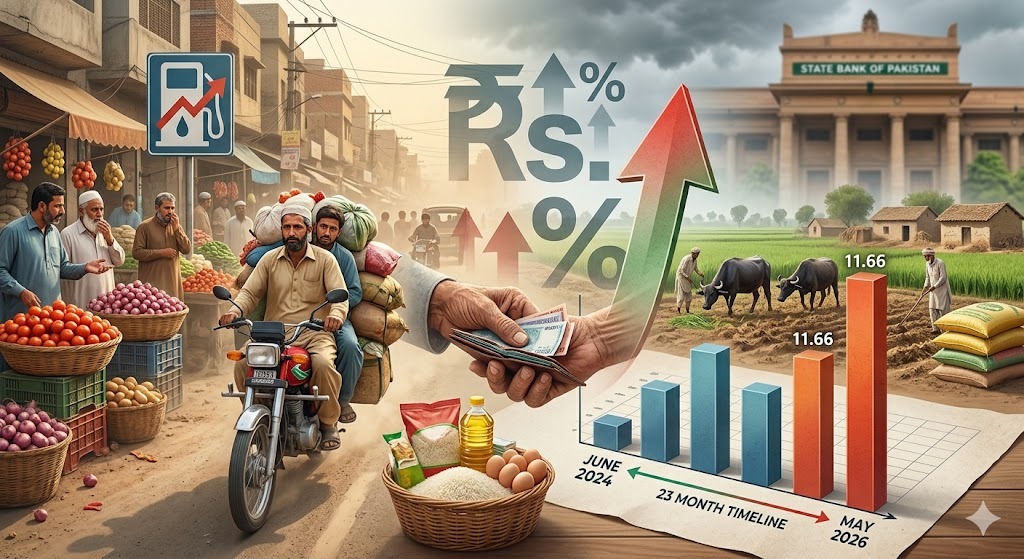
The official data showed that inflation increased by 0.52 percent in May compared to April, marking a continued upward trend in consumer prices. On a year-on-year basis, inflation climbed to 11.66 percent in May 2026, compared to just 3.5 percent recorded in the same month last year.
The report noted that this is the highest inflation level recorded since June 2024, making May 2026 a 23-month peak in price growth. Analysts say the surge reflects rising food, energy, and transportation costs, alongside persistent supply-side constraints in the economy.
From July 2025 to May 2026, the average inflation rate stood at 6.69 percent, indicating that price pressures have gradually built up over the fiscal year. In comparison, April 2026 had already shown signs of acceleration with a year-on-year inflation rate of 10.89 percent, suggesting that the latest spike is part of a broader upward trend.
The report further highlighted a divergence between urban and rural inflation patterns. In rural areas, monthly inflation rose by 0.30 percent in May, while urban centers experienced a sharper increase of 0.68 percent, reflecting higher costs in metropolitan markets.
On a yearly basis, rural inflation stood at 11.48 percent, while urban inflation reached 11.79 percent, indicating that price pressures are being felt across both segments of society, with slightly greater intensity in cities.
Economists suggest that multiple factors are contributing to the inflationary spike, including currency fluctuations, higher fuel costs, and adjustments in administered prices. They also point to structural issues such as supply chain inefficiencies and dependence on imports as key drivers of persistent inflation.
The rising cost of living is expected to increase pressure on policymakers ahead of future monetary policy decisions. Market observers believe the State Bank of Pakistan may maintain a cautious stance, balancing inflation control with the need to support economic growth.
Meanwhile, households continue to face challenges as essential commodities become more expensive, reducing purchasing power and increasing financial strain on lower and middle-income groups.
Experts warn that if inflationary pressures persist in the coming months, the government may need to introduce additional fiscal and monetary measures to stabilize prices and protect economic recovery efforts.
The latest data underscores the fragility of Pakistan’s inflation outlook and highlights the importance of coordinated policy actions to ensure long-term economic stability.


