


DUBAI (Agencies) — The United States has carried out airstrikes on Iranian radar and drone facilities, while Kuwait reported intercepting incoming drone and missile fire, marking a sharp escalation in already fragile tensions across the Gulf region.
According to the U.S. Central Command, American forces struck targets around the Iranian coastal city of Geruk and on Qeshm Island over the weekend. The strikes, described by Washington as “measured and deliberate,” were conducted in response to what it said were aggressive Iranian actions, including the downing of a U.S. MQ-1 surveillance drone operating over international waters.
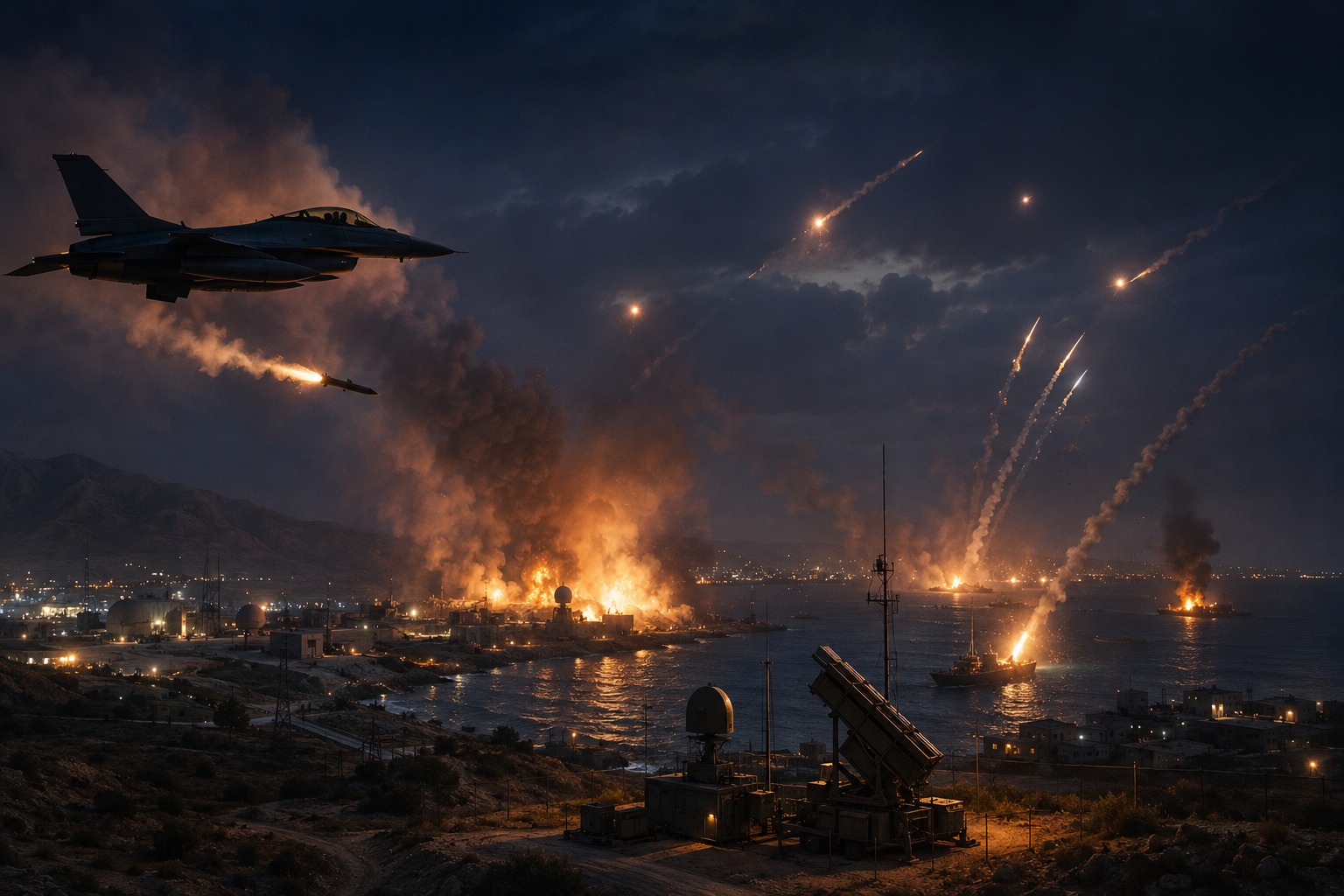
U.S. officials said fighter aircraft were deployed to destroy Iranian air defence systems, a ground control station, and several one-way attack drones that were identified as threats to commercial and military shipping in regional waters.
Iran later confirmed retaliatory action, saying it had responded to the U.S. strikes, though it did not provide precise details. State media suggested the response may have been directed toward Kuwait, which reported early Monday that its air defence systems had engaged and intercepted incoming drone and missile fire.
Kuwaiti authorities said the attack occurred during the early hours of the morning, with air defence units successfully responding to multiple aerial threats. The country hosts a major U.S. military presence, including U.S. Army Central, which serves as the forward command for American ground forces in the Middle East.
Iran’s Islamic Revolutionary Guard Corps claimed responsibility for a response operation, stating that U.S. forces had targeted infrastructure including a telecommunications tower, according to Iranian state media. Footage broadcast on Iranian television reportedly showed ballistic missile launches, including imagery featuring anti-U.S. messaging.
The exchange of strikes comes against the backdrop of a fragile and informal ceasefire arrangement between Washington and Tehran, which has repeatedly come under strain in recent weeks. Despite ongoing diplomatic contacts aimed at de-escalation, both sides have continued military operations in the region.
Tensions have also affected global shipping routes, particularly through the Strait of Hormuz, a critical waterway through which a significant share of the world’s oil and gas supplies pass. Iranian actions in the strait have already disrupted maritime traffic, raising concerns over global energy prices and supply stability.
The wider regional conflict has also seen continued hostilities involving Israel and Hezbollah in Lebanon, despite ceasefire understandings. Israel has expanded its military presence in parts of southern Lebanon, while Hezbollah has continued launching drone operations in support of Iran.
The latest escalation follows a broader pattern of tit-for-tat strikes. Over the weekend, U.S. forces also targeted a cargo vessel attempting to breach restrictions near Iranian-controlled waters, further intensifying maritime tensions in the Gulf.
Diplomatic efforts to extend the ceasefire remain ongoing but uncertain. U.S. Vice President JD Vance said negotiations were focused on establishing broad terms regarding Iran’s nuclear programme, with detailed arrangements expected to follow in later talks.
Iranian Foreign Ministry spokesperson Esmail Baghaei accused Washington of repeatedly shifting its position, saying negotiations were taking place in an atmosphere of deep mistrust.
U.S. President Donald Trump has meanwhile expressed optimism about the diplomatic process, stating in a social media post that Iran was interested in reaching a deal that would benefit both sides, while urging calm as talks continue.
Analysts warn that the latest exchange of strikes could further destabilise the region if diplomatic efforts fail to produce a durable agreement, particularly given the strategic importance of Gulf shipping routes and rising military activity on multiple fronts.


