


By Commerce Reporter
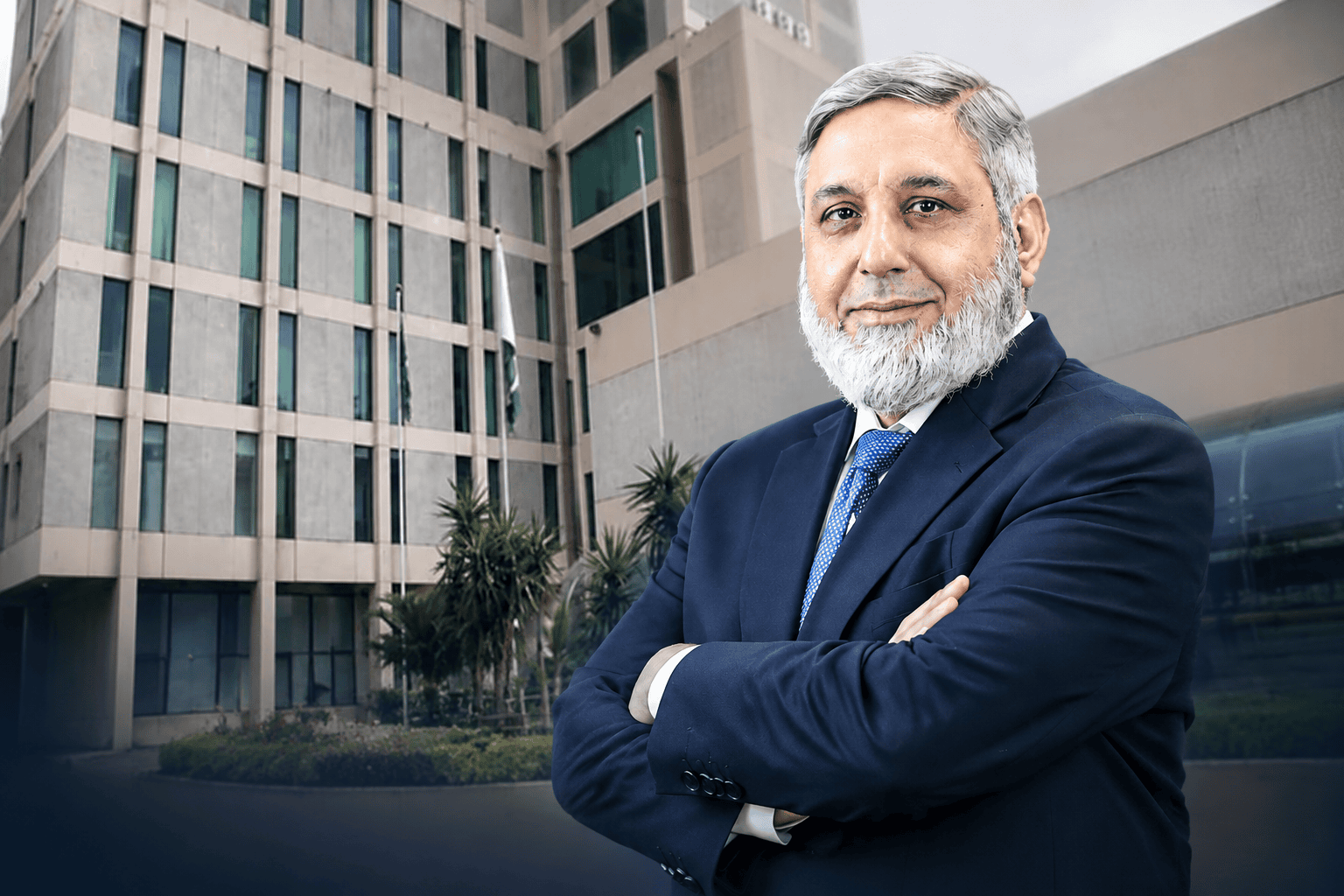
LAHORE: Lahore Chamber of Commerce and Industry (LCCI) Senior Vice President Tanveer Ahmad Sheikh has said that the chamber spent the last one year actively protecting the interests of traders, industrialists and small and medium enterprises by engaging with government institutions, regulatory authorities and policymakers.
In an exclusive interview, Tanveer Ahmad Sheikh said the LCCI adopted a policy of practical engagement and focused on resolving genuine issues of the business community instead of limiting itself to issuing statements.
He said the chamber worked on legal, taxation, industrial, regulatory and administrative matters while ensuring that the voice of businessmen reached the relevant forums.
“The role of a chamber is not only to highlight problems but also to provide solutions. During the past year, LCCI remained a bridge between the government and business community,” he said.
FBR Section 37 issue and protection of businesses from raids without prior notice
He said one of the significant regulatory issues taken up by the LCCI during the year concerned Sections 37A, 37AA and 37B of the Sales Tax Act, 1990, under which the business community feared that tax authorities could conduct raids and make arrests without serving prior notice.
He said the LCCI strongly opposed provisions that could expose genuine businessmen and taxpayers to sudden raids, arrests or coercive action without first providing them an opportunity to explain their position.
“The LCCI’s position was very clear: genuine taxpayers and businessmen should not be treated like criminals. Any enforcement action must follow due process, and businesses should be given proper notice and an opportunity to respond,” Tanveer Ahmad Sheikh said.
He said the chamber immediately took up the issue with the federal government and relevant authorities, warning that such powers could create fear among traders and industrialists, undermine taxpayers’ confidence and adversely affect the overall business environment.
According to him, the LCCI’s intervention and the business community’s strong reservations produced results, as the government substantially revised the provision and introduced safeguards, restricting arrest to tax fraud cases of Rs50 million and above and only after three notices, or where there was a risk of the accused absconding or tampering with evidence, subject to approval by a high-powered FBR committee.The LCCI also strongly advocated reduction in taxation burden, resulting in relief measures including the abolition of Super Tax for persons having income up to Rs500 million and a reduction in the rate from 10 per cent to 8 per cent above that threshold.
RUDA conversion fee issue and protection of SMEs
Tanveer Ahmad Sheikh said LCCI played a significant role in raising the concerns of industrialists regarding the conversion fee imposed by Ravi Urban Development Authority (RUDA).
“The major concern was that the industrial areas were not formally declared as industrial zones, yet businesses were being asked to pay heavy conversion charges,” he said.
The LCCI took up the matter with Punjab Minister for Industries and Commerce Chaudhry Shafay Hussain and other relevant authorities.
“The chamber explained that established industries could not bear extraordinary charges and that such policies could damage SMEs,” he said.
After negotiations and LCCI intervention, the implementation was stopped temporarily while discussions continued regarding reduction of the conversion fee and finding a workable solution.
Saving businesses from displacement on Band Road
Tanveer Ahmad Sheikh said LCCI also protected the interests of truck body makers operating on Band Road.
He said these businessmen were asked to remove their workshops, creating serious uncertainty for hundreds of entrepreneurs and workers.
“The LCCI immediately intervened, contacted authorities and presented the economic importance of these businesses,” he said.
He added that after negotiations, an understanding was developed between stakeholders and immediate displacement was avoided.
According to him, the chamber believes that relocation of industries should only be done after providing alternative arrangements.
Badami Bagh steel godown issue resolved
The LCCI Senior Vice President said steel godown owners in Badami Bagh also faced pressure to leave their existing locations.
He said the chamber took up the matter with relevant authorities and highlighted the importance of these businesses for Lahore’s commercial activities.
“The LCCI contacted important stakeholders, including Federal Minister Hanif Abbasi, and presented the concerns of businessmen,” he said.
Following intervention, authorities stepped back from the earlier decision. Existing leases were restored and new lease arrangements were provided to the same businessmen.
He said the development restored confidence among traders who feared losing their businesses.
Textile sector and Export Facilitation Scheme concerns
Tanveer Ahmad Sheikh said the textile sector remained one of LCCI’s major focus areas.
He said concerns were raised regarding possible misuse of the Export Facilitation Scheme (EFS), but at the same time restrictions affecting genuine local manufacturers were also highlighted.
“The policy should encourage exports but should not create hurdles for local manufacturing,” he said.
He added that the issue was taken up with the Finance Ministry to ensure a balanced approach that protected exporters as well as domestic industries.
All Chambers Conference and budget proposals
Tanveer Ahmad Sheikh said LCCI organised an All Chambers Conference to collect proposals from chambers across Pakistan.
He said representatives of different trade bodies discussed taxation, exports, energy costs, industrial growth and ease of doing business.
“After detailed consultation, comprehensive budget proposals were prepared and submitted to the government,” he said.
He added that these proposals reflected ground realities faced by businessmen.
The LCCI also strongly advocated reduction in taxation burden, resulting in relief measures including the abolition of Super Tax for persons having income up to Rs500 million and a reduction in the rate from 10 per cent to 8 per cent above that threshold.
“This was an important achievement for small businesses that were struggling under increasing costs,” he said.
MOFA attestation requirement removed
Tanveer Ahmad Sheikh said LCCI also successfully raised the issue of unnecessary Ministry of Foreign Affairs (MOFA) attestation requirements.
He said businessmen and exporters were facing additional procedures that increased delays and costs.
“The LCCI took up the matter with the Ministry of Foreign Affairs and explained the difficulties faced by the business community,” he said.
Following the intervention, the requirement of MOFA attestation was removed in cases where it was creating unnecessary hurdles.
He termed it a major facilitation step for exporters, traders and entrepreneurs.
Digital transformation of LCCI services
Tanveer Ahmad Sheikh said improving internal services remained a priority during the year.
He said LCCI introduced online membership registration and online membership renewal facilities.
“Businessmen can now access chamber services digitally without unnecessary paperwork and delays,” he said.
He added that the digital reforms improved transparency and efficiency.
The chamber also strengthened facilitation desks, including those related to the National Accountability Bureau (NAB) and Intellectual Property Organisation (IPO), to provide direct support to members.
Engagement with government initiatives and regulatory reforms
Tanveer Ahmad Sheikh said the LCCI maintained continuous engagement with federal and provincial governments to ensure that business interests remained part of policymaking.
He said the chamber appreciated initiatives that supported economic development and also raised concerns where government measures created difficulties for traders and industrialists.
He particularly mentioned reforms related to the Crime Control Department (CCD) and waste management initiatives, saying that positive steps taken by authorities were acknowledged and appreciated by the business community. However, he added that regulatory reforms should always maintain a balance between enforcement and business facilitation.
Concerns over PERA enforcement measures
The LCCI Senior Vice President said the chamber also raised concerns regarding the working approach of the Punjab Enforcement and Regulatory Authority (PERA).
He said while enforcement of laws was necessary, measures should not create fear among legitimate businesses.
“Industries and traders need a supportive environment where regulations are implemented fairly and businesses are given an opportunity to comply,” he said.
According to him, LCCI conveyed its reservations regarding certain actions to the provincial government and highlighted the concerns of businessmen.
He added that the chamber engaged at senior levels, including discussions with the Chief Minister and Prime Minister’s offices, to ensure that business-friendly policies remained the priority.
Appreciation of Pakistan’s role during Iran conflict
Tanveer Ahmad Sheikh said the LCCI appreciated the role played by Pakistan’s armed forces and government in promoting peace and stability during tensions related to the Iran conflict.
He said regional peace was directly linked with economic progress, trade expansion and investor confidence.
“The business community always supports initiatives that strengthen peace and stability because economic growth cannot take place without a secure environment,” he said.
Advocacy for GSP Plus benefits
Tanveer Ahmad Sheikh said LCCI continued raising its voice for making the Generalised Scheme of Preferences Plus (GSP Plus) facility more effective for Pakistani exporters.
He said the facility provided important opportunities for Pakistan’s trade with European markets, but continuous efforts were needed to maximise its benefits.
“The chamber remained engaged with stakeholders to ensure exporters could fully utilise available opportunities,” he said.
MoUs and cost reduction initiatives for members
The LCCI signed several memorandums of understanding (MoUs) during the year to facilitate its members and reduce business costs, Tanveer Ahmad Sheikh said.
He explained that these agreements were aimed at providing better services, professional support and financial advantages to traders and industrialists.
“The objective was to ensure that LCCI membership provided practical benefits to businesses,” he said.
He added that facilitation of members remained one of the chamber’s main priorities.
Environmental issues and reopening of sealed factories
Tanveer Ahmad Sheikh said LCCI played an active role in resolving problems faced by industries due to environmental regulations.
He said several factories were sealed by environmental authorities, creating difficulties for owners, workers and production activities.
“The LCCI immediately approached the relevant departments and many factories were reopened within 24 hours after intervention,” he said.
He added that the chamber did not oppose environmental protection but demanded workable alternatives instead of sudden closure of industries.
“Authorities also acknowledged the need to find alternative solutions that protect the environment while allowing industries to continue operations,” he said.
Rental property tax issue resolved
The LCCI Senior Vice President said the chamber also took up the issue of rental property taxation.
He said the proposed taxation measures created concerns among property owners and businesses.
“After LCCI’s intervention and discussions with authorities, the Punjab Revenue Authority reconsidered the matter and stepped back from the proposal,” he said.
According to him, the chamber’s efforts helped prevent additional financial pressure on businesses.
Promotion of IT sector and freelancing
Tanveer Ahmad Sheikh said LCCI gave special attention to promoting Pakistan’s growing IT sector and freelancing industry.
He said freelancing awards were organised to encourage young professionals and recognise talent in the digital economy.
“Information technology has enormous potential to create employment and increase exports. The LCCI is supporting this sector through awareness and recognition programmes,” he said.
Support for startups and new businesses
He said LCCI conducted several seminars and awareness sessions for startups and new entrepreneurs.
He highlighted initiatives related to the Asaan Business programme, saying that new entrepreneurs needed guidance regarding registration, finance and regulatory matters.
The chamber also worked to resolve banking difficulties faced by businessmen through negotiations with the State Bank of Pakistan.
“Access to finance is one of the biggest challenges for new businesses. The LCCI took up these concerns with banking authorities,” he said.
Support for Daroghawala factory owners
Tanveer Ahmad Sheikh said LCCI also stood with factory owners of the Daroghawala area who faced difficulties due to alleged coercive measures.
He said the chamber took up the matter to protect the honour and dignity of businessmen.
“The issue was highlighted because businessmen should not be subjected to unfair treatment or unnecessary pressure,” he said.
He added that LCCI initiated efforts to create awareness about the difficulties faced by industrialists and demanded fair treatment from authorities.
Customs issues and container problems resolved
Tanveer Ahmad Sheikh said Customs-related issues were among the major concerns addressed by LCCI.
He said importers were facing heavy detention and demurrage charges because containers were not being grounded on time.
“The delay was increasing costs for businesses. The LCCI intervened and took up the matter with Customs authorities,” he said.
He added that the chamber also raised concerns regarding Anti-Smuggling Organisation (ASO) officials seizing containers without sufficient reasons.
“Unnecessary seizures create financial losses for importers. The LCCI worked to ensure that legitimate businesses were not affected,” he said.
Increasing membership and strengthening LCCI representation
Tanveer Ahmad Sheikh said one of the biggest achievements of the year was a significant increase in LCCI membership.
He said around 13,000 new members joined the chamber due to improved services, stronger representation and confidence in LCCI’s role.
“Businessmen become part of an institution when they see that it stands with them and delivers results,” he said.
He added that LCCI focused on expanding its reach so that more traders and industrialists could benefit from its services.
Future vision
Concluding the interview, Tanveer Ahmad Sheikh, whose tenure as LCCI Senior Vice President is set to conclude in October, said the work undertaken during the year had been aimed at leaving behind a stronger platform for the business community and a more effective mechanism for resolving its problems.
He said economic stability, industrial growth, export promotion, support for SMEs and improvement in the ease of doing business should remain central to the LCCI’s agenda in the years ahead.
“Our objective throughout the year was to reduce unnecessary hurdles, protect legitimate businesses and ensure that the voice of traders and industrialists reached policymakers and relevant government institutions,” Sheikh said.
He expressed hope that the initiatives launched during the tenure would be carried forward by the incoming LCCI leadership, particularly the chamber’s engagement with federal and provincial authorities on taxation, regulatory reforms, industrial facilitation and reducing the cost of doing business.
“The private sector is the engine of economic growth. Supporting businesses means supporting Pakistan’s economy,” he said.
Looking back at the year, Sheikh said the increase in LCCI membership and the resolution of a number of longstanding business issues demonstrated growing confidence in the chamber. He said the leadership had tried to ensure that LCCI remained accessible to its members and responded quickly whenever traders or industrialists faced difficulties.
He said the chamber must continue serving as a strong bridge between policymakers and the private sector, while future leadership should build on the progress made and continue constructive engagement with government institutions for Pakistan’s economic development.


