


By Our International Desk
KYIV: More than 500,000 Russian military personnel are estimated to have been killed since Moscow launched its full-scale invasion of Ukraine in February 2022, Britain’s top military officer said Friday, as the war entered another phase of intense drone attacks on both sides.
Air Chief Marshal Sir Richard Knighton, Chief of the UK Defence Staff, put Russia’s overall casualties — including troops killed and wounded — at around 1.5 million.
The British assessment broadly corresponds with figures issued by the Ukrainian military, although Russia did not immediately respond to the latest estimate. Neither Moscow nor Kyiv regularly provides independently verifiable figures for its total battlefield losses.
Knighton also said Russia had suffered extensive equipment losses during more than four years of fighting. According to the British assessment, Moscow has lost more than 10,000 armoured and protected vehicles, nearly 3,000 artillery and air-defence systems and more than 370 aircraft and helicopters.
He did not provide an estimate of Ukrainian military casualties.
Despite Russia’s numerical advantage, its forces have struggled to achieve rapid territorial gains, with Western officials and military analysts reporting that the pace of Russian advances has slowed during 2026.
Russian drones strike Kyiv
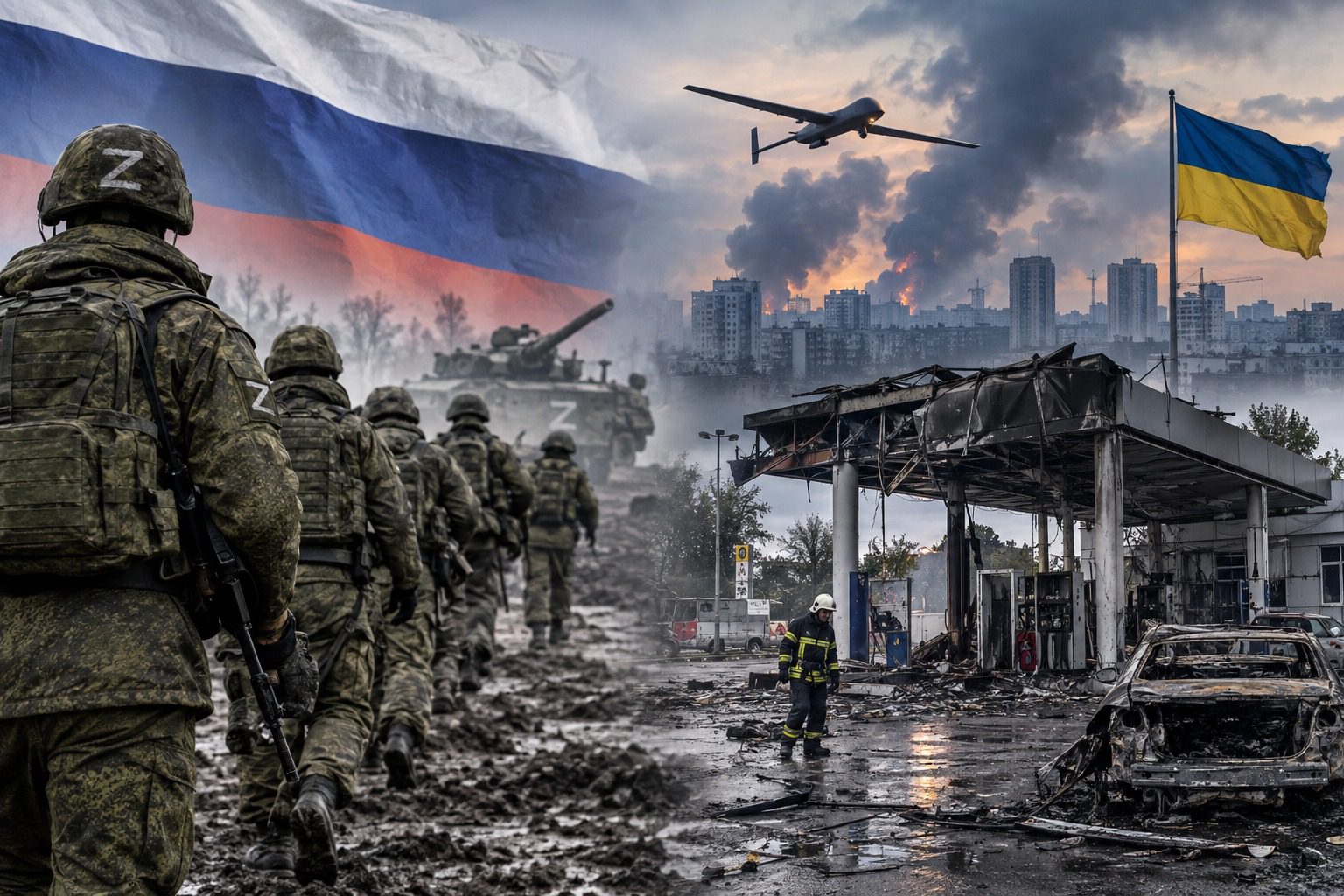
The casualty assessment came as Russian drones struck civilian infrastructure in Kyiv, including roadside fuel stations.
Two Ukrnafta filling stations in the Ukrainian capital were targeted, with Ukrainian prosecutors reporting two deaths and six injuries in one of the attacks.
The strikes were part of a wider series of attacks that Ukrainian officials say are increasingly affecting civilian locations and infrastructure.
Ukrainian Foreign Minister Andrii Sybiha accused Russia of deliberately targeting places used by civilians in an attempt to cause casualties and undermine public morale. Moscow has not accepted Ukrainian accusations that it deliberately targets civilians.
Ukrainian authorities have urged residents to avoid exposed infrastructure, including fuel stations, during air-raid warnings.
Five killed in Pavlohrad
Pavlohrad in central Ukraine observed a day of mourning Friday after five people were killed in drone strikes near shopping centres a day earlier. Ukrainian officials said dozens more were wounded in the attack.
Elsewhere, a woman and her 10-year-old son were injured when drones struck an apartment building and shopping centre in Zaporizhzhia, according to Ukrainian emergency authorities.
Another Russian attack in Dnipro reportedly wounded 12 people on Friday.
Ukraine expands strikes deep inside Russia
Ukraine, meanwhile, has intensified its long-range drone campaign against targets deep inside Russian territory, particularly energy infrastructure that Kyiv says supports Moscow’s ability to finance and sustain the war.
The Russian Defence Ministry said its air defences intercepted 777 Ukrainian drones during a major overnight attack across 16 Russian regions as well as occupied Crimea and areas over the Azov and Caspian seas.
Russian regional officials said two people were killed and three wounded in a Ukrainian drone attack in the Tula region, south of Moscow.
Reports also emerged of a fire at the Saratov oil refinery following a Ukrainian drone strike. The facility has previously been targeted by Kyiv.
Ukrainian President Volodymyr Zelenskyy said long-range attacks had reached eight Russian regions and described the operations as an effort to weaken Russia’s capacity to continue the war.
Russia’s oil sector faces growing pressure
Ukraine has increasingly focused its long-range strikes on Russian refineries and other energy facilities, seeking to disrupt fuel supplies and revenues.
The Center for Research on Energy and Clean Air reported that Russian oil-product exports fell to record lows in August while the country increased fuel imports.
According to the organisation, Russian fuel imports reached about 172,000 metric tons during August — more than seven times the previous monthly record.
The developments underline how the conflict has increasingly expanded far beyond the conventional front lines, with both countries using long-range drones to strike infrastructure hundreds or even thousands of kilometres from active battlefields.
What it means
If the British estimate is accurate, the scale of Russian military deaths illustrates the extraordinary human cost Moscow has absorbed since February 2022. However, battlefield casualty figures from the war remain extremely difficult to independently verify.
At the same time, the expanding drone campaigns show that geographic distance from the front is providing diminishing protection to infrastructure and civilians in both countries.
Future outlook
Ukraine is seeking additional Western air-defence assistance as Russian drone and missile attacks continue, while Kyiv is expected to maintain pressure on Russia’s oil and fuel infrastructure.
With neither side appearing close to a decisive battlefield breakthrough, long-range drones, air-defence capabilities and attacks on energy infrastructure are likely to remain increasingly important elements of the conflict.