


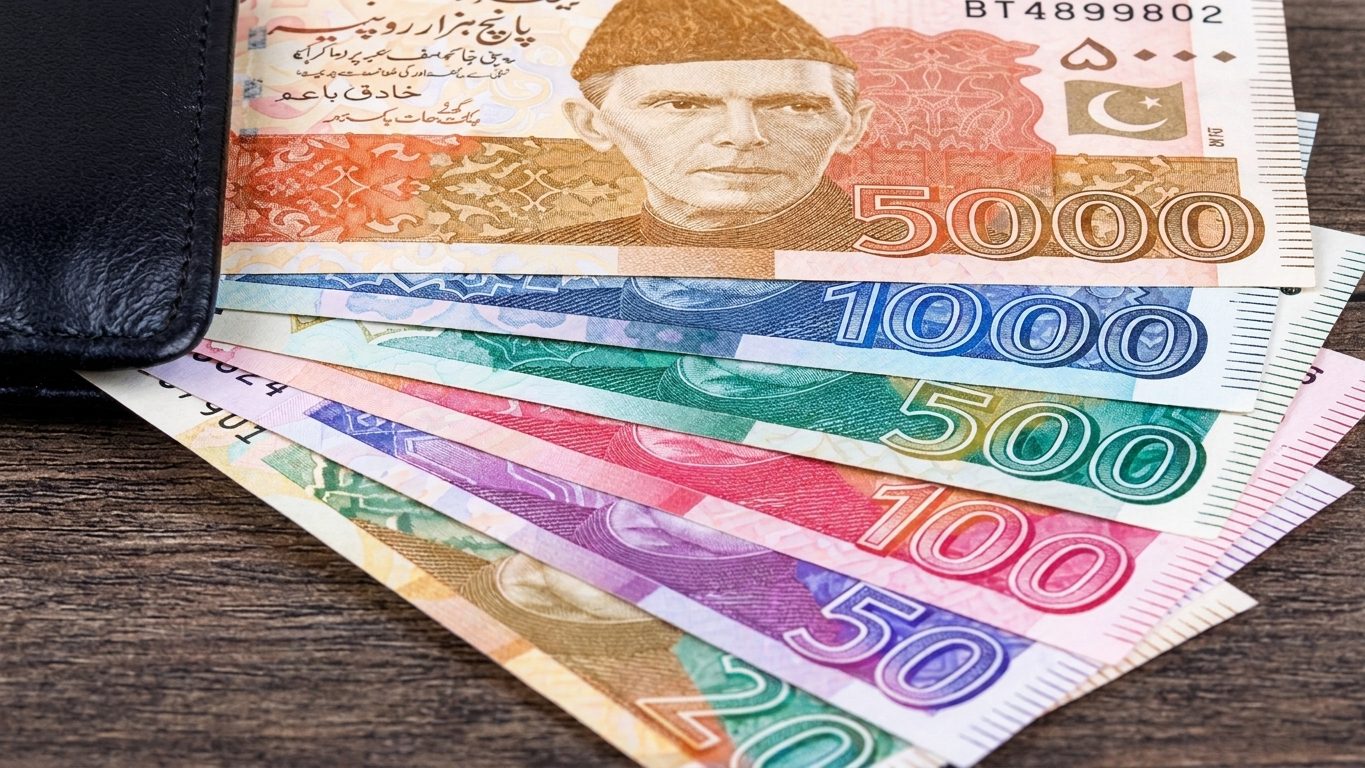
According to the reported exchange rate, the US dollar closed at Rs276.77, compared with Tuesday’s closing rate of Rs276.80. The latest movement reflects a slight gain for the local currency, although the change remained limited.
The modest decline in the dollar’s value comes as currency movements continue to influence Pakistan’s import costs, international payments and broader economic conditions.
Rupee records a marginal gain
The rupee’s improvement of three paisa represents a small daily movement in the interbank exchange rate. While the change indicates a slight strengthening of the local currency, a single session’s performance is not sufficient to establish a sustained upward trend.
Foreign exchange rates fluctuate in response to a range of factors, including demand for foreign currencies, international payment requirements, trade flows and expectations about economic conditions.
The latest closing rate provides a snapshot of the currency market on Wednesday, but further trading sessions will be needed to determine whether the rupee can maintain its position against the dollar.
For businesses and individuals making payments in foreign currencies, even relatively small exchange-rate movements can affect the final cost of transactions, particularly when large amounts are involved.
Dollar movements remain important for importers
The dollar exchange rate is important for Pakistan because many international transactions, including payments for imported goods and commodities, are conducted in US currency.
When the dollar becomes more expensive against the rupee, importers generally require more local currency to purchase the same amount of foreign exchange. Conversely, a stronger rupee can reduce the domestic currency cost of dollar-denominated payments, provided other costs and pricing arrangements remain unchanged.
However, Wednesday’s three-paisa movement was relatively small and should not be interpreted as a significant reduction in import costs on its own.
Import prices can also depend on international commodity prices, freight charges, insurance, duties and other expenses. Consequently, changes in the exchange rate do not necessarily translate immediately into lower prices for consumers.
Businesses dealing in imported raw materials, machinery, fuel and other internationally traded products typically monitor currency movements when calculating costs and planning payments.
Implications for the broader economy
Exchange-rate stability is an important consideration for economic planning, as substantial and sustained currency fluctuations can complicate financial decisions for businesses and households.
A stable exchange rate can help companies estimate the local currency cost of imports and manage payments more effectively. It can also assist businesses involved in international trade when preparing budgets and negotiating contracts.
For consumers, the broader impact of currency movements depends on how exchange rates affect the prices of imported products and production inputs. Any potential benefit from a stronger rupee may take time to appear and can vary across sectors.
Remittances are another important consideration. Money sent home by overseas Pakistanis is converted into local currency at prevailing exchange rates. A lower dollar rate means each dollar converts into slightly fewer rupees, although the overall effect depends on the amount transferred and the applicable exchange rate.
One session does not determine the market trend
The rupee’s latest gain remains modest, with the dollar declining from Rs276.80 to Rs276.77 between the two closing sessions.
Market participants will continue to monitor subsequent exchange-rate movements to assess whether the improvement continues or the dollar regains ground.
The latest figures alone do not establish the reason for the dollar’s decline, nor do they provide enough information to predict the direction of the exchange rate in coming sessions.
For now, Wednesday’s closing rate indicates a small gain for the Pakistani currency rather than a major shift in the foreign exchange market.