



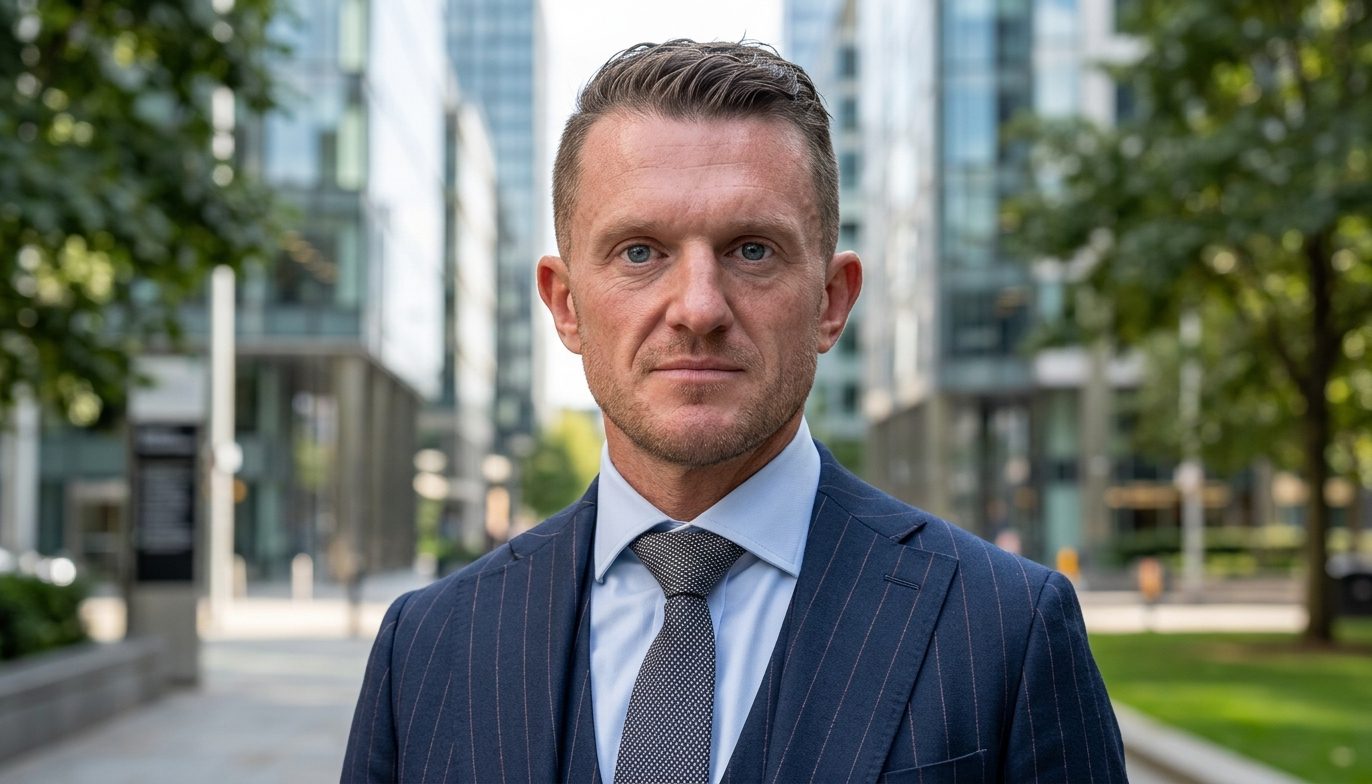
LONDON (Web Desk) – British far-right activist Tommy Robinson, whose real name is Stephen Yaxley-Lennon, has been found guilty of harassing two journalists and causing them to fear violence, exposing him to a potential prison sentence of up to 10 years.
A jury at Southwark Crown Court reached its verdict on Wednesday, October 28, after more than 11 hours of deliberations. Robinson was convicted on two charges relating to freelance journalist Andrew Young and Daily Mail editor Jacob Dirnhuber.
The 43-year-old activist was released on bail following the verdict and is scheduled to be sentenced on December 16. The maximum penalty for harassment causing fear of violence is 10 years in prison, although the sentence will depend on the court’s assessment of the offences and relevant circumstances.
Case linked to newspaper report
The case stems from an article published by the Daily Mail in August 2024 concerning Robinson’s social media activity during riots across Britain following the killing of three girls in Southport.
Robinson was holidaying in Cyprus when the newspaper published the report. He subsequently criticised the journalists involved and hired private investigators to locate their residential addresses, according to evidence presented during the trial.
He later shared images relating to the journalists’ homes and family members on social media platform X and sent messages directly to those involved.
The prosecution argued that the actions amounted to a campaign of intimidation intended to frighten the journalists and discourage them from reporting on him.
During the proceedings, jurors heard that Robinson had contacted Young by telephone and threatened to come after him. He also sent messages to Dirnhuber that contributed to concerns about the journalist’s personal safety.
The court heard that the consequences extended beyond online exchanges. Young was provided with personal protection by the newspaper, while Dirnhuber moved out of his home because of fears for his safety.
Other people associated with the newspaper also expressed concerns about their security following the incident.
Robinson denied intending to intimidate journalists
Robinson denied the allegations during the trial, maintaining that he had not intended to threaten or intimidate the journalists.
He argued that his actions were connected to his objection to the publication of a photograph of his former wife and that he wanted the newspaper to remove the image.
However, the jury rejected his defence and found him guilty on both counts by a majority of 10 votes to two.
Following the verdict, Robinson described the decision as “insane”. Before the trial, he had also publicly thanked billionaire Elon Musk for providing financial support for his legal defence.
The conviction marks a significant development in the legal proceedings against the controversial activist, whose public profile has been associated with anti-immigration campaigning and frequent online disputes.
Potential prison sentence
The offence of harassment causing fear of violence carries a maximum prison sentence of 10 years under British law. The maximum penalty does not mean Robinson will automatically receive that term.
The sentencing hearing on December 16 will determine the punishment after the court considers the circumstances of the offences and applicable sentencing principles.
Until then, Robinson remains on bail. The conviction has been established by the jury, while the specific sentence remains undecided.
The case has also drawn attention to the potential consequences of publishing personal information about journalists and their families during public disputes.
The court heard that the journalists took substantial precautions after Robinson’s actions, including security arrangements and changes to their living situations.
Wider questions about online conduct
The proceedings have highlighted the legal boundaries surrounding online expression, personal information and conduct that causes another person to fear violence.
Public figures can criticise media coverage and challenge reporting through established legal channels. However, conduct involving targeted harassment and threats can result in criminal proceedings when the legal requirements for an offence are met.
The case also underscores the risks faced by journalists covering controversial political figures, particularly when professional disagreements extend beyond published work into their private lives.
With sentencing still pending, the next major stage in the proceedings will be the court’s decision on the appropriate penalty.