


TEL AVIV (Web Desk) – Israeli Prime Minister Benjamin Netanyahu’s political bloc remained ahead in the country’s general election on Wednesday, October 28, but preliminary results showed that neither major political camp had secured the parliamentary majority required to form a government independently.
With around 85 per cent of the total vote counted, Netanyahu’s bloc was projected to hold 53 seats in the 120-member Knesset, while the opposition bloc led by former military chief Gadi Eisenkot was projected to secure 48 seats. Arab parties were projected to win 19 seats, marking a significant increase in their parliamentary representation.
A minimum of 61 seats is required to command a majority in the Israeli parliament. The preliminary figures therefore left the country facing potentially lengthy negotiations over the formation of its next government. Approximately 600,000 additional ballots, including votes cast by military personnel and other eligible groups, were still awaiting counting.
Netanyahu and Eisenkot have both expressed their intention to form a government, despite the uncertain electoral outcome. The final distribution of seats and the willingness of smaller parties to enter coalition arrangements are expected to shape the next stage of Israel’s political process.
Arab parties gain significant parliamentary influence
One of the most notable developments in the election was the strong performance of Arab political parties, whose combined representation could become decisive in determining which political camp forms the next government.
Arab citizens account for approximately 21 per cent of Israel’s population. Their parties have historically faced significant obstacles in influencing government formation, but the latest results have strengthened their potential role in parliamentary negotiations.
The preliminary outcome suggests that Eisenkot’s opposition bloc could potentially obtain a parliamentary majority if it secured sufficient support from Arab parties. However, the prospect remains politically complicated because several opposition figures had expressed reluctance during the campaign to form a coalition government with Arab lawmakers.
Yair Golan, leader of the Democrats party within the opposition camp, called for cooperation with Arab representatives, arguing that their votes should not be excluded from efforts to establish a new government.
Such cooperation could reshape Israel’s parliamentary landscape, although disagreements within the opposition over security policy and coalition arrangements may complicate negotiations.
Netanyahu calls for a strong right-wing government
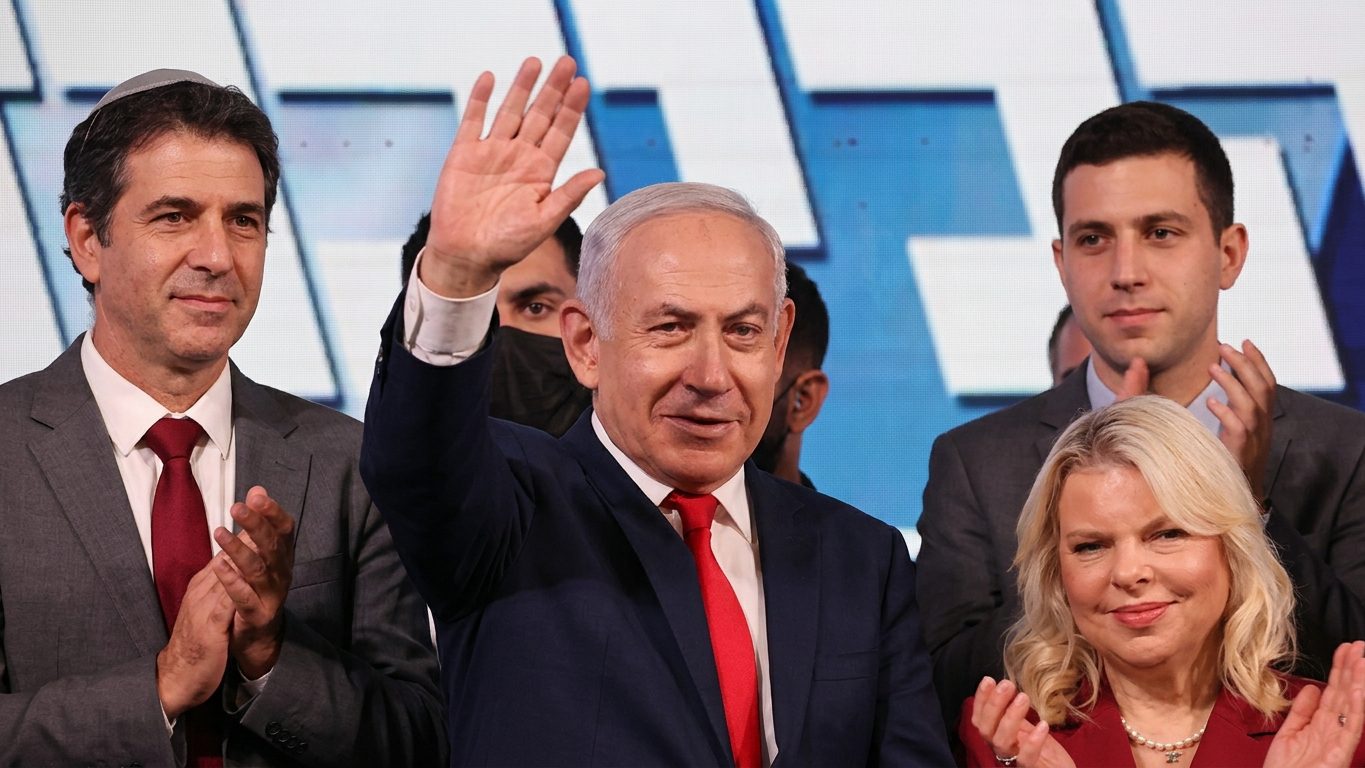
Addressing supporters in Jerusalem after the polls closed, Netanyahu called for a strong government of the right and urged unity among Jewish and Zionist political forces. He stopped short of making an unequivocal declaration of victory as the results remained uncertain.
The election represents another major test for the veteran prime minister, who has governed Israel for nearly two decades across several terms. His political standing has been shaped by security concerns, domestic divisions and international criticism over Israel’s military campaigns.
Netanyahu’s supporters have highlighted his government’s security policies, while opponents have called for political change and a different approach to domestic governance and international relations.
Eisenkot, meanwhile, urged Netanyahu not to use national security concerns for political advantage. He said the electorate had signalled a desire for change and pledged to work quickly towards forming an alternative government.
High voter turnout reflects election’s importance
The election recorded participation of nearly 78 per cent, the highest turnout since 1999, according to preliminary figures. The strong participation reflected the significance of the contest amid deep political divisions and continuing regional instability.
The vote took place against the backdrop of the wars in Gaza and involving Iran, growing international criticism of Israeli policies, and continued violence and settlement expansion in the occupied West Bank.
Although Eisenkot has presented himself as an alternative to Netanyahu, the two leaders share several positions on security. Eisenkot, a former military chief, supported Israel’s military campaign in Gaza while promising to improve the country’s international standing and address domestic political divisions.
Coalition negotiations could determine the outcome
The preliminary results leave both camps facing difficult negotiations. Netanyahu’s bloc may seek support from smaller right-wing and religious parties, while Eisenkot’s alliance must determine whether cooperation with Arab parties is politically possible.
If the negotiations fail to produce a workable coalition, Israel could face an extended period of political uncertainty and the possibility of another election. Until a new government is formed, Netanyahu is expected to remain caretaker prime minister.
The remaining ballots could still affect the final allocation of parliamentary seats, although the preliminary figures indicate that no single bloc has secured the 61 seats needed to govern independently.
The coming negotiations will determine whether Netanyahu can retain power, or whether Eisenkot can assemble a coalition capable of replacing the incumbent government.