


By Our Correspondent
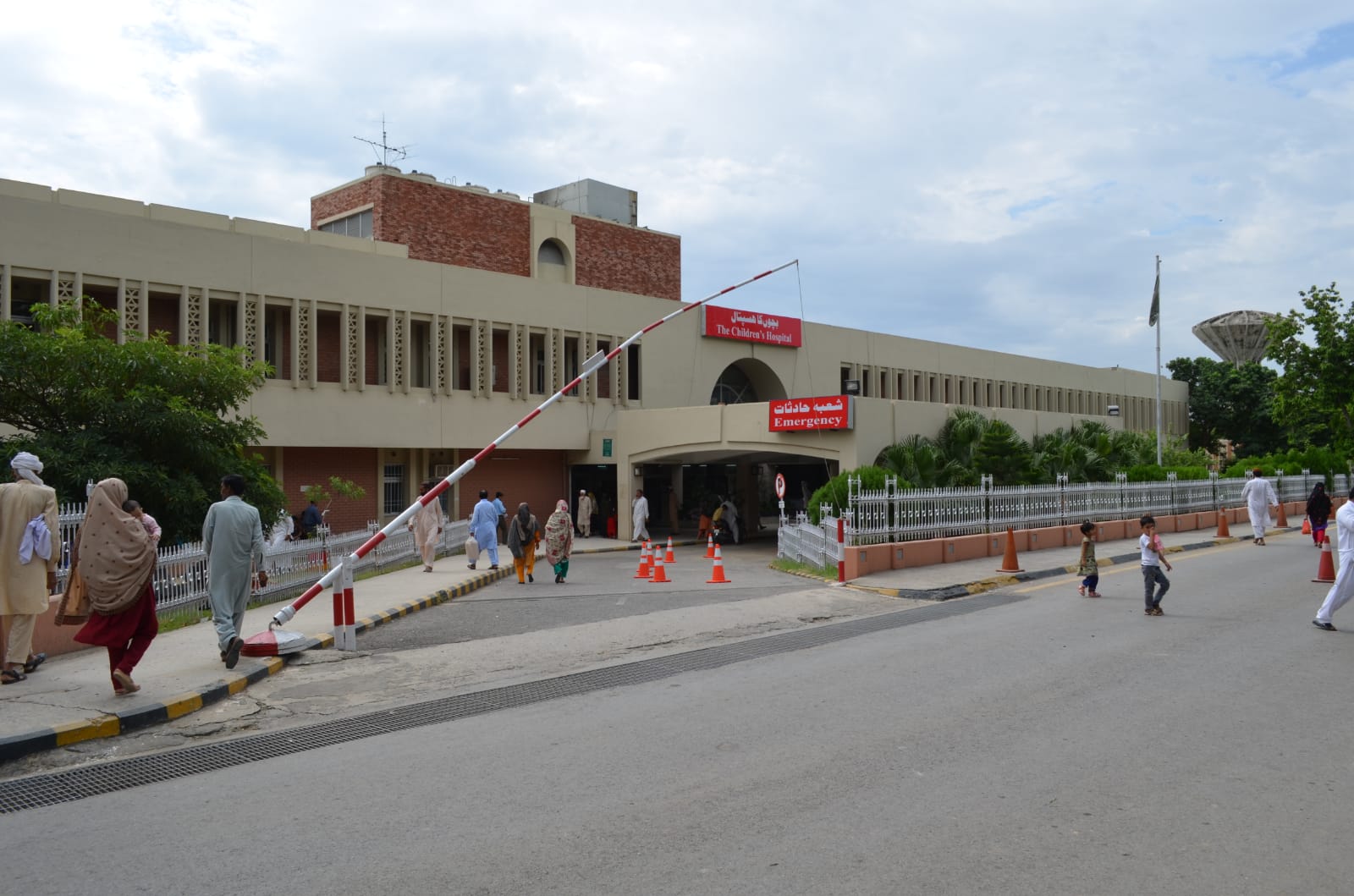
ISLAMABAD: Fourteen newborn babies were killed in a devastating fire that tore through a ward at the Pakistan Institute of Medical Sciences (Pims) early Wednesday, leaving grieving families demanding answers over fire safety and emergency arrangements at the federal capital’s largest public-sector hospital.
The blaze broke out on the third floor of the Mother and Child Hospital, where infants requiring specialised medical care were being treated. Fifteen babies were present in the affected ward at the time of the incident, according to hospital officials.
Pims spokesperson Dr Aneeza Jalil said 14 babies lost their lives while one infant was rescued by a doctor.
Read also: The cost of negligence: When maintenance fails, newborn lives are lost
The Islamabad administration said rescue teams rushed to the hospital after receiving information about the fire. Six fire brigade vehicles and four ambulances participated in the emergency operation.
Authorities said firefighters brought the blaze under control and efforts were made to shift the children to intensive care. However, 14 infants suffered fatal injuries in the fire.
Dr Jalil said six bodies had initially been handed over to their parents and arrangements were being made to hand over the remaining bodies to their families.
The tragedy triggered scenes of grief and anguish outside the hospital as families waited for information about their newborn children.
Television footage showed rescue personnel using ladders to reach broken windows of the affected section. Glass from shattered windows could be seen around the building as emergency workers and security personnel remained deployed at the hospital.
Health minister says AC blast triggered fire
Federal Health Minister Mustafa Kamal said the fire erupted at around 6:45am following what he described as a blast in an air-conditioning unit inside the ward.
Speaking to Geo News, Kamal said the babies being treated there were either inside incubators or receiving oxygen.
According to the minister’s preliminary account, the blast sparked the fire and the presence of oxygen equipment contributed to its rapid spread.
He confirmed the deaths of 14 infants and said law enforcement agencies and other relevant authorities were present at the scene.
The exact cause of the incident and the circumstances that allowed the fire to become so deadly will require a formal investigation. Questions are also expected to focus on electrical safety, oxygen handling, evacuation arrangements and fire-prevention systems inside the facility.
Parents recount terrifying escape
PIMS fire tragedy: “Give me my child back, or I won’t leave,” a grieving mother cries, raising serious questions over the hospital’s safety arrangements and response.
Survivors and relatives described scenes of panic as smoke spread through the hospital and patients were told to leave the building.
Malik Israr, whose niece was admitted to the gynaecology ward, raised concerns about the nursery operating in a building where repair and renovation work was underway.
He said patients were ordered to evacuate after the fire broke out, forcing women who had recently given birth to rush downstairs from the second floor.
For many families, however, evacuation came with an unbearable loss.
Khurram Mehmood, 40, told AFP that his three-day-old daughter died in the fire. He said his wife had been inside the ward and was evacuated along with other patients.
“I lost my daughter. She was only three-days-old,” he said.
Mehmood also alleged that rescuers took hours to arrive, an assertion that would need to be examined against official emergency-response records.
Outside the hospital, another mother, Shagufta Parveen, held her 10-day-old baby after escaping the blaze. Smoke residue remained visible on her hands as she described people screaming and thick black smoke filling the area.
Her baby survived.
Other parents were confronted with a very different reality.
Javeria, whose newborn was among those killed, demanded that her child be returned to her and called for justice.
Another grieving parent, Mudasir, alleged that all but one of the ward’s doors were closed and claimed there were inadequate fire-safety arrangements.
Those allegations have not yet been independently verified, but they are likely to form part of questions facing hospital management and investigators.
One baby rescued as 14 families face tragedy
Amid the scale of the disaster, one infant survived.
According to the Pims spokesperson, a doctor managed to rescue one of the 15 babies present in the ward.
The survival of the child stood in stark contrast to the deaths of the other newborns, many of whom had been receiving intensive medical support through incubators or oxygen.
The tragedy has left families who had arrived at the hospital seeking treatment for their babies instead preparing to receive their bodies.
Fire safety under scrutiny
The incident is expected to place Pims’ fire-prevention and emergency-response systems under intense scrutiny.
Investigators will need to determine whether required fire alarms, extinguishers, emergency exits and evacuation procedures were available and functional in the affected section.
The presence and management of oxygen supplies will also be a critical part of any technical investigation because oxygen-rich environments can accelerate combustion, although oxygen itself is not a fuel.
The reported renovation work inside the building could also become part of the investigation, particularly whether construction activity affected emergency access, electrical systems or evacuation routes.
Any determination of responsibility, however, will depend on the findings of the official inquiry rather than preliminary accounts from officials or witnesses.
Why the Pims fire matters
Pims is Islamabad’s largest public-sector hospital and one of the federal capital’s oldest major healthcare facilities. Established in 1985, the institution includes several hospitals, medical departments and teaching facilities and receives patients from Islamabad as well as other parts of the country.
The deaths of 14 newborns therefore raise wider concerns about safety standards in public hospitals, particularly in sensitive areas such as neonatal units, intensive care wards and facilities where oxygen is extensively used.
Hospital fires can become particularly dangerous because many patients cannot evacuate without assistance. Newborn babies in incubators and critically ill patients are especially dependent on medical staff and functioning emergency systems.
Investigation must establish responsibility
The immediate priority remains supporting the bereaved families and establishing precisely how the fire began and spread.
A comprehensive investigation would need to establish the technical cause of the reported air-conditioning explosion, whether electrical equipment met required safety standards, how oxygen was stored and supplied, whether alarms and firefighting equipment functioned properly, and whether emergency exits were accessible.
It would also need to determine the timeline of the rescue operation amid conflicting perceptions about how quickly emergency assistance reached the affected ward.
For the families who lost their newborn children, however, the investigation is about more than identifying a technical fault.
Their questions centre on whether the deaths could have been prevented and whether the country’s largest public hospitals have adequate systems to protect their most vulnerable patients.
As authorities investigate one of the deadliest hospital fire tragedies in the federal capital, the deaths of 14 newborns are likely to intensify demands for accountability, stronger hospital fire-safety enforcement and urgent inspections of neonatal and intensive care facilities across Pakistan.