


By Our Correspondent
LAHORE: The Punjab government has introduced a new vehicle scrapping law targeting old, unfit and pollution-causing vehicles as part of efforts to reduce harmful emissions and improve road safety across the province.
Under amendments to the Provincial Motor Vehicles Ordinance, 1965, vehicles whose registration has expired or been cancelled can be classified as “end-of-life vehicles” and sent for scrapping.
Vehicles that fail to obtain mandatory fitness or emission certificates may also be declared end-of-life vehicles and face compulsory scrapping under the new legal framework.
The measure represents a significant change for vehicle owners in Punjab, making registration, roadworthiness and emission compliance increasingly important for keeping older vehicles on the road.
Which vehicles can be scrapped in Punjab?
Under the ordinance, several categories of vehicles can qualify as end-of-life vehicles.
These include vehicles with cancelled or expired registration and those that fail to obtain required fitness or emission certificates.
Vehicles severely damaged in road accidents, fires or natural disasters may also be declared suitable for scrapping.
Owners will also be allowed to voluntarily surrender vehicles they no longer consider usable to an approved vehicle scrapping facility.
Punjab to establish authorised vehicle scrapping centres
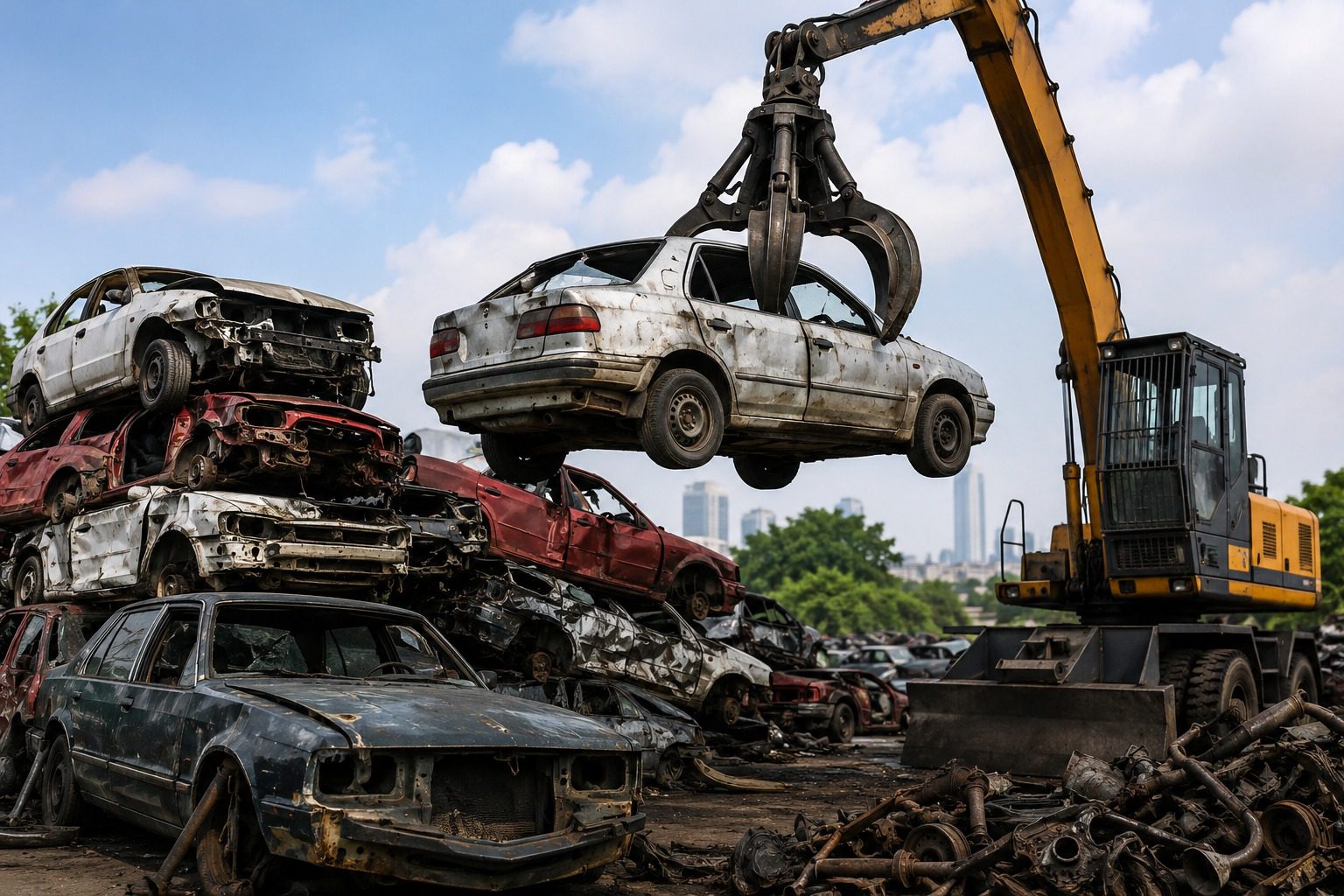
End-of-life vehicles will be processed at authorised scrapping facilities under the new system.
The facilities may be operated privately or established by the Punjab Transport and Mass Transit Department.
The vehicle scrapping process will include removing pollutants and potentially harmful materials before dismantling a vehicle. Components that remain usable can be recovered, while unusable parts can be recycled.
Vehicle frames and other non-reusable components may also be crushed and recycled under procedures prescribed by the provincial government.
Fitness and emission certificates become more important
The new law places greater importance on vehicle fitness and emission certification in Punjab.
Vehicles that do not meet the required standards could ultimately be classified as end-of-life vehicles, increasing pressure on owners to ensure their vehicles remain roadworthy and comply with environmental requirements.
The measure is particularly significant for older vehicles that produce excessive smoke or harmful emissions.
Punjab targets pollution from old vehicles
Reducing vehicular pollution is one of the main objectives behind the new vehicle scrapping framework.
Old and poorly maintained vehicles can contribute significantly to harmful emissions, particularly when engines and emission-control systems are not properly maintained.
By removing vehicles that fail fitness and emission requirements, the Punjab government aims to reduce pollution while encouraging cleaner transport.
The initiative also supports the province’s broader move towards environmentally friendly mass transit and electric vehicles.
New vehicle scrapping rules to be formulated
The Punjab government has been authorised to formulate detailed rules governing the identification and scrapping of end-of-life vehicles.
These rules are expected to determine how authorised scrapping centres operate, how vehicles are surrendered and dismantled, and how reusable and recyclable materials are handled.
The regulatory framework will therefore be important in determining how the policy affects millions of vehicle owners across Punjab.
Governor promulgates Motor Vehicles Amendment Ordinance
The governor of Punjab promulgated the Motor Vehicles Amendment Ordinance under Article 128 of the Constitution while the Punjab Assembly was not in session.
The amendment adds legal definitions of “end-of-life vehicle” and “scrapping” to the Provincial Motor Vehicles Ordinance, 1965.
The ordinance has taken immediate effect, providing the legal foundation for Punjab’s new vehicle scrapping system.
For motorists, the development means keeping vehicle registration, fitness certification and emission documentation up to date could become increasingly important as authorities intensify action against old, unfit and pollution-causing vehicles.