


(Web Desk) – Iran has begun an extensive week-long series of funeral ceremonies for late Supreme Leader Ayatollah Ali Khamenei, with thousands of mourners gathering in Tehran as the country pays tribute to one of the most influential figures in its modern history. The state-organized ceremonies are expected to continue across several cities in Iran and neighboring Iraq, reflecting both the religious and political significance of the late leader.
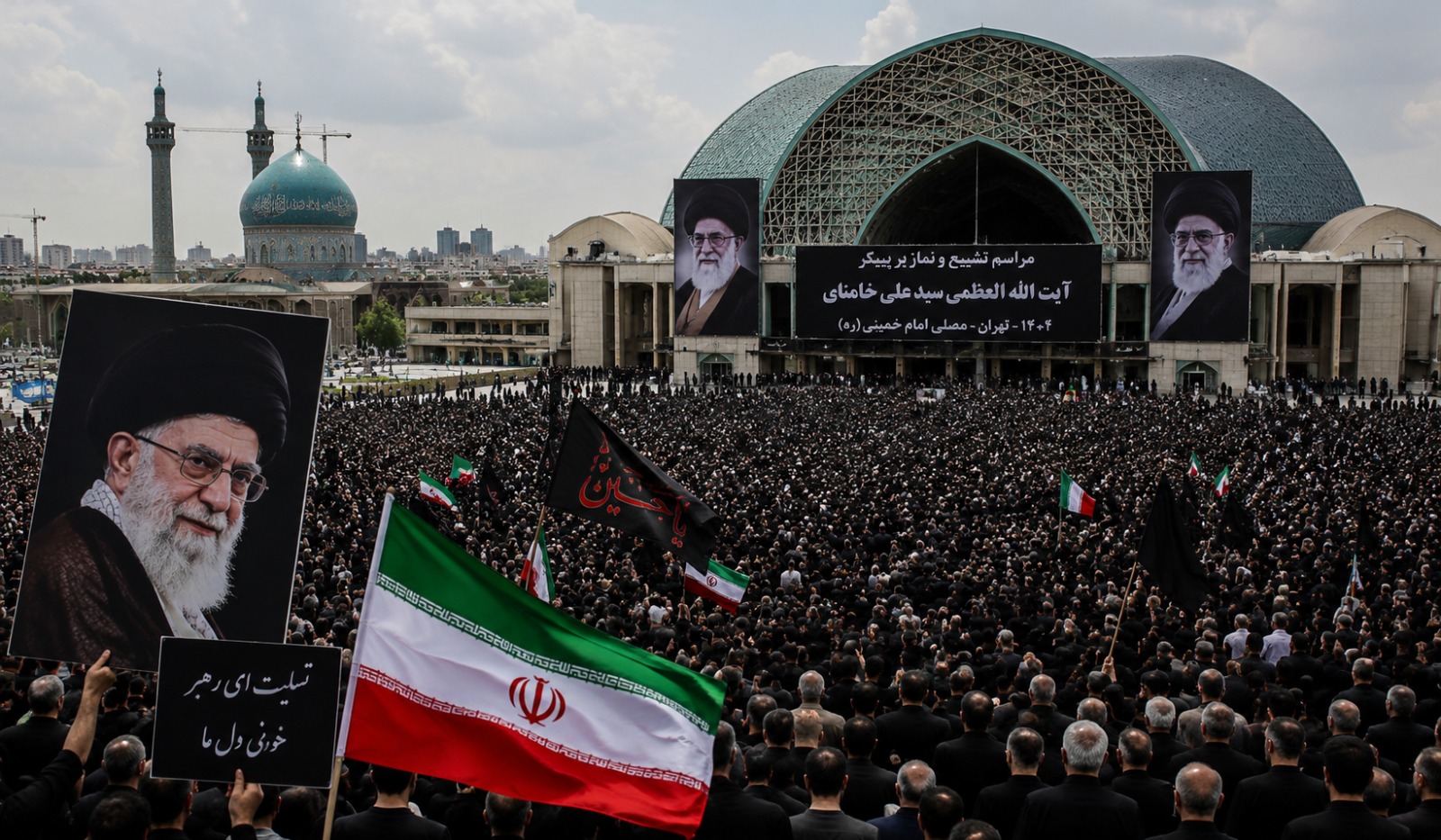
The latest funeral prayers were held at Tehran’s Imam Khomeini Grand Mosalla, where three of Khamenei’s sons—Mostafa, Meysam and Masoud—stood beside their father’s coffin along with the coffins of four other family members. The ceremony was attended by senior government officials, military commanders, religious scholars and thousands of citizens who gathered to offer prayers.
One notable absence was Iran’s current Supreme Leader, Mojtaba Khamenei. His nonappearance has fueled speculation, although Iranian authorities have not issued any official explanation regarding his absence. Reports circulating in recent days have suggested that Mojtaba Khamenei sustained injuries during the attack that claimed the lives of several members of the Khamenei family, but no official confirmation has been provided.
State television broadcast emotional scenes from the ceremony, showing mourners filling the vast religious complex while recitations from the Quran echoed through the gathering. Iranian President Masoud Pezeshkian, Parliament Speaker Mohammad Baqer Qalibaf and other senior officials joined funeral prayers, highlighting the national importance of the occasion.
Images from the ceremony showed Masoud Khamenei visibly emotional as he stood alongside his brothers during the funeral prayers. Thousands of mourners carrying Iranian flags and religious banners participated in the ceremony, with many expressing grief through traditional mourning rituals.
Authorities have organized one of the largest state funeral programs in recent Iranian history. Following ceremonies in Tehran, the late leader’s remains are scheduled to travel to the religious city of Qom before being taken to Iraq for commemorative events in the holy cities of Najaf and Karbala. The final burial is expected to take place in Mashhad, one of the most important religious centers in the Islamic world.
Government agencies have mobilized extensive logistical support for the nationwide mourning events. Public transportation services have been expanded, while temporary accommodation and food distribution centers have been established for visitors traveling from different parts of the country.
Iranian officials say millions of people are expected to participate in the funeral processions over the coming days. The Tehran Metro reported exceptionally high passenger numbers as mourners traveled to attend the ceremonies, reflecting the scale of public participation.
The funeral events are unfolding at a sensitive time for Iran following months of regional tensions and conflict. Although a ceasefire has reduced military hostilities, the country’s leadership continues to emphasize national unity and stability during the transition period.
Political observers note that the succession of the country’s highest leadership position places additional international attention on the ceremonies. While the funeral remains primarily a religious and national event, it also symbolizes continuity within Iran’s political and constitutional framework.
International attention has also focused on the broader diplomatic situation in the region. Several foreign officials and representatives have traveled to Tehran to offer condolences, while discussions on regional security and future diplomatic engagement continue in parallel with the mourning period.
The week-long funeral program is expected to conclude with the burial ceremony in Mashhad after processions across multiple cities. Officials believe the nationwide events will provide citizens an opportunity to pay their final respects while reinforcing national solidarity during a period of political transition.
As Iran continues its farewell ceremonies, authorities have urged the public to participate peacefully and respectfully. Security arrangements remain in place throughout the country to facilitate the large gatherings expected over the coming days.
The funeral of Ayatollah Ali Khamenei marks a defining moment in Iran’s contemporary history, closing a significant chapter while attention increasingly shifts toward the country’s future leadership and its role in regional and international affairs.