



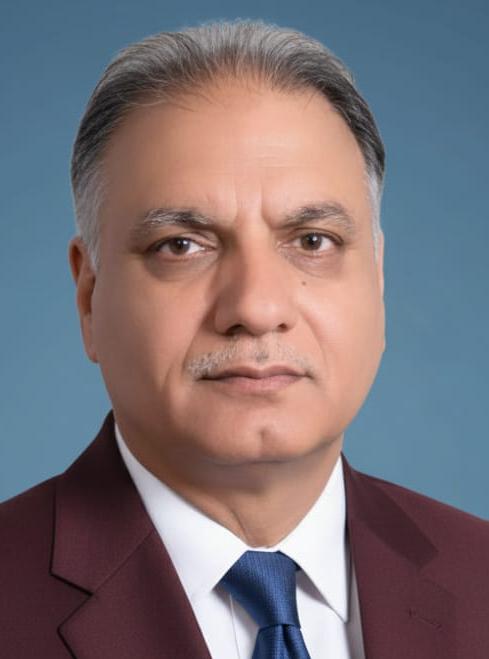
Dr Alamdar Hussain Malik
Pakistan’s power sector has once again exposed a disturbing contradiction in the government’s priorities. The federal government paid Rs2.935 trillion (Rs2,935.76 billion) to Independent Power Producers (IPPs) during the first 11 months of fiscal year 2025–26, from July 2025 to May 2026. Of this, around Rs1.168 trillion was energy payment and Rs1.565 trillion was capacity payment. The final annual figure will be even higher after June’s payments are included.
Now place this figure against the condition of Pakistan. The latest official Labour Force Survey puts unemployment at 7.1 percent, while the IMF’s latest data puts Pakistan’s general government gross debt at about 70.1 percent of GDP. Inflation remains a serious burden on household budgets, while economic growth remains far below what is required to create employment for a rapidly growing population.
These are not merely economic statistics. Behind every percentage is a Pakistani family struggling with food, electricity, education, healthcare and employment.
And yet, in this same country, the state has been able to commit almost Rs3 trillion in only 11 months to IPPs. This is the contradiction that demands an answer.
The government repeatedly says that fiscal space is limited for health, education, social protection, poverty alleviation, universities, agricultural development and other projects that directly benefit ordinary citizens. Hospitals need resources, schools lack facilities, universities face financial constraints and development programmes remain underfunded. But when it comes to the power sector, trillions of rupees are available.
What kind of governance allows a poor and indebted country to have insufficient resources for its people, while committing enormous sums to a power system that includes payments for generating capacity that is not fully utilised? This is no longer merely an electricity-sector controversy. It is a question of national priorities, economic planning and leadership.
The government may argue that these payments are based on legally binding agreements. But that cannot be the end of the debate. These agreements were negotiated and approved by governments. Someone projected electricity demand; someone decided how much generation capacity Pakistan needed; and someone determined the financial risks that would ultimately be carried by consumers and the national exchequer. Today, the consequences are being transferred to ordinary Pakistanis.
Consumers are paying increasingly expensive electricity bills while industries struggle with high production costs and declining competitiveness. At the same time, the government remains under pressure from debt, fiscal deficits and the wider circular-debt problem.
The most disturbing component is the Rs1.565 trillion in capacity payments. Capacity payments may have a contractual justification, but when a country has excess or underutilised generating capacity, the government must ask whether the underlying power-planning model remains economically rational. A poor country cannot indefinitely borrow money to pay for capacity that its economy cannot afford to use.
There is another question that Pakistan’s most powerful decision-makers must answer. Those who possess the institutional authority to contemplate major changes in the country’s administrative structure—including proposals for new provinces and new administrative units—surely possess the capacity to confront a power sector that is consuming trillions of rupees of national resources.
Are they not seeing what is happening in the power sector? Are they not watching the burden being placed on the poor people of Pakistan?
If the state can mobilise enormous political and institutional energy to redraw administrative boundaries, why cannot the same determination be applied to correcting a power system that is draining the national economy?
Why not use that influence to renegotiate unsustainable arrangements, eliminate waste, protect consumers, improve governance and ensure that every rupee of public money produces a genuine benefit for Pakistan?
Pakistan does not merely need new administrative boundaries; it needs better governance within the boundaries it already has.
New provinces or administrative units may have their own arguments in terms of representation and service delivery, but they cannot substitute for economic reform. Pakistan’s immediate crisis is not the shape of the map. It is the condition of the economy and the quality of governance.
The country is facing unemployment, inflation, indebtedness and expensive electricity, while investment in human development remains inadequate. At such a moment, the most urgent question is not who will control another administrative unit. It is: Who will have the courage and competence to stop the bleeding of the national economy?
Those with the power to contemplate changing the administrative map of Pakistan should also have the vision to change policies that are impoverishing Pakistan.
Pakistan urgently needs a transparent, independent and comprehensive review of all major IPP agreements. Parliament and the public should know the original cost of each plant, contractual terms, capacity payments, energy payments, returns, fuel costs, exchange-rate protections, actual generation and utilisation. Where agreements can legally and fairly be renegotiated, the national interest must come first.
At the same time, Pakistan needs realistic electricity-demand forecasting, stronger transmission and distribution systems, reduced line losses, better recovery and a decisive shift towards cheaper indigenous and renewable sources of energy. Future power contracts must never again expose the country to enormous financial obligations based on unrealistic assumptions.
But the issue goes far beyond IPPs.
Every rupee spent must be judged against what Pakistan is sacrificing elsewhere.
What could Rs2.935 trillion have done for Pakistan if even a substantial portion had been invested in hospitals, schools, universities, agricultural research, clean water, rural infrastructure, employment generation and productive industries?
That is the real comparison. On one side is a nation struggling with unemployment, inflation and debt. On the other is a state committing trillions to a power structure whose financial model has become increasingly burdensome.
This is not simply a shortage of money. It is a crisis of priorities. And if these are the government’s priorities, if this is its economic vision, and if this represents the total competence of the present leadership, then a fundamental question arises: what is the logic of sustaining such a system?
A government is not merely an institution that occupies offices and signs contracts. It is entrusted with the nation’s scarce resources to serve its citizens. When essential sectors remain underfunded while trillions are committed elsewhere, the people have every right to question the priorities and competence of those governing them.
Pakistan does not belong to any government, political party or ruling elite. It belongs to its people. If the present leadership cannot establish rational priorities, protect the public interest and provide competent economic governance, it must face democratic and constitutional accountability. The answer to failed governance is not perpetual political entitlement; it is the democratic right of the people to choose, through constitutional means, those whom they believe can serve the nation better.
Pakistan needs leadership that puts people before privilege, productivity before waste, development before dependency and national interest before vested interests.
The Rs2.935 trillion paid to IPPs in just 11 months should therefore not disappear into another government accounting statement.
It should be a national wake-up call.
A country that says it has no adequate money for its people cannot indefinitely justify trillions spent sustaining a system that its people and industries increasingly cannot afford.
The question is no longer merely how much Pakistan is paying for electricity. The question is what kind of governance Pakistan is willing to sustain—and whether the people of Pakistan deserve something fundamentally better.
The writer is Advisor Academics, University of Veterinary and Animal Sciences, Swat and
Former Financial Adviser, Finance Division, Government of Pakistan


