



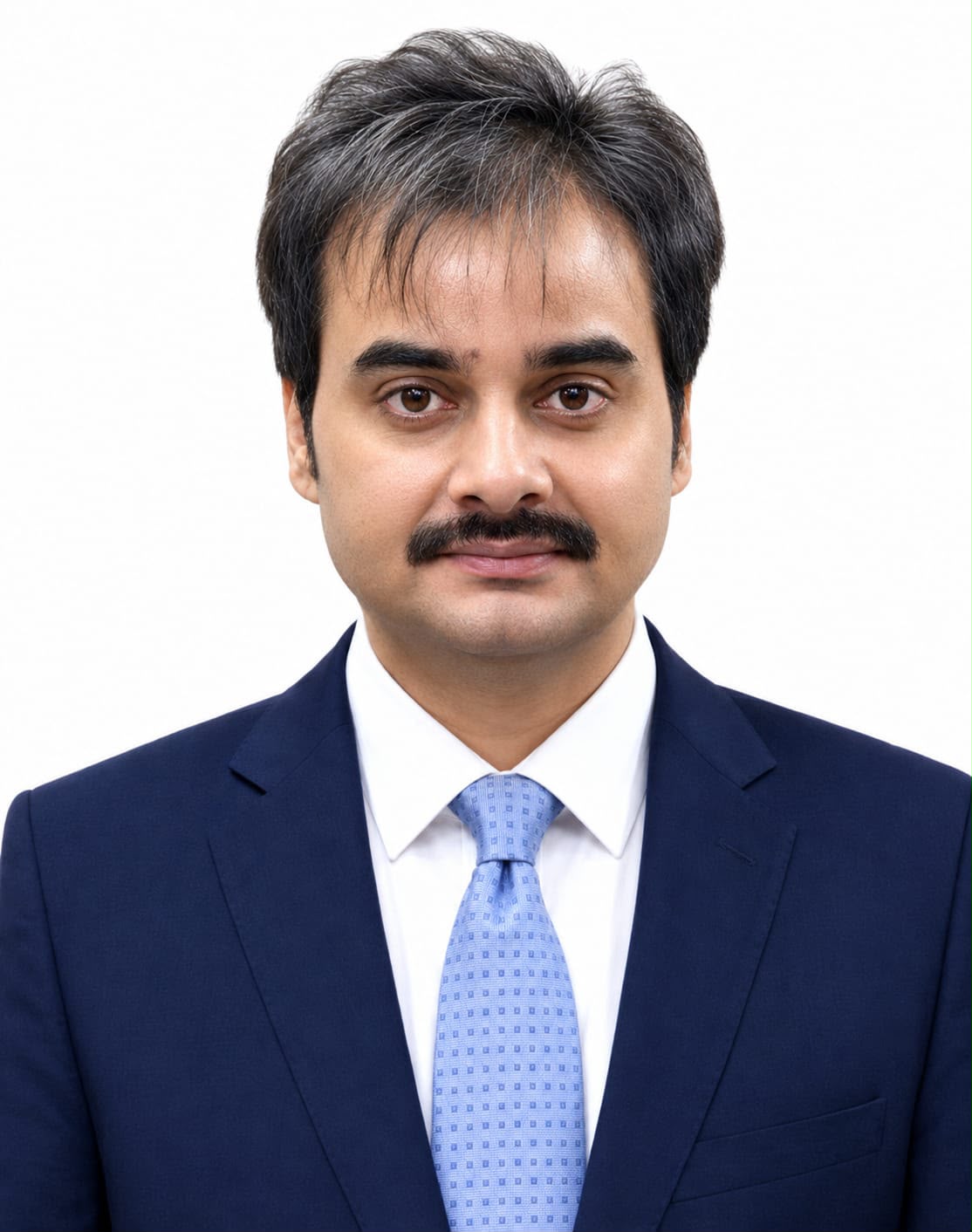
Ali Hussam Asghar sets out business-first agenda for Lahore’s trade and industry
By M Qadeer
LAHORE: Lahore’s business community needs more than ceremonial representation. It needs a chamber capable of standing beside traders and industrialists when they confront excessive business costs, complicated taxation, regulatory difficulties, expensive energy, inadequate infrastructure and problems with government departments, says Ali Hussam Asghar, chairman of the Pioneer Businessman Group and a candidate for president of the Lahore Chamber of Commerce and Industry (LCCI).
With the LCCI elections approaching on September 23 and 24, Asghar says his campaign should ultimately be judged on a straightforward question: Can the chamber make it easier, safer and less expensive to do business in Lahore?
In an interview outlining the economic priorities he wants to place before Lahore’s trade and industry, Asghar said the chamber must evolve into an effective bridge between entrepreneurs and government rather than limiting itself to raising issues after businesses have already suffered.
What should be the first priority of the next LCCI leadership?
Ali Hussam Asghar: The fundamental responsibility of LCCI is to represent and protect the legitimate interests of Lahore’s trade and industry. Our businessmen create jobs, invest their capital, pay taxes and keep the economy moving. They deserve an environment where they can concentrate on expanding their businesses rather than spending their time moving from one government office to another.
Ease of doing business should not remain a slogan. We have to identify the actual problems faced by traders and industrialists and work with federal, provincial and local authorities to resolve them.
Traders complain about multiple taxes and increasing compliance costs. How serious is the problem?
Pakistan needs revenue, and businesses understand their responsibility to pay legitimate taxes. The problem arises when the documented business community feels that the same people are repeatedly being asked to carry an increasing burden.
We need simplification, predictability and greater coordination among tax authorities. A businessman should clearly understand what he has to pay, to whom he has to pay it and what compliance is required.
Our objective should be to broaden economic activity and the tax base instead of making existing taxpayers less competitive. LCCI should strongly advocate rationalisation of overlapping taxes, fees and regulatory requirements wherever they unnecessarily increase the cost of doing business.
Electricity has become a major concern for industry. What can LCCI do?
Energy is no longer merely a utility issue; it is a competitiveness issue.
If a manufacturer in Lahore produces a product at a substantially higher energy cost than a competitor elsewhere, it becomes extremely difficult for that manufacturer to compete in domestic and international markets.
LCCI must develop evidence-based proposals on electricity tariffs and industrial competitiveness and take them to the relevant authorities. We need policies that encourage production, investment and exports.
An industrialist should be thinking about purchasing new machinery, increasing production and employing more people—not constantly worrying about whether the next increase in input costs will make his product uncompetitive.
Parking seems like a small issue compared with taxation and energy. Why should it be an LCCI priority?
For a trader, it is not a small issue at all.
Look at Lahore’s major commercial areas. Customers, employees, suppliers and traders themselves struggle with congestion and inadequate parking. Accessibility directly affects commercial activity.
LCCI should work with the Punjab government, city administration, traffic authorities and relevant development agencies on practical parking solutions for major business centres. Where feasible, modern multi-storey parking facilities and better traffic management should be considered.
Economic development is also about making markets accessible.
There are concerns among traders about PERA and enforcement by government departments. What would your approach be?
The law must be respected, and legitimate regulatory enforcement has its place. At the same time, enforcement should be transparent, proportionate and conducted in a manner that does not unnecessarily disrupt lawful business activity.
If traders have grievances concerning enforcement practices, there should be an institutional mechanism through which those concerns can be documented and taken up with the relevant authorities.
LCCI should not encourage anyone to evade the law. Its responsibility should be to help ensure that legitimate businesses are treated fairly and that genuine disputes are resolved through dialogue and lawful procedures.
Would you establish a mechanism inside LCCI specifically for these complaints?
There should be a strong business facilitation and grievance mechanism within the chamber.
When an LCCI member faces a genuine issue involving a government department, the chamber should be able to guide the member, document the matter and, where appropriate, raise it institutionally with the relevant authority.
The purpose should not be confrontation with government. The purpose should be resolution.
I believe regular institutional interaction between LCCI and government departments can prevent many disputes from becoming serious problems.
What about Lahore’s industrial areas?
Lahore cannot remain economically strong without a competitive industrial base.
Industrialists need reliable electricity and gas, better infrastructure, efficient transportation, predictable regulations and an environment conducive to expansion.
We need to identify problems industrial area by industrial area rather than discussing industry only in general terms. LCCI can compile these issues, prioritise them and pursue them systematically with the authorities concerned.
Our goal should be to make Lahore attractive not only for existing industry but also for new investment.
What is your plan for SMEs?
Small and medium enterprises are essential to Lahore’s economy, but many small entrepreneurs struggle to grow beyond a certain level.
They need easier access to finance, technology, skills, markets and information. LCCI can play a much larger role in connecting SMEs with financial institutions, government programmes, digital opportunities and potential domestic and international buyers.
A small business today can become a major employer and exporter tomorrow if we create the right conditions.
Your group’s vision talks extensively about exports. How can Lahore contribute?
Pakistan needs sustainable foreign exchange earnings, and exports are fundamental to that objective.
Lahore has tremendous entrepreneurial and industrial capacity. We should help businesses identify new markets, improve products, understand international standards and establish relationships with foreign chambers and trade organisations.
We must also encourage businesses that have traditionally concentrated on the domestic market to explore export opportunities.
LCCI can become a more effective gateway connecting Lahore businesses with international markets.
How important are innovation and technology?
They are indispensable.
The world economy is changing rapidly. Businesses that fail to adopt technology, digital systems, modern manufacturing practices and innovative business models risk being left behind.
Our younger generation is particularly important. LCCI should create stronger connections between established businesses, startups, universities, technology companies and young entrepreneurs.
Lahore should aspire to become not merely a traditional trading centre but a modern centre of entrepreneurship, technology, manufacturing and exports.
Previous LCCI leaderships have also spoken about business facilitation. Why should members expect something different?
Businesspeople should judge leadership by performance, not slogans.
The chamber’s agenda should have identifiable priorities, continuous follow-up and measurable outcomes. If an issue is raised with a government department, members should know what progress has been made.
I want LCCI to become increasingly responsive to the businessman standing in a market, running an SME or operating a factory.
Leadership has meaning only when members feel that their institution is accessible to them.
What would be your message to the Punjab and federal governments?
Treat the business community as a partner in economic development.
Government and business do not have to stand on opposite sides. Businesses need government for infrastructure, regulation and stability, while government needs thriving businesses for investment, employment, exports and revenue.
Consultation before major regulatory or taxation decisions can prevent unintended consequences.
LCCI should therefore maintain a strong working relationship with government while retaining the courage to respectfully oppose policies that unnecessarily damage trade and industry.
If elected, on what should members ultimately judge your presidency?
They should judge us on whether LCCI became more accessible, whether the voice of traders and industrialists became stronger, whether genuine problems were pursued seriously with government, and whether we contributed towards reducing unnecessary barriers to doing business.
The larger objective is economic development.
Every unnecessary cost ultimately affects investment, employment and the consumer. If businesses can operate more efficiently, they can expand, employ more people, compete internationally and contribute more to Pakistan.
Lahore has enormous economic potential. What it needs is an environment in which entrepreneurship is facilitated rather than complicated.


