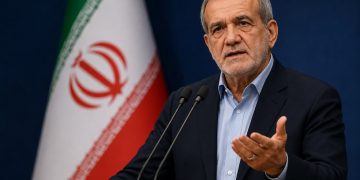



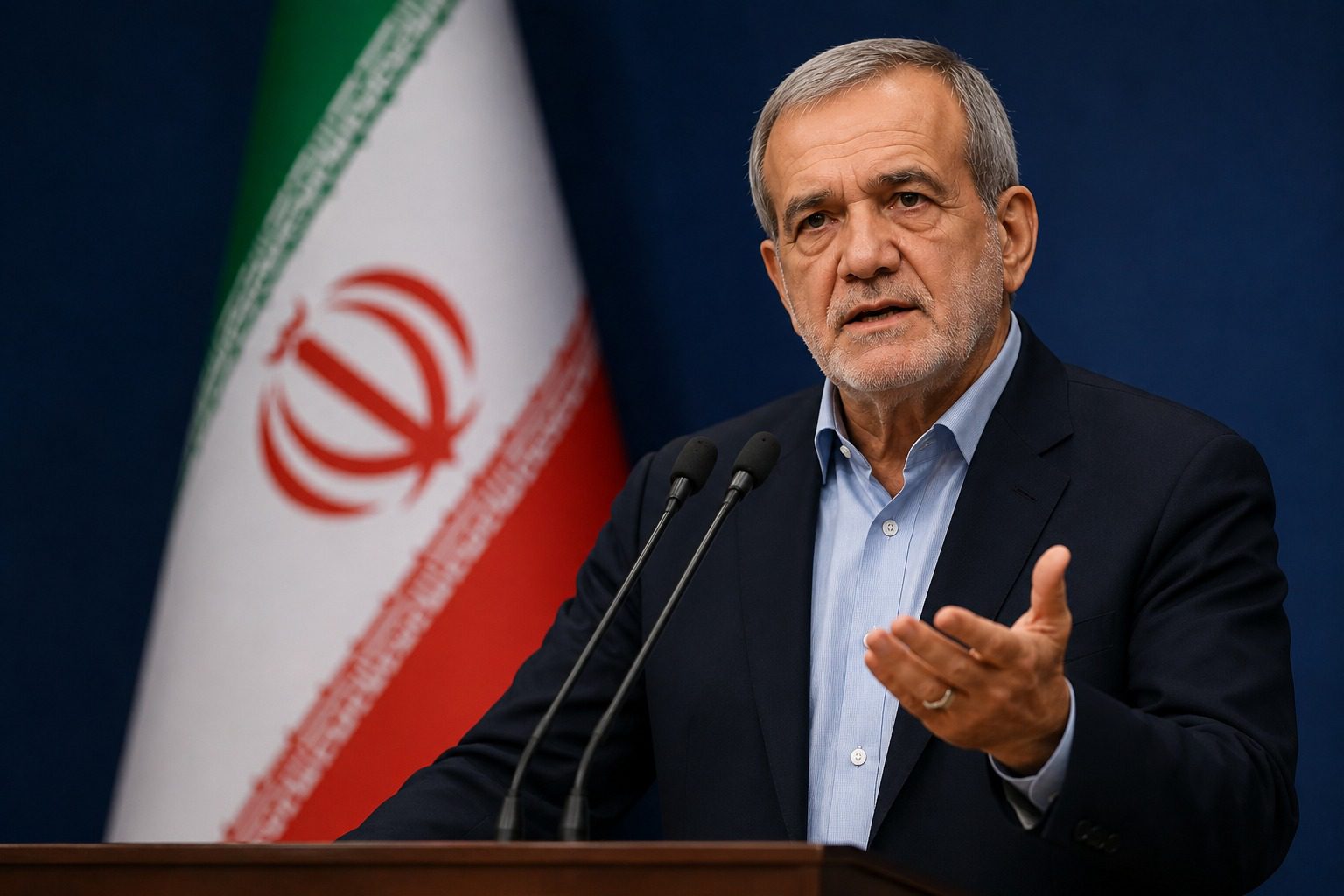
TEHRAN (Web Desk) — Iranian President Masoud Pezeshkian has reaffirmed Tehran’s desire for a negotiated end to the war with the United States after the two countries exchanged fire, raising fresh fears that months of conflict could again escalate into a broader Middle East confrontation.
Pezeshkian said Iran remained prepared to pursue a diplomatic solution despite renewed military action, arguing that prolonging the conflict would serve neither side and would deepen instability across the region.
His remarks came after US forces struck Iranian missile launchers on Larak Island in the Strait of Hormuz, marking the first significant US military action against Iran in about a month.
Iran responded by launching attacks targeting US bases in Jordan, bringing the two sides into another direct exchange of fire after a relative lull.
Two people were reported killed in the US strike on Larak Island. The latest confrontation has put renewed pressure on efforts to find a political settlement to a conflict that has disrupted regional security, energy markets and international shipping.
The Strait of Hormuz remains one of the most sensitive flashpoints. The strategically vital waterway is a major route for global energy supplies, making any military escalation around it a concern far beyond the Middle East.
Washington said its action on Larak Island was intended to counter a threat involving sea mines in the Strait of Hormuz. Tehran, however, has repeatedly insisted that it will defend its territory and strategic interests against military pressure.
Despite the latest hostilities, Pezeshkian continued to emphasise negotiations rather than an indefinite military confrontation.
The Iranian president has increasingly argued in recent weeks for ending the country’s state of prolonged conflict and uncertainty through an agreement that protects Iran’s security and national interests.
His latest appeal is particularly significant because it comes immediately after renewed military exchanges, highlighting the tension between Tehran’s stated willingness to negotiate and its determination to respond militarily when attacked. Diplomatic efforts have struggled to produce a lasting settlement.
The United States and Iran signed a memorandum in June that provided a framework for negotiations aimed at reaching a wider agreement to end the war. The negotiating period subsequently expired without a comprehensive peace settlement, while both sides accused each other of undermining the process.
Differences over Iran’s nuclear programme, sanctions, regional security and the Strait of Hormuz remain major obstacles to an agreement.
Washington has continued economic pressure on Tehran while demanding restrictions intended to prevent Iran from obtaining a nuclear weapon. Iran, meanwhile, has demanded security guarantees and relief from sanctions while insisting that any settlement must respect its sovereignty.
The latest military flare-up has also unsettled global energy markets. Oil prices rose as traders assessed the possibility that further escalation could threaten supplies or shipping through the Gulf. Any serious disruption in the Strait of Hormuz could have significant consequences for oil-importing economies and push international energy prices higher.
Tensions were further aggravated by US President Donald Trump’s publication of an artificial intelligence-generated video appearing to show Iran’s strategically important Kharg Island oil facilities destroyed.
Iranian officials dismissed the imagery as disinformation, while operations at the oil hub were reported to be continuing.
The episode added an information-war dimension to an already volatile military confrontation.
Pezeshkian’s renewed emphasis on diplomacy suggests Tehran wants to keep the possibility of negotiations alive even while demonstrating that it is prepared to retaliate against US military action.
The immediate challenge is preventing the latest exchange from triggering another cycle of strikes and counter-strikes.
With diplomatic channels under strain and fundamental disagreements still unresolved, the coming days could determine whether Washington and Tehran return to negotiations or move towards another dangerous phase of direct confrontation.
For the wider Middle East, the stakes remain high. A prolonged escalation could threaten shipping, push energy prices higher and draw additional regional states into a conflict that Pezeshkian says should ultimately be resolved through dialogue rather than continued warfare.


