



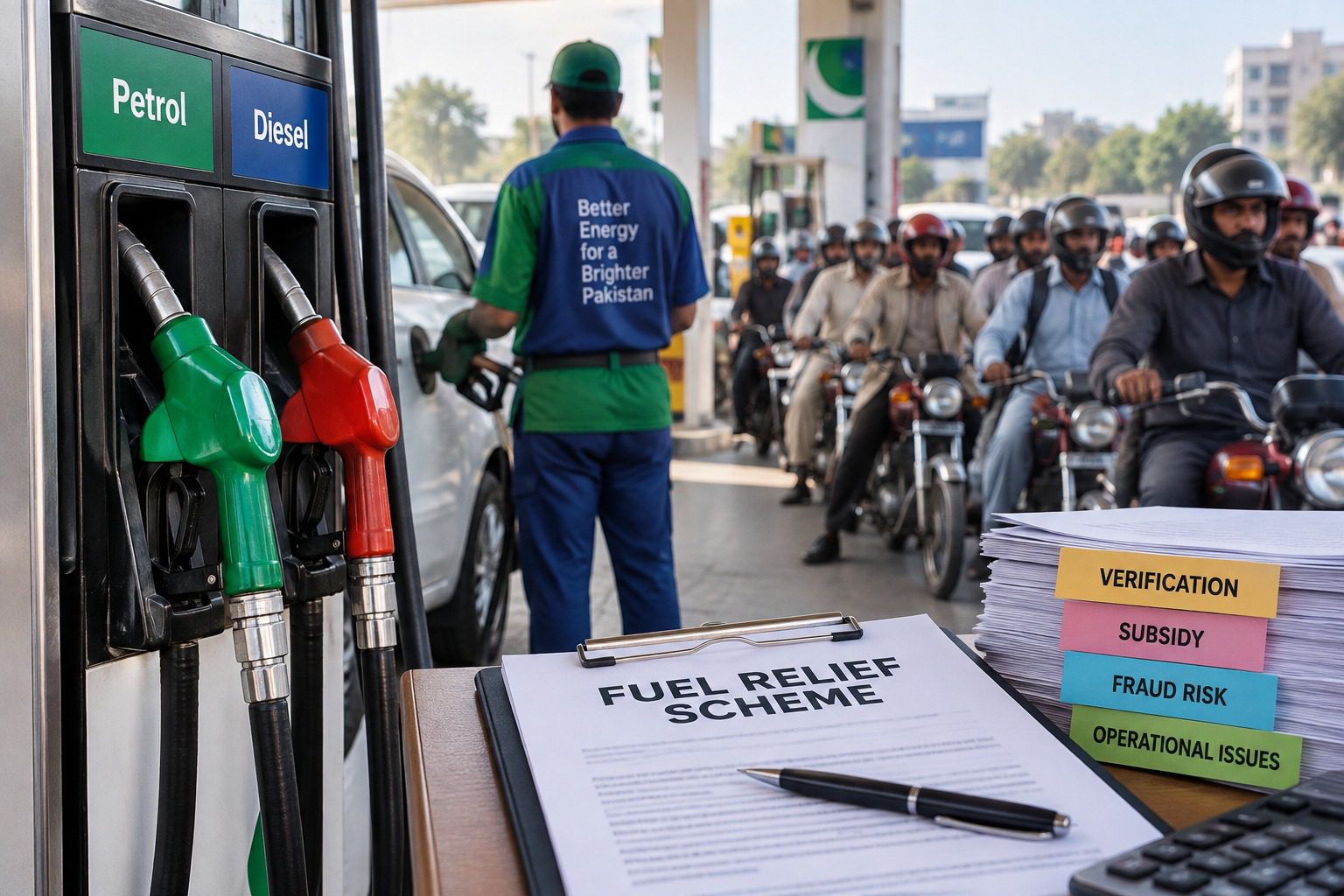
ISLAMABAD (Web Desk) The Pakistan Petroleum Dealers Association (PPDA) has raised serious concerns over the government’s proposed fuel relief scheme, warning that its existing mechanism may be difficult for filling stations to implement and could expose dealers to financial losses and operational disruption.
In a statement on Monday, a PPDA spokesperson said concern was growing among petroleum dealers across the country because responsibility for verifying beneficiaries and processing subsidised fuel transactions could place an additional burden on filling stations.
The association said it supported government efforts to provide relief to consumers but wanted the mechanism redesigned before implementation.
According to the PPDA, the possibility of fraudulent or fake identification poses a particular challenge. The association argued that dealers should not be held financially responsible if fraudulent identification or transactions result in losses.
Dealers fear long queues at petrol pumps
The PPDA also questioned how filling stations would practically verify documents or invoices when dealing with large numbers of customers.
It said between 35 and 50 motorcycles could be waiting in a single queue at a busy petrol station, making individual verification potentially time-consuming.
The association warned that additional checks could lead to longer queues, inconvenience consumers and slow down normal filling-station operations.
Dealers also fear losing regular customers if motorists leave stations because of delays.
The PPDA has consequently demanded an immediate review of the mechanism and called on the petroleum minister to hold consultations with dealers before finalising implementation arrangements.
‘Give relief, but don’t make dealers bear the burden’
The association maintained that it had no objection to the government providing substantial relief to consumers but argued that the financial and administrative burden should not be transferred to individual petrol dealers.
It suggested that the subsidy or relief should primarily be managed between the government and oil marketing companies, with filling stations given a clearly defined operational role.
Dealers said inadequate information about the scheme could also create disputes between petrol station staff and consumers if customers expect subsidised fuel but stations are unable to verify eligibility or reimbursement.
Cash-flow concerns emerge
Separately, All Pakistan Petrol Pump Owners Association Vice Chairman Inam-ul-Haq Chaudhry also raised concerns about how filling stations would be reimbursed under the scheme.
He said petrol pump operators had not been adequately informed about the proposed mechanism and wanted the government to clarify how subsidy payments would reach dealers.
The concern is particularly important because filling stations must continuously replenish their fuel stocks.
If dealers are required to initially absorb the subsidy and wait for reimbursement, they argue that substantial amounts of their working capital could become tied up, potentially affecting their ability to purchase fresh stocks.
What does it mean for consumers?
The dispute does not necessarily mean consumers will lose the announced fuel relief. Instead, it highlights disagreement over how that relief should be delivered.
For motorcycle, rickshaw and eligible small-car owners, the biggest practical issue will be whether the verification process is simple enough to allow them to receive discounted fuel without lengthy queues or repeated documentation.
If dealers and the government cannot agree on a workable system before implementation, motorists could potentially face confusion at filling stations.
Why dealers are worried
For a petrol pump, fuel sales operate on high daily volumes and require continuous cash flow. If a station sells subsidised petrol but reimbursement is delayed, the dealer may temporarily have to finance the difference.
At busy stations, identity and eligibility verification could also slow each transaction. Even a small increase in processing time per motorcycle could create substantial queues during peak hours.
The dealers are therefore seeking a system in which eligibility can be verified quickly and reimbursement is secure and timely.
What happens next?
The PPDA has called an emergency meeting to discuss the scheme, its proposed implementation mechanism and the concerns raised by dealers.
The association said it would determine its next course of action following consultations and expected to announce its position at a press conference within 24 to 48 hours.
The immediate challenge for the government will be to develop a mechanism that delivers the promised benefit directly to eligible consumers while protecting public money against fraud and ensuring filling stations do not face unreasonable financial or administrative burdens.


