


By Maheen Sultan
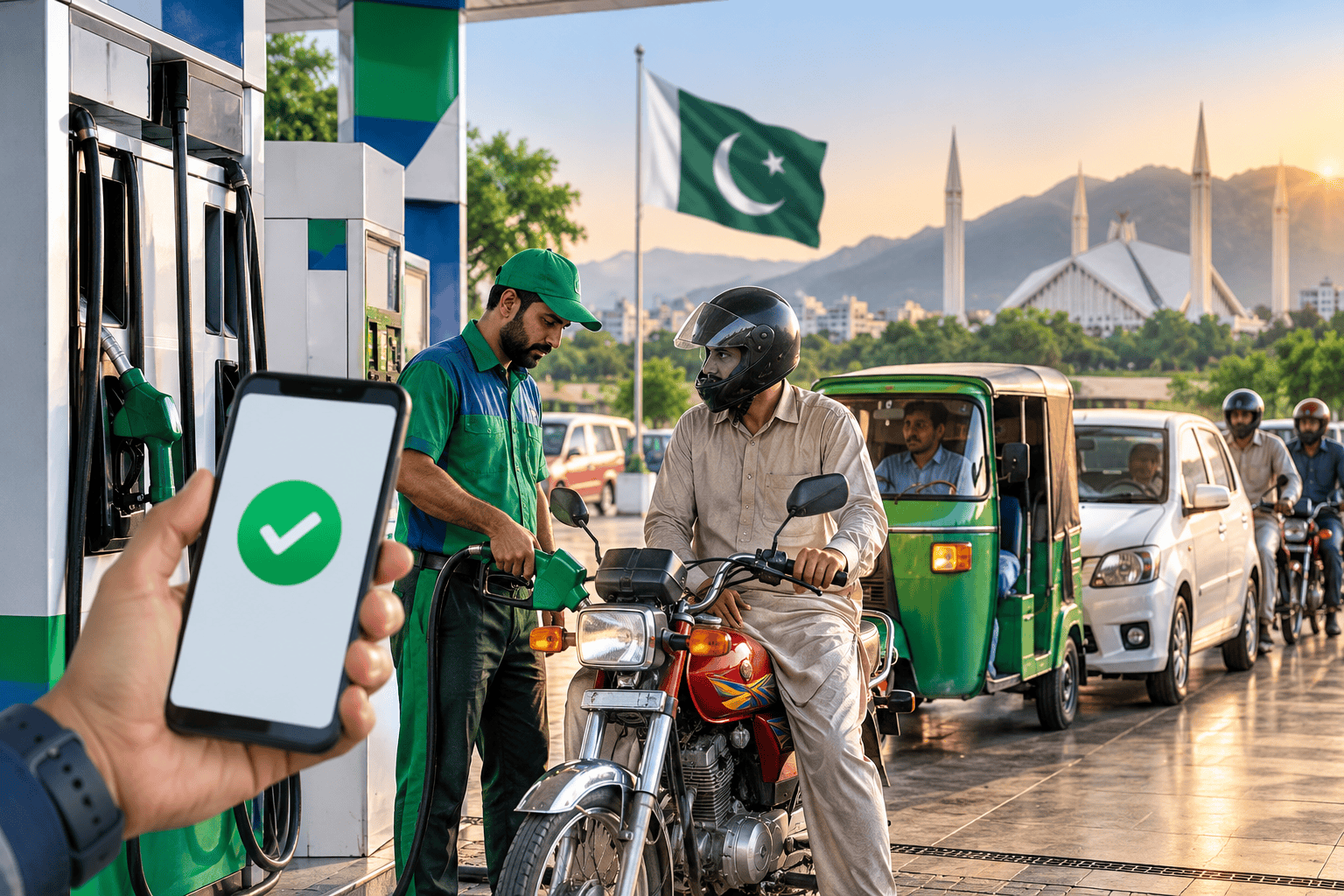
ISLAMABAD: Prime Minister Shehbaz Sharif has launched a special fuel relief scheme offering Rs100 per litre relief on petrol to eligible motorcycle, rickshaw, Qingqi, three-wheeler and small-car owners as soaring international oil prices increase pressure on household budgets.
The scheme is aimed particularly at working- and lower-income consumers who rely on motorcycles, rickshaws and small vehicles for their daily commute and livelihoods.
Under the programme, eligible two- and three-wheeler users will be able to receive the Rs100-per-litre relief on up to 20 litres of petrol per month.
Owners of eligible small cars with engines of up to 800cc will receive the same Rs100-per-litre relief on up to 30 litres per month.
This means the maximum monthly benefit could reach Rs2,000 for eligible motorcycle and three-wheeler users and Rs3,000 for eligible small-car owners, provided they use their full monthly allocation.
Who is eligible?
The scheme covers motorcycles, rickshaws, Qingqis and other eligible two- and three-wheelers.
Private cars with an engine capacity of up to 800cc are also included.
Vehicle ownership and registration information will be electronically verified through relevant government databases.
How to register for fuel relief
Registration has opened, and applicants will need a mobile SIM registered in their own name.
To register, an eligible citizen must send an SMS containing the required personal and vehicle information from the SIM registered in their own name.
The registration information includes the applicant’s CNIC number without dashes, vehicle registration number without spaces or dashes, provincial code and vehicle registration date.
The system has been developed by the Ministry of Information Technology and Telecommunication in coordination with provincial departments, Nadra and telecom operators.
Vehicle details will be automatically checked against records maintained by the relevant provincial transport and excise authorities.
Once the registration and vehicle information are successfully verified, the applicant will receive a confirmation message.
How to get the petrol token
Successful registration alone does not complete the process.
Before going to a petrol station to purchase subsidised fuel, a registered consumer will need to send:
TOK to 9771
A fuel token will then be issued to the registered user.
The consumer will present the token at the participating petrol station, where it will be verified before petrol is provided under the relief scheme.
How much relief will you get?
For motorcycles, rickshaws, Qingqis and other eligible two- and three-wheelers:
Rs100 per litre × maximum 20 litres = up to Rs2,000 relief per month.
For eligible cars with engines of up to 800cc:
Rs100 per litre × maximum 30 litres = up to Rs3,000 relief per month.
The benefit therefore depends on how much petrol an eligible consumer purchases within the monthly limit.
When will subsidised petrol become available?
According to the announced schedule, the facility will first become operational in Islamabad from the night between Monday and Tuesday.
It will subsequently be extended to the rest of Pakistan, including Azad Jammu and Kashmir and Gilgit-Baltistan, from the night between Wednesday and Thursday.
The government said provincial authorities had cooperated by providing vehicle information needed for registration and verification.
Why has the government launched the scheme?
The relief package follows a sharp increase in domestic petroleum prices amid tensions in the Middle East and disruption risks affecting important international oil-supply routes.
Following the latest increase, petrol has reached Rs375.82 per litre, while high-speed diesel stands at Rs403.32 per litre.
At the current petrol price, the Rs100 relief would effectively reduce the cost borne by an eligible consumer to Rs275.82 per litre for petrol purchased within the scheme’s applicable monthly limit, subject to the government’s final implementation and verification rules.
Prime Minister Shehbaz Sharif said the government recognised the burden rising fuel prices were placing on households and would seek to protect people from some of the impact.
The scheme is particularly intended to provide support to workers and households that depend on motorcycles, rickshaws and small cars for transportation and income.


