



By Our Correspondent
ISLAMABAD – Federal Power Minister Awais Leghari has said that negotiations with Chinese independent power producers (IPPs) under the China-Pakistan Economic Corridor (CPEC) have so far produced “no sufficient outcome”, even as the government claims broader reforms have delivered significant relief in the power sector.
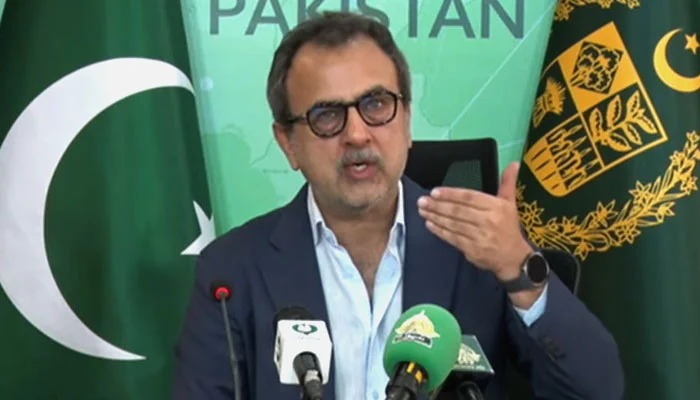
Speaking at a press briefing on Sunday, Leghari noted that while Pakistan has secured around Rs3.5 trillion in savings through revised agreements with multiple private and state-owned power producers, similar progress has not been achieved in talks with Chinese energy companies operating under long-term CPEC frameworks.
He said discussions with CPEC-based IPPs were ongoing, mainly focused on debt reprofiling and tariff adjustments, but added that “sufficient results have not materialised yet”. According to him, any revision in these agreements must remain within the parameters of government-to-government commitments, which include sovereign guarantees from both sides.
The minister stressed that Pakistan must also respect earlier investment agreements signed at a time when foreign investors were reluctant to enter the market. He expressed hope that continued engagement would eventually lead to mutually acceptable solutions.
Leghari highlighted that past renegotiations with IPPs, restructuring of contracts, and closure of outdated plants had contributed to overall savings of Rs3.5 trillion. He added that several legacy agreements will continue until as late as 2053, limiting immediate fiscal flexibility.
On broader sector reforms, the minister said measures such as reducing transmission losses, shifting old generation company staff to distribution firms, and reallocating fiscal space to reduce circular debt had helped lower power subsidies. He noted that subsidies had declined from Rs1.287 trillion last year to Rs890 billion this year, with a further reduction expected to Rs830 billion in the next fiscal cycle.
Addressing operational challenges, Leghari said the Neelum-Jhelum Hydropower Project has remained non-functional for around 18 months due to structural design flaws. He stated that the Water and Power Development Authority (WAPDA) would require another 18 months to complete repairs, resulting in significant financial losses and forcing reliance on more expensive power generation sources.
He also claimed that removing cross-subsidies had reduced a Rs250 billion burden on industrial consumers, contributing to tariff reductions across multiple categories.
Presenting comparative data, the minister said average domestic electricity tariffs fell by 16% between May 2024 and 2026, while commercial tariffs declined by 8%. Industrial users benefited most, with a 33% reduction. Tariffs for general services, bulk consumers, and agriculture reportedly decreased by 10%, 13%, and 14% respectively.
He added that the national average tariff dropped by 20% to Rs42.26 per unit in May 2026, compared to Rs53.04 two years earlier.
Responding to criticism, Leghari rejected claims that subsidies for low-income consumers were being removed, calling such reports part of a “misleading campaign”. He said the government has introduced a QR-based registration system to ensure subsidies are directed only to eligible consumers, especially amid rising adoption of solar energy.
According to him, around two million single-phase consumers have already been registered under the new system, which aims to prevent misuse of subsidised electricity by ineligible users.
Leghari further said solar self-generation capacity in Pakistan is expected to expand significantly, potentially reaching 50,000 megawatts within the next decade, up from less than 20,000MW at present, even as net-metering shifts toward net-billing.


