


By Our Correspondent
LAHORE: Former prime minister and Pakistan Peoples Party (PPP) Central Punjab President Raja Pervaiz Ashraf has said that new provinces cannot be created “on the roads or in bazaars”, stressing that the Constitution provides a clear procedure for their establishment.
“This system should continue until a new system is introduced,” Ashraf said, warning that debate merely for the sake of argument and criticism could harm the country.
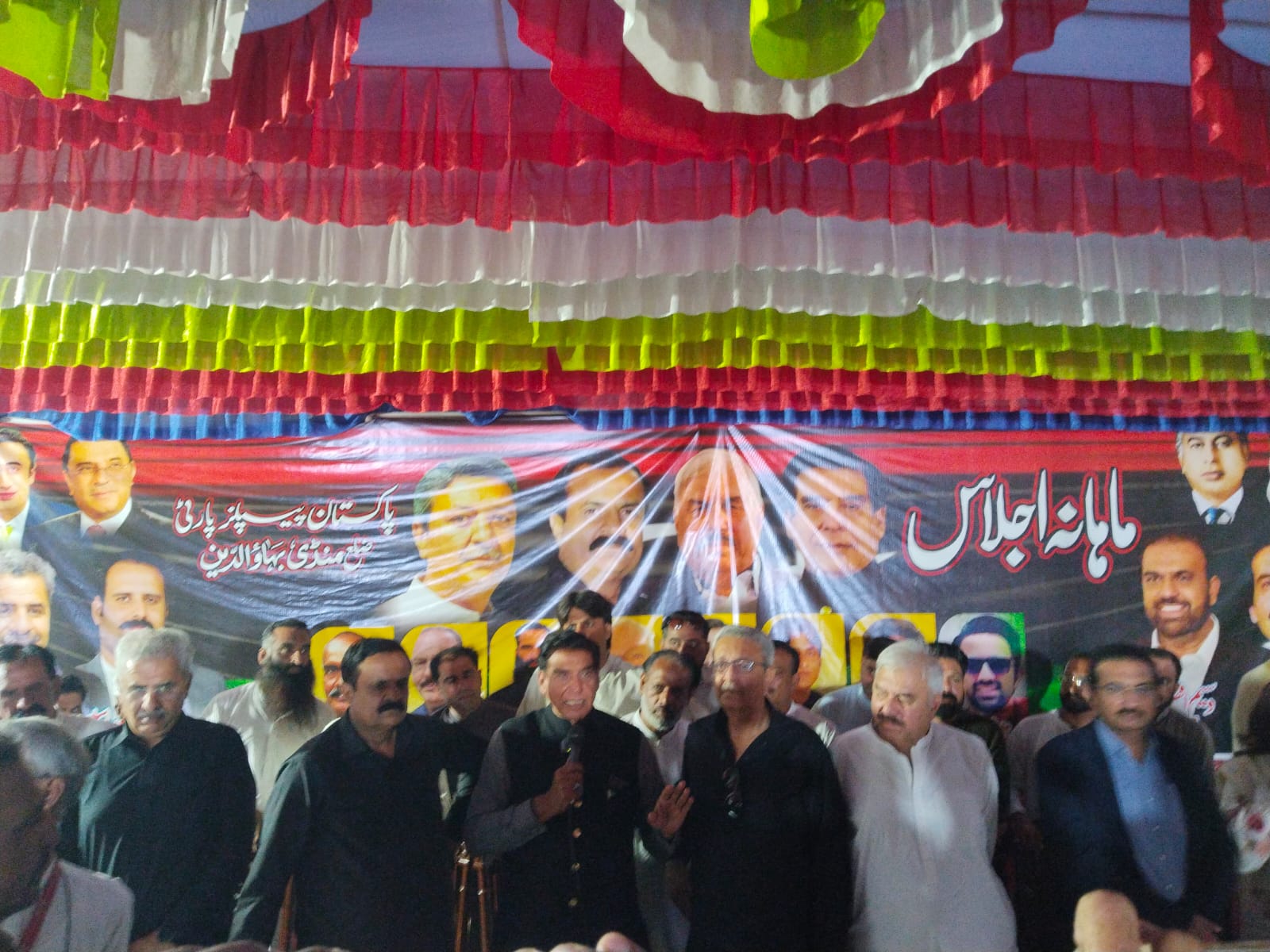
He was addressing a press conference at the camp of PPP Divisional President Asif Bashir Bhagat in Mandi Bahauddin. PPP Central Punjab General Secretary Syed Hassan Murtaza, Senior Vice President Rana Farooq Saeed, Information Secretary Shahzad Saeed Cheema and other party leaders were also present.
Earlier, a meeting of the PPP Punjab Executive was held, attended by members of the provincial executive and finance committees.
PPP-PML-N alliance ‘for Pakistan’
Discussing the PPP’s political cooperation with the Pakistan Muslim League-Nawaz (PML-N), Ashraf said the alliance was formed in the national interest and was necessary under the prevailing circumstances.
“We need to give stability to Pakistan,” he said, adding that the PPP and PML-N had joined hands for the country’s sake.
Ashraf maintained that the PPP had taken the decision by going beyond conventional party politics.
He said the effectiveness of any political system depended significantly on how it was operated rather than merely on its structure.
PPP will continue raising public issues
Responding to questions from journalists, the former prime minister said that despite being part of the ruling coalition, the PPP continued to speak about issues affecting ordinary citizens.
He also referred to inflation, saying rising prices had become a global challenge.
Ashraf said Pakistan’s international image was evolving and described the country as increasingly playing a role in resolving disputes.
Ashraf opposes government’s solar policy
Responding to a question about increasing electricity load-shedding, Ashraf expressed disagreement with the government’s solar energy policy and called for changes.
He argued that electricity supplied by consumers through solar systems should receive fair pricing treatment.
The former premier said improvements to the solar policy could contribute to addressing electricity shortages and reducing load-shedding.


