


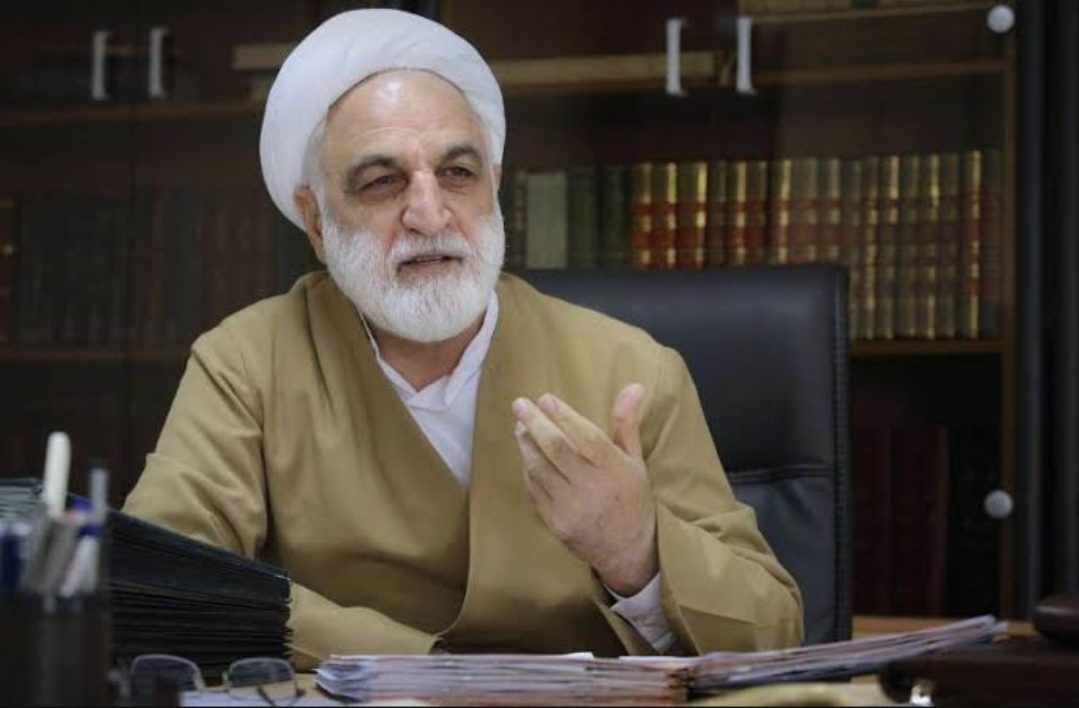
NEW DELHI: Iran’s judiciary chief Gholam-Hossein Mohseni-Ejei has declared that the Islamic Republic will “never surrender to America,” claiming that Iran has emerged victorious against its adversaries in two wars over the past year and a half.
Ejei made the remarks during a meeting with Indian Supreme Court Chief Justice Sanjiv Khanna on the sidelines of the BRICS summit in New Delhi, where he highlighted Iran’s resistance against what he described as foreign aggression and pressure.
“Over the past year and a half, we prevailed over the enemy in both wars, and we will never surrender to America,” Ejei said, according to Iran’s state-run news agency IRNA.
The statement came amid heightened tensions between Tehran and Washington, with disputes continuing over Iran’s nuclear programme, regional influence, sanctions and security issues in the Middle East.
Iran highlights military and political resilience
Iranian officials have repeatedly framed recent confrontations as part of a broader struggle against Western pressure, particularly from the United States and its allies.
Ejei’s remarks reflected Tehran’s long-standing position that the country has successfully resisted military threats, economic sanctions and diplomatic isolation.
Iran’s leadership has frequently stated that foreign pressure has failed to weaken the country’s political system and that national unity has helped it withstand challenges.
The judiciary chief did not provide details about the two wars he referred to in his remarks, but Iranian officials have in recent months pointed to regional military confrontations and security crises as examples of what they describe as resistance against hostile powers.
US-Iran tensions remain high
Relations between Iran and the United States have remained deeply strained for decades, with tensions intensifying after Washington withdrew from the 2015 nuclear agreement and reimposed sanctions on Tehran.
The two countries have repeatedly accused each other of threatening regional stability.
Washington has maintained pressure on Iran over its nuclear activities, missile programme and support for allied groups in the region.
Iran, meanwhile, has rejected US demands, arguing that its nuclear programme is peaceful and that it has the right to pursue independent defence and foreign policies.
The latest comments from Tehran’s judiciary chief suggest that Iran’s leadership continues to favour a policy of resistance rather than accepting demands imposed by Washington.
Economic pressure continues
Despite its strong political statements, Iran continues to face major economic challenges due to international sanctions.
Restrictions on banking, investment and energy exports have affected Iran’s economy, creating pressure on businesses, trade and currency markets.
The United States has repeatedly used sanctions as a tool to influence Tehran’s policies, while Iranian officials argue that sanctions have strengthened domestic production and encouraged economic self-reliance.
Iran has also sought to expand economic partnerships with countries outside the Western bloc, including China, Russia and India.
BRICS platform and diplomatic outreach
Ejei’s remarks were delivered during his participation in BRICS-related engagements in India, highlighting Iran’s efforts to strengthen ties with emerging economies.
Iran became part of the expanded BRICS grouping as the organisation seeks to increase cooperation among developing economies and reduce reliance on Western-dominated global institutions.
Tehran views BRICS membership as an opportunity to improve trade links, expand diplomatic relations and create alternatives to systems affected by US sanctions.
During meetings in New Delhi, Iranian officials emphasised the importance of cooperation with regional and global partners.
Nuclear issue remains a major dispute
The nuclear programme remains one of the biggest sources of disagreement between Iran and Western countries.
The United States and European nations have raised concerns about Iran’s nuclear activities, while Tehran maintains that its programme is intended for peaceful purposes, including energy and scientific research.
International efforts to revive diplomatic engagement have faced repeated obstacles, with both sides accusing each other of failing to meet commitments.
Iran has insisted that sanctions must be lifted before it accepts additional restrictions, while Western governments have demanded greater guarantees regarding nuclear activities.
Regional impact
Iran’s statements are closely monitored across the Middle East because of Tehran’s influence in regional security matters.
The country maintains close relations with several allied groups and plays an important role in conflicts and political developments across the region.
Analysts say continued tensions between Iran and the United States could affect regional stability, energy markets and international diplomacy.
At the same time, Iran’s participation in platforms such as BRICS indicates its efforts to strengthen alliances beyond traditional Western partners.
No sign of compromise yet
Ejei’s latest remarks underline that Tehran is not preparing to change its approach toward Washington in the near future.
While Iran has previously engaged in diplomatic negotiations, its leadership has repeatedly rejected talks conducted under pressure or threats.
The United States and Iran remain locked in disputes over security, sanctions and regional influence, with no immediate breakthrough visible.
For now, Tehran appears determined to continue its policy of resistance while expanding relations with countries that support a more multipolar global order.


