


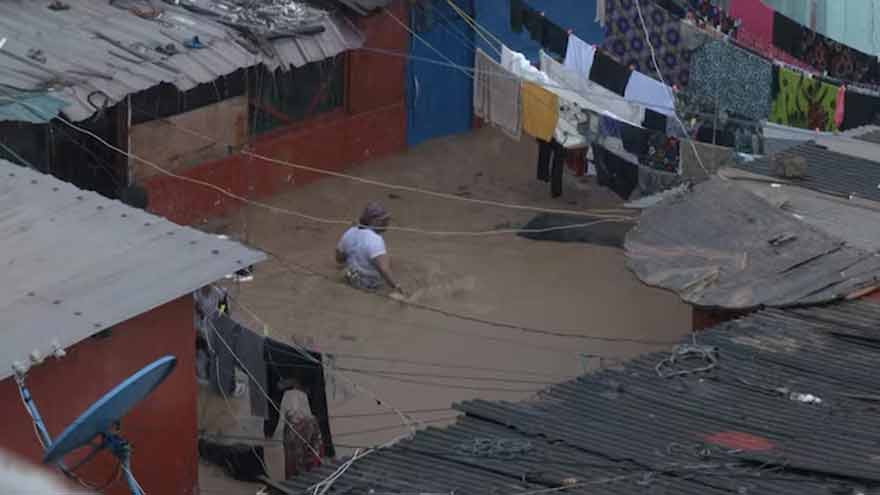
ACCRA (Web Desk) – At least 12 people have lost their lives after torrential rainfall triggered widespread flooding across Ghana, inundating neighborhoods in the capital, Accra, and forcing emergency responders to launch large-scale rescue operations.
Authorities said relentless rainfall submerged roads, homes and businesses, leaving thousands of residents stranded as floodwaters swept through several parts of the city. Emergency teams continued search and rescue operations throughout Tuesday, warning that the number of casualties could rise as assessments continue.
According to the Ghana National Fire Service, the victims include eight men, three women and one child. Rescue personnel have already evacuated more than 470 people from flooded communities, while additional operations remain underway in severely affected areas.
Government officials described the rainfall as one of the most intense weather events experienced in recent years. Preliminary weather data indicated that Accra received approximately 140 millimeters of rain within a short period, more than double the city’s highest single-day rainfall recorded during the previous year.
President John Dramani Mahama said the exceptional rainfall reflected increasingly unpredictable weather patterns linked to climate change. He acknowledged that the scale of the downpour placed enormous pressure on the country’s drainage and emergency response systems.
The government has announced an emergency relief package worth 300 million Ghanaian cedis to support rescue operations, temporary shelters, food distribution and rehabilitation efforts in affected communities. Authorities said the funds would help provide immediate assistance to displaced families and repair damaged infrastructure.
To strengthen rescue efforts, the president directed the deployment of the Ghana Armed Forces and police personnel to work alongside the National Disaster Management Organisation and other emergency agencies. Security forces have been assisting with evacuations, traffic management and delivery of relief supplies.
Floodwaters submerged major roads across Accra, disrupting transportation and leaving commuters stranded for hours. Several vehicles were trapped in rising water while businesses temporarily suspended operations due to inaccessible streets and damaged property.
Schools and public institutions in some affected districts also experienced disruptions as authorities assessed the safety of buildings and surrounding infrastructure. Power outages were reported in several neighborhoods after electrical systems were affected by flooding.
Urban planners have long identified poor drainage systems, rapid urbanization and unauthorized construction on waterways as key factors contributing to recurring floods in Accra. Environmental experts say blocked drainage channels significantly reduce the city’s ability to cope with heavy seasonal rainfall.
Climate specialists also warn that rising global temperatures are increasing the frequency and intensity of extreme weather events across West Africa. More frequent heavy rainfall has heightened the risk of flash floods in rapidly expanding urban centers where drainage infrastructure struggles to meet growing demand.
Humanitarian organizations have begun coordinating with local authorities to provide emergency assistance, including clean drinking water, food supplies, medical care and temporary accommodation for displaced residents.
Neighboring Ivory Coast has also experienced severe rainfall in recent days, with local reports indicating significant flooding and casualties. Regional weather agencies continue monitoring conditions as heavy rain remains possible across parts of West Africa.
Economic experts cautioned that widespread flooding could temporarily disrupt commercial activity, transportation networks and supply chains while increasing repair costs for damaged infrastructure. Insurance claims are also expected to rise following extensive property damage.
Authorities have urged residents living near rivers, drainage canals and flood-prone areas to remain alert and follow evacuation instructions where necessary. Emergency services continue advising motorists to avoid waterlogged roads and unnecessary travel until conditions improve.
As rescue operations continue, officials remain focused on locating missing persons, assisting displaced families and restoring essential public services. The latest disaster highlights Ghana’s growing vulnerability to extreme weather events and underscores the urgent need for improved urban planning, stronger drainage infrastructure and long-term climate resilience measures to reduce the impact of future floods.


