


CUPERTINO (Web Desk) – Apple’s long-rumored foldable iPhone appears to be moving closer to reality as a growing number of industry reports, prototype leaks and supply chain information point toward a possible launch alongside the iPhone 18 series in 2026.
Although Apple has not officially confirmed the existence of a foldable smartphone, analysts believe the company has entered the final stages of development. Several reports suggest suppliers are preparing components while leaked dummy units have offered an early look at what could become Apple’s most ambitious iPhone redesign in years.
Industry observers believe the device could be marketed as the iPhone Ultra or iPhone Ultra Fold, positioning it above the existing Pro lineup as Apple’s most premium smartphone. The naming, however, remains speculative until the company makes an official announcement.
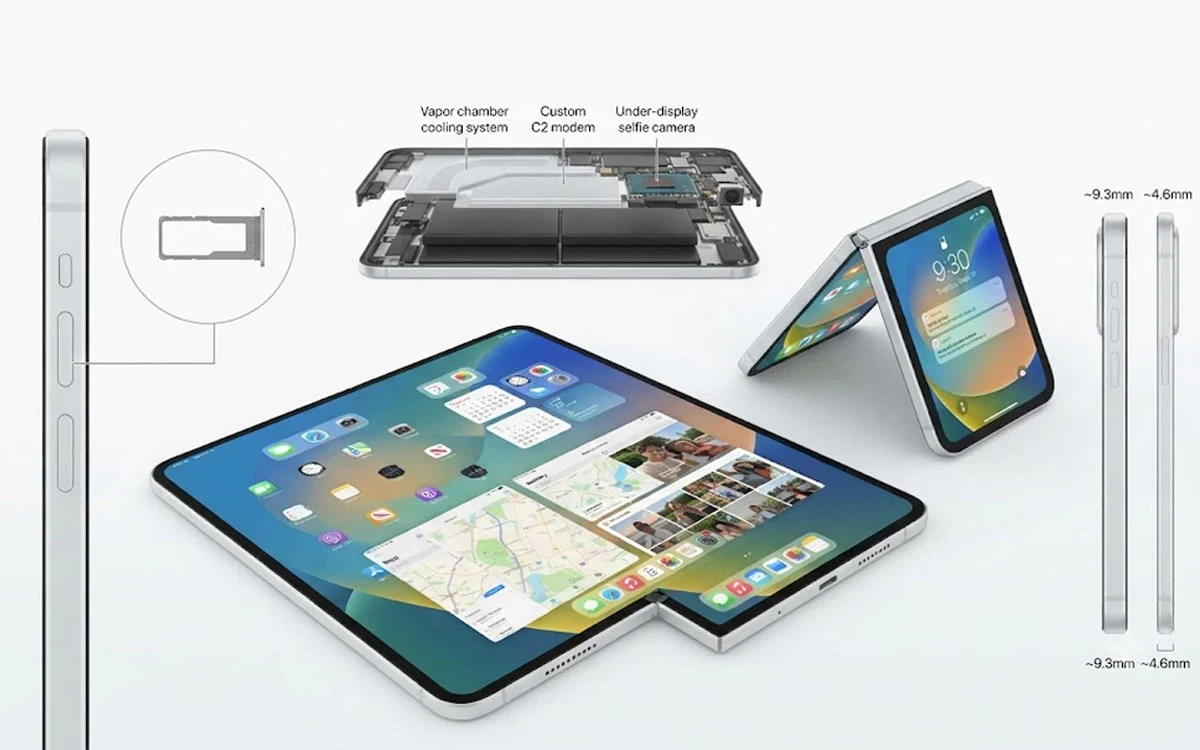
Unlike flip-style foldable phones, Apple’s first foldable is expected to adopt a book-style design that opens like a tablet. When unfolded, the device is rumored to feature a display measuring approximately 7.6 inches, providing users with a screen size similar to a compact tablet while remaining pocket-friendly when folded.
The external cover display is expected to range between 5.2 and 5.5 inches, allowing users to perform everyday tasks without opening the device. This dual-screen configuration would let customers switch seamlessly between smartphone and tablet experiences.
One of the biggest challenges facing foldable devices has been the visible crease running through the center of flexible displays. According to multiple reports, Apple has focused heavily on solving this issue.
Sources familiar with the project claim the company has developed engineering techniques that significantly reduce or nearly eliminate the display crease. If achieved, this would distinguish Apple’s device from many existing foldable smartphones currently available in the market.
Samsung Display is reportedly expected to manufacture the flexible OLED panels, while Apple is believed to be handling the hardware integration, hinge engineering and software optimization internally.
The hinge itself has reportedly undergone extensive testing to improve durability after years of research into folding mechanisms. Apple is said to be prioritizing long-term reliability before releasing its first foldable device.
Reports also indicate Apple may abandon Face ID in the foldable model due to space limitations within the ultra-thin design. Instead, the company could reintroduce Touch ID through a fingerprint sensor integrated into the side-mounted power button.
Camera performance is expected to remain a major selling point. Leaks suggest the foldable iPhone may include dual 48-megapixel rear cameras alongside an under-display front-facing camera designed to maximize screen space without requiring a visible notch or Dynamic Island.
The device is also rumored to feature Apple’s next-generation A20 processor paired with 12GB of RAM, delivering improved multitasking and artificial intelligence capabilities. Storage options may include 256GB, 512GB and 1TB variants aimed at professional users.
Connectivity improvements are also expected through Apple’s in-house C2 modem, which could provide better power efficiency, stronger wireless performance and reduced reliance on third-party chip suppliers.
To handle demanding applications such as gaming, video editing and AI processing, Apple is reportedly testing a vapor chamber cooling system that would improve heat management during extended use.
Battery capacity is also expected to increase despite the device’s slim profile. Engineers are believed to be using redesigned battery technology to maximize internal space while maintaining all-day battery life.
Reports indicate the foldable iPhone could measure approximately 9 millimeters when folded and less than 5 millimeters when fully opened, making it one of the thinnest foldable smartphones ever produced.
Another rumored design change is the complete removal of the physical SIM tray, continuing Apple’s transition toward eSIM technology in international markets.
Pricing is expected to place the device firmly within the ultra-premium category. Market analysts estimate the foldable iPhone could start between $2,300 and $2,500, making it the most expensive smartphone Apple has ever introduced.
Despite growing confidence among analysts, Apple has remained silent regarding the project. As with all pre-release leaks, specifications, pricing and launch plans remain unofficial and could change before the company’s formal product announcement.
If the reports prove accurate, Apple’s entry into the foldable smartphone market could reshape competition by combining premium hardware, advanced engineering and its tightly integrated software ecosystem into an entirely new flagship device.