


By Asim Shahzad
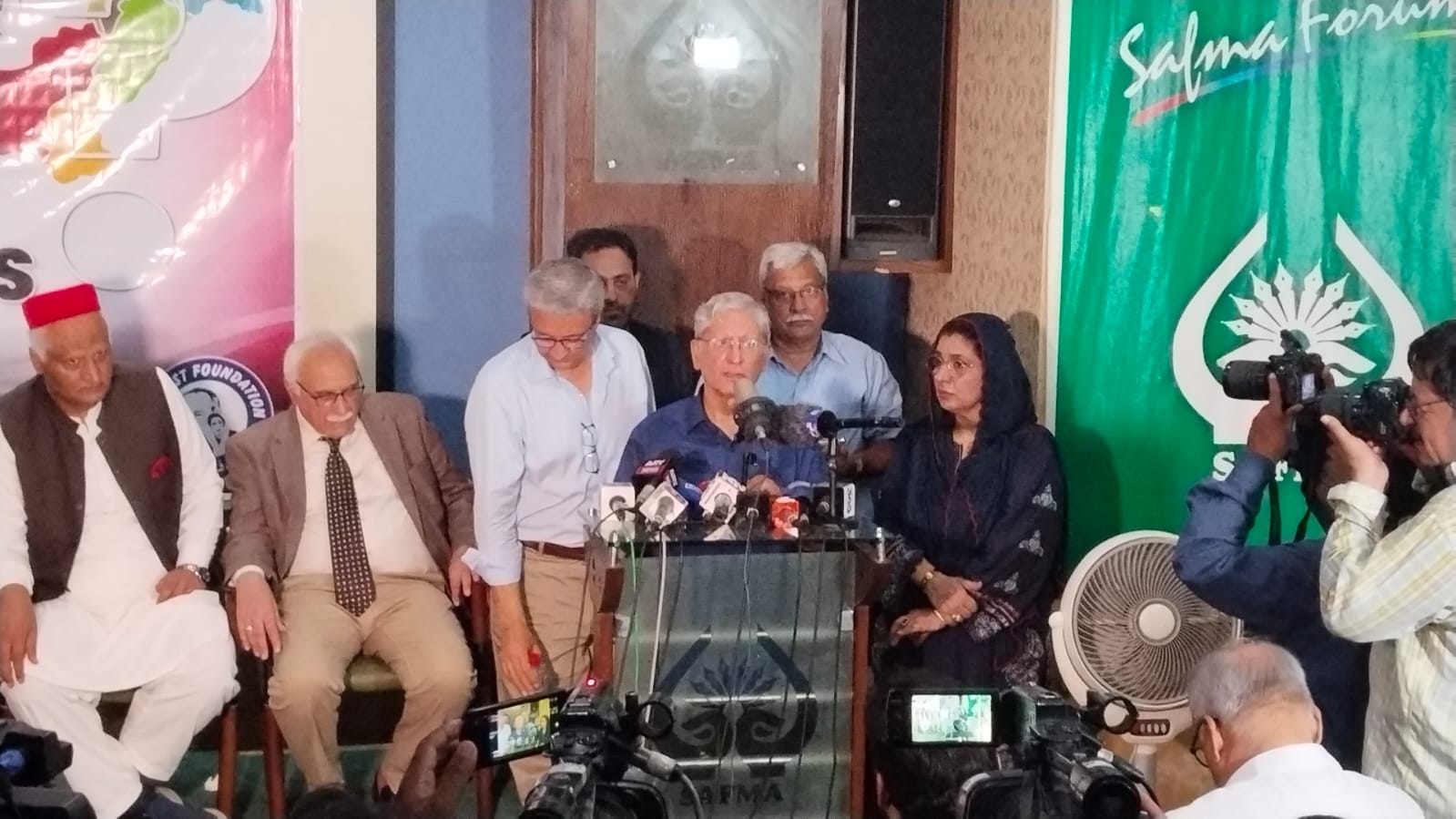
LAHORE: Senior Pakistan Peoples Party (PPP) leader Chaudhry Aitzaz Ahsan has called for an organised and broad-based national movement to address Pakistan’s political, economic and governance challenges, warning that continued divisions along sectarian and caste lines could squander the country’s potential.
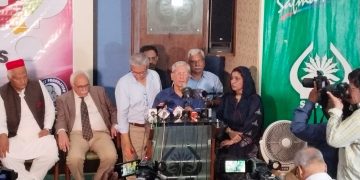
“We are eating into the future of our coming generations,” Aitzaz said while addressing a discussion titled “More provinces or empowered district governments” organised by the People’s Information Bureau and Bhutto Shaheed Foundation at the SAFMA Auditorium.
The session was moderated by Bushra Manzoor Maneka and Ahmed Ghuman, while PPP Central Punjab Information Secretary Shahzad Saeed Cheema, senior journalist Imtiaz Alam, Barrister Aamir Hassan, PTI leader Ahmed Owais, Brigadier (retd) Dr Amin and senior journalist Intikhab Hanif were among the speakers.
Aitzaz said Pakistan needed meaningful reforms to its governance structure, arguing that the administrative system inherited from British colonial rule had largely remained intact.
“From August 14 until today, we have not witnessed any fundamental change in the British system except the change of flag,” he said.
He stressed the importance of elected local governments, saying local bodies were not a substitute for provincial or federal institutions and their elections must be held regularly.
Aitzaz also expressed concern over Pakistan’s debt burden, putting it at around $150 billion, and called for greater financial discipline. He said political parties, including the PPP, needed to recognise the seriousness of the economic situation.
“The PPP also spends generously. We will have to tighten our belts,” he said, warning against policies that transfer an increasing economic burden to future generations.
On foreign relations, Aitzaz said Pakistan should formulate policies according to its national and international interests and avoid unnecessarily turning neighbouring countries into adversaries.
He also criticised what he described as unequal political treatment, saying the state had become a “stepmother” and alleging that one political party was being subjected to pressure.
PPP Central Punjab Information Secretary Shahzad Saeed Cheema described the unanimously adopted 1973 Constitution as Pakistan’s social contract. He said the 18th Amendment had strengthened provincial autonomy, while questions remained about the motivations behind several other legislative changes.
Senior journalist Imtiaz Alam said Pakistan’s history demonstrated the consequences of failing to respect the people’s mandate. He stressed that the provinces were constitutional units forming the federation and questioned whether provincial autonomy envisaged under the 18th Amendment had been fully implemented.
Alam also raised concerns about delays in meetings of the Council of Common Interests and warned against creating new administrative divisions without political consensus. He called on state institutions to operate within their constitutional domains.
Barrister Aamir Hassan said any move to create new provinces must be carried out strictly through the Constitution.
“Provinces should be formed constitutionally. Dividing administrative units is not child’s play,” he said.
Hassan defended the PPP’s democratic record, saying the party had struggled for democracy for decades and had not been brought into politics through the patronage of any state official.
He said President Asif Ali Zardari had transferred presidential powers to parliament, parliament had strengthened provinces, and provinces should now transfer meaningful authority to district governments.
Hassan also cautioned against indiscriminate criticism of the armed forces, arguing that political disputes should be resolved through democratic and constitutional mechanisms.
PTI leader Ahmed Owais, however, expressed concern about constitutional governance and freedom of expression. He alleged that Pakistan was being run without adequate adherence to the Constitution and law and said citizens faced restrictions on expressing and hearing political opinions.
Brigadier (retd) Dr Amin argued that military interventions historically had not occurred without support from sections of the political class. He called for national unity and warned that the issue of new provinces should not become another prolonged controversy like the Kalabagh Dam.
Senior journalist Intikhab Hanif called for genuinely national policies rather than what he described as “official policies”. He said Pakistan’s history showed that some figures once branded as traitors had raised concerns that later proved significant.
The discussion brought together differing perspectives on whether Pakistan needs additional provinces or stronger district governments, with speakers stressing constitutionalism, devolution, democratic governance and the need to address political and economic challenges through institutional reforms.