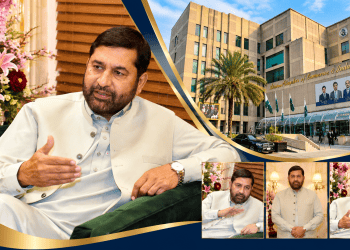



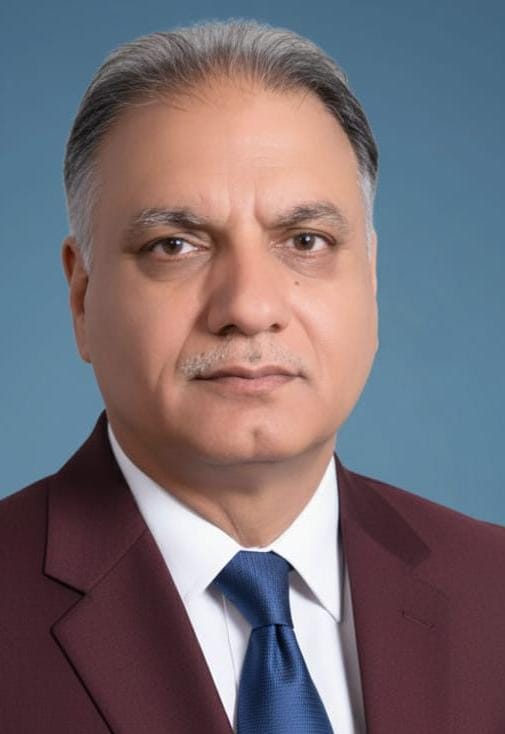
Dr Alamdar Hussain Malik
What does twenty years of loyal service mean if, after two decades, government employees are suddenly confronted with uncertainty about their professional future and the security of their families? Through a notification issued by the Establishment Division, the federal government has ordered the repatriation of eleven employees belonging to Balochistan who have been serving in federal government divisions.
Read also: Dr Alamdar Hussain Malik honoured with gold medal of excellence at Pakistan Agro Award 2026
This decision raises fundamental questions of justice, administrative responsibility and human dignity. Why has this step been taken after nearly twenty years of service, and what compelling circumstances have made their repatriation necessary at this particular moment?
The most disturbing question is: What has happened all of a sudden after twenty years? What extraordinary circumstances have arisen that these employees must now be sent back? Have they suddenly become a burden on the federal government? Has an emergency emerged that makes their immediate repatriation unavoidable? If their services were acceptable for nearly two decades, why has their continued presence suddenly become an issue?
The Establishment Division and the relevant authorities owe these employees and the public a clear explanation. What has changed in the administrative structure? Why has this decision become necessary now? What alternatives were considered before taking a step that could profoundly affect the lives of eleven employees and their families? These are legitimate questions that deserve clear and convincing answers.
Behind every employee stands a family whose livelihood, education, accommodation and future depend upon employment stability. Their spouses, children, elderly parents and other dependants may now face anxiety and uncertainty. The prospect of relocation, disruption of established family arrangements and uncertainty about suitable employment can impose immense emotional, financial and psychological pressure.
Why should these employees and their near and dear ones be subjected to such distress without a clear explanation and a practical plan for their future? They have devoted a substantial part of their working lives to public service. They deserve to be treated as human beings with legitimate rights and family responsibilities, not merely as names on an administrative notification.
If these employees were serving under deputation arrangements that have now changed, the government should explain the relevant administrative circumstances transparently. If their parent departments have undergone restructuring or their functions have been transferred to other institutions, appropriate adjustments may be necessary. However, such changes should be managed through a fair and humane process that takes account of their service histories, applicable rules and legitimate interests.
The government must clarify whether suitable positions are available in their parent departments and whether their lawful pay, seniority, pension rights and other service benefits will be protected. Equivalent positions in appropriate institutions should be explored wherever legally and administratively possible. No employee should be left in avoidable uncertainty when a reasonable and fair solution may be available.
This matter becomes even more sensitive when viewed in the wider context of Balochistan’s relationship with the federation. For decades, the people of Balochistan have expressed concerns about deprivation, inadequate facilities, limited development opportunities and unequal treatment compared with other provinces. These concerns deserve serious attention and a meaningful response.
In these circumstances, a decision affecting eleven employees from Balochistan cannot be viewed solely as an administrative matter. If implemented without a convincing explanation and reasonable arrangements, it could reinforce the perception that the concerns of the province are not receiving adequate consideration. Regardless of the intention behind the decision, its potential impact on public confidence and the relationship between Balochistan and the federal government must not be ignored.
Balochistan is an integral part of Pakistan, and its people are equal stakeholders in the federation. They deserve the same dignity, opportunities and fair treatment as citizens of every other province. National unity is strengthened when the state responds to grievances with understanding, justice and practical action. It is weakened when avoidable hardships deepen an existing sense of deprivation.
The question, therefore, is not simply whether these eleven employees should return to their parent departments. The deeper questions are why this decision has become necessary after so many years, whether it is being implemented fairly, and what responsibility the government accepts for its consequences.
At this critical juncture, I make a respectful and earnest appeal to the Honourable Prime Minister of Pakistan, Mian Muhammad Shehbaz Sharif, to take special and personal notice of this matter and intervene urgently to safeguard the careers, livelihoods and future of these eleven distressed employees belonging to Balochistan. I request the Honourable Prime Minister to direct the relevant authorities to review the decision communicated through the Establishment Division’s notification, explain the administrative necessity for this sudden repatriation after nearly twenty years of service, and explore a fair, practical and humane arrangement that protects the employees’ lawful service rights and professional futures.
The Prime Minister’s personal intervention could prevent avoidable hardship to these employees and their families and demonstrate that the federal government recognises its responsibility towards public servants who have devoted many years of their lives to government service. This is particularly important for Balochistan, where questions of equal treatment, representation and deprivation remain matters of serious public concern.
The Honourable Prime Minister has an opportunity to ensure that an administrative decision does not become a source of lasting distress for eleven families or further aggravate the sense of alienation among the people of a province that deserves equal respect within the federation. A timely, compassionate and just resolution would send a powerful message that the government values both the service of its employees and the dignity of the people of Balochistan.
These employees are not asking for special privileges. They are asking for fairness, dignity and recognition of their long years of service. Twenty years represents a substantial portion of a person’s working life. It is reasonable for employees who have served the state for so long to expect that decisions affecting their livelihoods will be taken transparently, with due consideration for their families and with respect for their lawful rights.
After twenty years of service, the question is not merely why these employees must return to Balochistan. The question is why their future has suddenly become uncertain, what compelling circumstances justify this decision, and who will take responsibility for the hardship it may cause.
The federal government should ensure that administrative decisions do not become a source of personal suffering or deepen longstanding grievances in Balochistan. The Honourable Prime Minister’s timely intervention can help protect these employees’ careers, restore their peace of mind and reaffirm the federal government’s commitment to fairness and equality.
After twenty years of service, these employees deserve justice, not abandonment. Balochistan deserves equality, not further alienation. And Pakistan’s federation deserves decisions that unite its people rather than deepen their grievances.
The writer is Former Financial Adviser, Finance Division, Government of Pakistan